
Early Signs of Depression: What to Look For and When to Seek Help
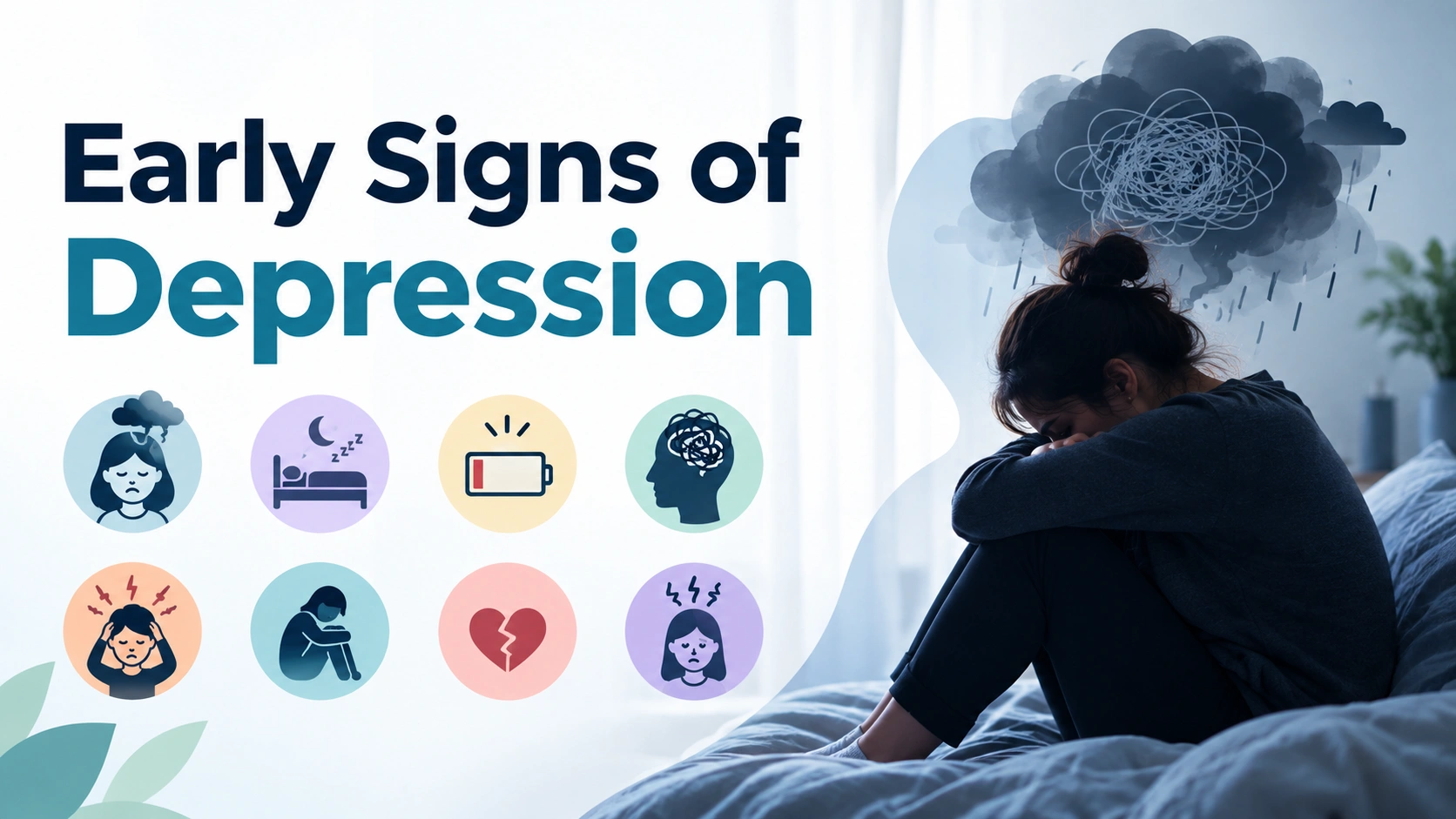
Depression does not always begin with a sudden or obvious change. In many cases, the early signs of depression develop gradually. A person may first notice that they are more tired than usual, less interested in things they normally enjoy, increasingly withdrawn, or struggling to concentrate.
Because these changes can seem minor at first, they are sometimes dismissed as stress, laziness, a bad mood, or simply having a difficult week. But when several changes continue over time or begin affecting everyday life, they deserve attention.
Recognizing the early symptoms of depression does not mean diagnosing yourself. Many of these experiences can also occur because of stress, grief, poor sleep, physical health problems, or other emotional difficulties. The purpose of looking at these signs is to notice meaningful changes and understand when professional support may be worth considering.
Table of Contents
- What Are the Early Signs of Depression?
- Losing Interest in Things You Usually Enjoy
- Feeling Tired All the Time
- Changes in Sleep
- Becoming More Withdrawn
- Difficulty Concentrating
- Feeling Low, Empty or Emotionally Numb
- Increasing Self-Criticism and Guilt
- Changes in Appetite or Eating Habits
- Losing Motivation for Everyday Tasks
- Irritability Can Also Be an Early Sign
- When Do Early Signs of Depression Need Attention?
- What Should You Do If You Notice These Signs?
- Frequently Asked Questions
- Final Thoughts
What Are the Early Signs of Depression?
The early signs of depression can be subtle.
You might notice that you are not enjoying your usual activities as much, spending more time alone, feeling unusually exhausted, or finding it difficult to concentrate. Sometimes the first noticeable change is in your routine rather than your mood.
For example, someone may continue going to work every day but stop meeting friends after work. Another person may still attend college but lose interest in hobbies and spend most evenings in bed.
A single change does not automatically indicate depression.
What matters is the overall pattern of changes, how long they continue, and whether they begin interfering with your normal life.
Some early signs may include:
- Losing interest in activities
- Unusual tiredness or low energy
- Changes in sleep
- Becoming socially withdrawn
- Difficulty concentrating
- Persistent low or empty mood
- Increased self-criticism
- Changes in appetite
- Reduced motivation
- Increased irritability
Let’s look at these changes more closely.
Losing Interest in Things You Usually Enjoy
One of the early signs people sometimes notice is a gradual loss of interest.
You may still have access to the things you normally enjoy, but they no longer feel as appealing.
Perhaps you used to look forward to meeting friends on weekends but now prefer staying home. Maybe you enjoyed gaming, exercising, watching movies, cooking, travelling, or another hobby, but you suddenly feel little desire to do it.
This can be confusing.
You might think: “I don’t know why I’ve stopped enjoying things. Nothing has really changed.”
A temporary loss of interest can happen to anyone. The concern is when this change continues and becomes part of a broader pattern involving mood, energy, motivation, or everyday functioning.
Feeling Tired All the Time
Another possible early sign is unusual or persistent fatigue.
You may sleep but still wake up feeling drained. Simple tasks that normally require little effort may suddenly feel difficult.
For example, getting ready for work, cleaning your room, replying to messages, or going outside may feel like a much bigger task than it used to.
This can sometimes be mistaken for laziness.
But low motivation and exhaustion are not necessarily signs that someone is unwilling to make an effort. Emotional difficulties can affect how much energy a person feels they have available for everyday activities.
At the same time, persistent tiredness has many possible causes, including inadequate sleep and physical health conditions. It should not automatically be assumed to be depression.
Changes in Sleep
A noticeable change in your normal sleeping pattern can sometimes be an early symptom of depression.
Some people find themselves sleeping much more than usual. Others struggle to fall asleep, wake frequently during the night, or wake earlier than they normally would.
You might notice:
- Sleeping longer than usual
- Difficulty falling asleep
- Waking during the night
- Waking unusually early
- Feeling tired despite sleeping
- Spending more time in bed during the day
Sleep changes can occur for many reasons, including stress, anxiety, lifestyle changes, physical health issues, and changes in routine.
But if a significant change in sleep occurs alongside low mood, loss of interest, low motivation, or social withdrawal, it may be worth paying closer attention to the overall pattern. You can also explore our guide on anxiety and sleep problems.
Becoming More Withdrawn
Sometimes the earliest noticeable sign comes from your social life.
You may start avoiding phone calls, ignoring messages, cancelling plans, or spending more time alone.
At first, you might simply tell yourself that you are busy or tired.
One cancelled plan is normal. But if you repeatedly avoid people you usually enjoy spending time with, something may have changed.
Depression can make social interaction feel exhausting. Even responding to a simple message can seem like too much effort.
Some people withdraw because they do not want to explain how they are feeling. Others may believe that they are a burden to their friends or family.
This gradual withdrawal can make things harder because isolation may reduce opportunities for connection and positive experiences.
Difficulty Concentrating
Problems with concentration can also appear early.
You may read something several times without remembering it, lose your train of thought during conversations, make more small mistakes, or struggle to complete tasks.
For students, this may look like difficulty studying or remembering information. For working professionals, it may mean taking longer to complete familiar tasks or struggling to stay focused during meetings.
You might simply think: “Why can’t I concentrate like I used to?”
Concentration problems are not specific to depression. Stress, anxiety, sleep deprivation, certain medications, and physical health conditions can produce similar difficulties.
However, when concentration changes occur alongside other emotional or behavioral changes, they are worth discussing rather than ignoring.
Feeling Low, Empty or Emotionally Numb
Depression does not always feel like intense sadness.
Some people experience a persistent low mood. Others describe feeling empty, disconnected, or emotionally numb.
You might not cry frequently or even consider yourself “sad.” Instead, you may feel that something is missing or that you are simply going through the motions.
For example: “I am doing everything I normally do, but I don’t feel connected to any of it.”
This emotional numbness can sometimes be difficult to explain to other people.
It is also one reason depression may go unnoticed. A person may assume that because they are not constantly crying, they cannot be experiencing depression.
Emotional experiences are different for everyone, so the absence of obvious sadness does not necessarily mean everything is fine.

Increasing Self-Criticism and Guilt
Another possible early change is becoming increasingly negative toward yourself.
You may start thinking that you are not good enough, that you disappoint everyone, or that your mistakes say something terrible about who you are.
A normal mistake might lead to an unusually harsh reaction.
For example: “I made one mistake at work” can become: “I’m completely useless. I always fail.”
Occasional self-criticism happens to everyone. The concern is when negative self-talk becomes frequent and starts influencing your confidence, relationships, motivation, or decisions.
Feelings of excessive guilt or worthlessness can be particularly distressing and deserve professional attention when they persist.
Changes in Appetite or Eating Habits
Changes in eating habits can sometimes accompany early depression.
Some people lose their appetite and begin skipping meals. Others eat more frequently or use food as a way of coping with difficult emotions.
You may notice that your normal relationship with food has changed without deliberately trying to change it.
Possible changes include eating much less than usual, eating more than usual, losing interest in meals, eating because of emotional distress, or noticeable changes in weight.
Eating patterns can change for many reasons, so this sign should be considered alongside other changes rather than viewed in isolation.
If significant or unexplained changes in appetite or weight occur, medical advice may also be appropriate.
Losing Motivation for Everyday Tasks
A subtle but important change can be a decline in motivation.
Things that previously required little thought may suddenly feel difficult.
You might postpone doing laundry, cleaning your room, replying to emails, attending social events, or completing routine responsibilities.
The problem is not necessarily that you do not know what needs to be done. You may know exactly what you need to do but feel unable to get started.
This can lead to frustration and self-blame: “Why am I being so lazy?”
Instead of immediately blaming yourself, it can be more useful to notice whether the reduced motivation is part of a larger pattern involving low mood, exhaustion, loss of interest, sleep changes, or withdrawal.
Irritability Can Also Be an Early Sign
Not everyone experiencing early depression becomes visibly sad.
For some people, irritability may become more noticeable.
You may find yourself becoming impatient over small things, reacting more strongly to everyday problems, or feeling frustrated with people close to you.
For example, a minor disagreement with a family member may suddenly feel much more overwhelming than it normally would.
Irritability alone does not mean depression. Stress, anxiety, relationship problems, lack of sleep, and many other factors can contribute to it.
However, a significant change in your usual emotional reactions can be worth examining when it appears alongside other possible depression symptoms. If you struggle with persistent mental loops, you can also read our guide on how to stop overthinking and anxiety.
When Do Early Signs of Depression Need Attention?
Not every period of low energy or sadness means depression. Everyone has difficult days, stressful weeks, disappointments, and periods when motivation is lower than usual.
The situation deserves more attention when changes persist, become more intense, or begin interfering with important areas of your life.
For example, you may want to consider professional support if:
- You have stopped enjoying most of your usual activities.
- You are increasingly isolating yourself.
- Your sleep has changed significantly.
- You feel exhausted most days.
- Concentration has become difficult.
- Your motivation has dropped considerably.
- Negative thoughts about yourself are becoming frequent.
- Work, studies, relationships, or daily responsibilities are being affected.
- You feel that you are becoming increasingly unlike yourself.
You do not need to wait until symptoms become severe before asking for help.
A qualified mental health counselor can help you understand whether the changes you are experiencing may be related to depression or another concern. Learn more about when you should seek professional treatment.
What Should You Do If You Notice These Signs?
The first step does not have to be dramatic.
Start by paying attention to what has changed. You might write down your mood, sleep, energy, appetite, social activity, and motivation for a short period. This can help you notice patterns that are difficult to recognize when every day feels similar.
It can also help to talk to someone you trust. You do not need to explain everything perfectly. Saying “I’ve not been feeling like myself lately” can be enough to begin a conversation.
If the changes continue or are interfering with your life, consider speaking with a qualified online mental health counselor. Counseling can provide a structured and confidential space to discuss what you are experiencing and explore appropriate support.

Final Thoughts
The early signs of depression are not always dramatic. Sometimes they begin with small changes: you stop enjoying your favorite activities, feel tired most of the time, avoid people, sleep differently, struggle to concentrate, or lose motivation for things that once felt manageable.
None of these signs alone proves that someone has depression.
What matters is the bigger picture and whether these changes persist or begin affecting everyday life.
If you have noticed that you have not felt like yourself for some time, it may be worth talking to someone rather than simply waiting and hoping the feeling disappears. A qualified mental health professional can help you understand what you are experiencing and whether additional support could be useful.