
Depression Symptoms: Emotional, Physical & Behavioral Signs
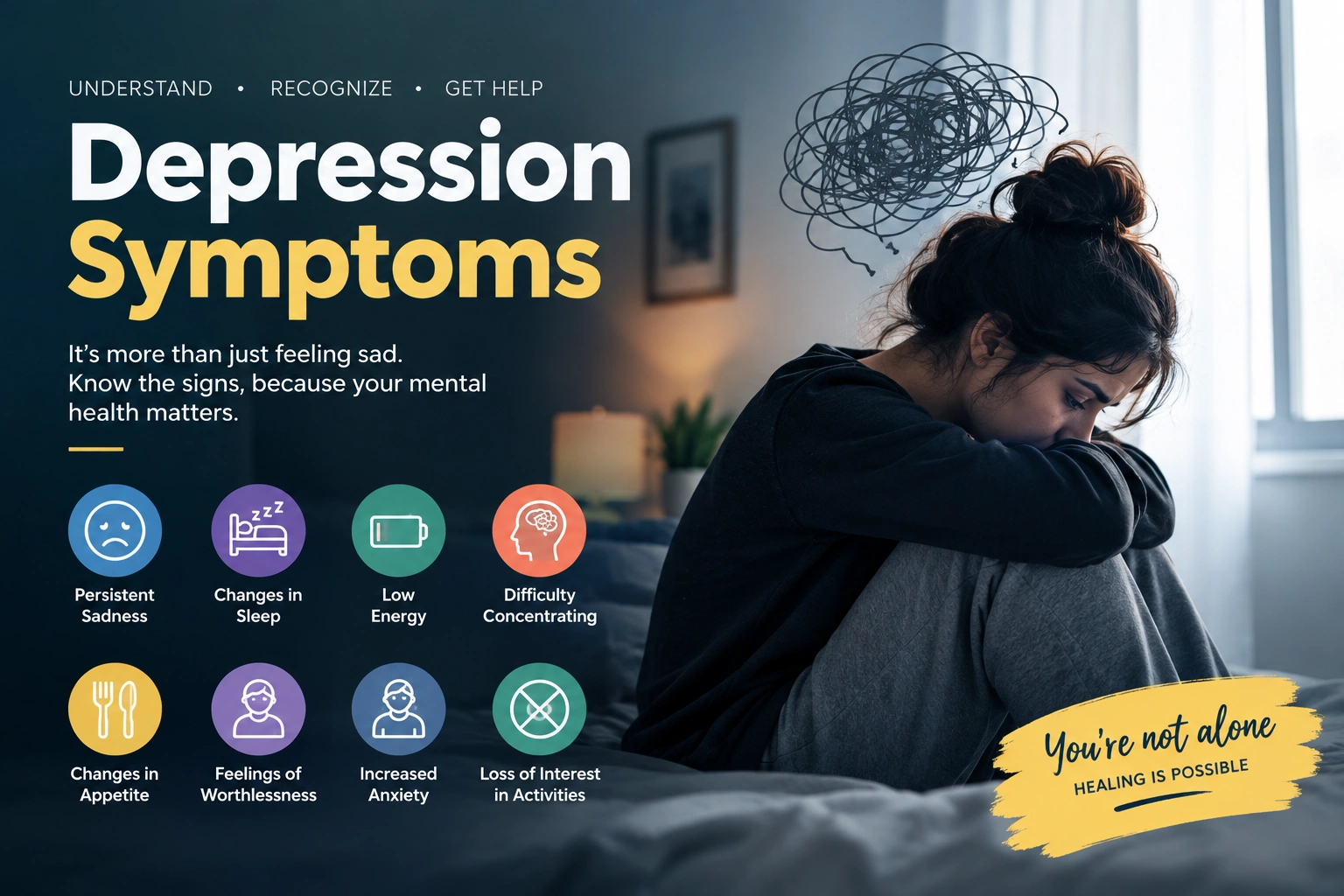
Depression does not always look the way people expect. It is not necessarily just crying, feeling sad, or staying in bed all day. For some people, depression symptoms appear as constant tiredness, loss of interest, difficulty concentrating, changes in sleep, irritability, or a feeling that everyday life has become unusually difficult.
Some people may notice several changes at once, while others may experience only a few. Symptoms can also vary in intensity and may affect emotional health, physical wellbeing, thoughts, behavior, relationships, work, or studies.
Knowing the common signs of depression can help you recognize when a change in mood or behavior deserves more attention. However, symptoms alone cannot confirm a diagnosis. A qualified mental health professional can help assess the complete picture.
Table of Contents
- What Are Depression Symptoms?
- Emotional Symptoms of Depression
- Loss of Interest and Pleasure
- Physical Symptoms of Depression
- Changes in Sleep
- Changes in Appetite and Weight
- Depression and Low Energy
- Difficulty Concentrating and Making Decisions
- Behavioral Signs of Depression
- Depression, Irritability and Anger
- Can Depression Exist Without Feeling Sad?
- When Should Depression Symptoms Be Taken Seriously?
- Frequently Asked Questions
- Final Thoughts
What Are Depression Symptoms?
Depression symptoms are changes in a person’s mood, thoughts, physical state, behavior, or everyday functioning that may occur with depression.
The symptoms are not identical for everyone.
One person may mainly notice persistent low mood and loss of interest. Another may complain about exhaustion, poor sleep, difficulty concentrating, or withdrawing from other people.
For example, someone might say:
“I don’t know what’s wrong with me. I just don’t enjoy anything anymore.”
Another person may say:
“I’m sleeping, but I still feel exhausted.”
Someone else may notice:
“I don’t want to talk to anyone. Even replying to messages feels like work.”
These experiences can have many possible explanations. Stress, grief, physical health problems, sleep difficulties, medication effects, and other mental health conditions can also cause similar changes.
That is why symptoms should be viewed as signs worth understanding rather than a way to diagnose yourself.
Emotional Symptoms of Depression
Changes in mood are among the symptoms commonly associated with depression.
A person may experience persistent sadness, emptiness, hopelessness, or a sense of emotional heaviness. However, depression is not always experienced as sadness.
Some people describe feeling emotionally numb rather than sad.
You may notice:
- Persistent low mood
- Feelings of emptiness
- Hopelessness about the future
- Excessive guilt
- Feeling worthless
- Frequent crying
- Emotional numbness
- Increased frustration
- Loss of confidence
For some people, negative thoughts about themselves become particularly strong.
A small mistake may turn into thoughts such as, “I’m useless,” or “I can never do anything right.”
Occasional self-doubt is normal. The concern is when negative self-evaluation becomes persistent and begins affecting the way a person functions or sees their life.
Loss of Interest and Pleasure
One of the important signs of depression can be losing interest in activities that previously felt enjoyable or meaningful.
This can be easy to overlook.
Someone may still have access to their favorite hobbies, friends, entertainment, or other activities but simply not feel motivated to participate.
For example, a person who normally enjoys meeting friends may start cancelling plans repeatedly. Someone who loves playing a sport may suddenly stop going. A person who previously looked forward to weekends may begin feeling indifferent about them.
This is more than simply being bored for a day.
When a noticeable loss of interest continues and becomes part of a broader pattern of emotional or behavioral changes, it may be worth discussing with a professional.
Physical Symptoms of Depression
Depression can also be associated with physical changes.
Some people primarily notice physical symptoms before recognizing that their mood has changed.
Possible physical experiences include:
- Persistent tiredness
- Low energy
- Changes in sleep
- Changes in appetite
- Changes in weight
- Feeling physically slowed down
- Difficulty maintaining normal routines
- Unexplained aches or discomfort
The relationship between physical and emotional health can be complicated.
For example, poor sleep can contribute to daytime fatigue, while low mood can make maintaining a regular sleep routine more difficult. Similarly, reduced activity can leave someone feeling physically sluggish.
Physical symptoms do not automatically mean depression. If you experience new, severe, persistent, or unexplained physical symptoms, medical evaluation may be appropriate to rule out other causes.
Changes in Sleep
Sleep changes are commonly associated with depression.
Some people experience insomnia and depression, finding it difficult to fall asleep or stay asleep. Others may sleep considerably more than usual but still wake feeling tired.
You might notice:
- Difficulty falling asleep
- Waking repeatedly during the night
- Waking earlier than usual
- Sleeping much longer than before
- Feeling tired despite getting enough time in bed
- Changes in your normal sleep routine
Sleep and mood can influence each other. For example, someone experiencing low mood may spend more time in bed because they lack motivation. Another person may lie awake because of negative thoughts or emotional distress.
A persistent change in sleep should not automatically be blamed on depression. Sleep problems can have many causes, and understanding the underlying issue is important. You can also explore our guide on anxiety and sleep problems.
Changes in Appetite and Weight
Depression can sometimes affect eating habits.
Some people lose interest in food and eat less than usual. Others may eat more frequently, particularly when using food as a way of coping with difficult emotions.
Changes may include reduced appetite, increased appetite, skipping meals, eating at unusual times, or noticeable weight changes.
These changes are not specific to depression. Physical health conditions, medications, stress, lifestyle changes, and other factors can also affect appetite and weight.
The important thing is to notice whether there has been a meaningful change from your usual pattern and whether it is occurring alongside other emotional or behavioral changes.
Depression and Low Energy
Feeling tired after a demanding day is normal.
Depression-related fatigue can feel different. A person may wake up feeling exhausted even after sleeping, struggle to begin basic tasks, or feel as though ordinary activities require much more effort than they used to.
For example, getting ready for work may feel overwhelming. Cleaning the room, preparing food, answering emails, or taking a shower may require unusual effort.
This does not mean the person is lazy.
When low mood and reduced energy occur together, motivation can become significantly harder to access.
Sometimes people become frustrated with themselves because they know what they “should” be doing but cannot seem to get started.

Difficulty Concentrating and Making Decisions
Another possible symptom is difficulty concentrating.
You may find yourself reading the same paragraph repeatedly, forgetting small things, losing track of conversations, or struggling to complete tasks that previously felt straightforward.
Decision-making can also become harder.
Something as simple as choosing what to eat or deciding whether to attend an event may feel unnecessarily complicated.
When concentration difficulties continue, they can affect work, education, relationships, and everyday responsibilities.
However, concentration problems are not unique to depression. Anxiety, sleep deprivation, stress, certain medications, and physical health conditions can also affect concentration.
Behavioral Signs of Depression
Depression can change the way a person behaves.
Someone who was previously social may begin avoiding friends. Another person may stop responding to messages or spend significantly more time alone.
Common behavioral changes can include:
- Withdrawing from friends or family
- Avoiding social activities
- Losing interest in hobbies
- Neglecting everyday responsibilities
- Spending much more time in bed
- Reduced activity
- Difficulty maintaining normal routines
- Decreased participation in work or studies
These changes may happen gradually. A person might first cancel one plan, then another, and eventually stop making plans altogether.
Sometimes people around them notice the change before they do.
This is why sudden or prolonged changes in normal behavior can be worth paying attention to, especially when they occur alongside changes in mood, energy, sleep, or interest.
Depression, Irritability and Anger
Depression does not always make someone appear sad.
Irritability and depression can sometimes occur together, particularly when a person feels emotionally exhausted, frustrated, overwhelmed, or unable to explain what they are experiencing.
Someone may become unusually impatient with family members, coworkers, or friends.
Small problems that would normally be manageable may suddenly feel extremely irritating.
This does not mean every episode of anger is a symptom of depression. Irritability has many possible causes.
But if a noticeable change in irritability occurs alongside low mood, withdrawal, exhaustion, loss of interest, sleep changes, or other concerns, it may be useful to look at the overall pattern rather than focusing on anger alone.
Can Depression Exist Without Feeling Sad?
Yes.
This is an important point when discussing depression symptoms.
Some people with depression do not describe themselves as sad. They may instead feel empty, emotionally disconnected, exhausted, uninterested, or unable to enjoy anything.
For example, someone may say:
“I’m not crying. I just don’t feel anything.”
Another person may say:
“Nothing is particularly wrong, but I don’t feel interested in my life anymore.”
This is one reason depression can sometimes go unrecognized.
A person’s emotional experience cannot be judged simply by whether they look sad.
Similarly, someone who is smiling, working, or socializing may still be experiencing significant emotional difficulties privately.

When Should Depression Symptoms Be Taken Seriously?
Having one difficult day does not mean you have depression.
It becomes more important to pay attention when several changes persist, become increasingly difficult to manage, or begin interfering with everyday life.
You may want to consider professional support if you notice ongoing changes such as:
- Persistent low mood
- Loss of interest in normal activities
- Significant sleep changes
- Major appetite changes
- Persistent exhaustion
- Difficulty concentrating
- Increasing isolation
- Strong feelings of worthlessness or hopelessness
- Difficulty managing normal responsibilities
You do not need to wait until symptoms become severe before asking for help. A qualified mental health professional can look at the complete pattern and help determine whether what you are experiencing may be related to depression or something else.