
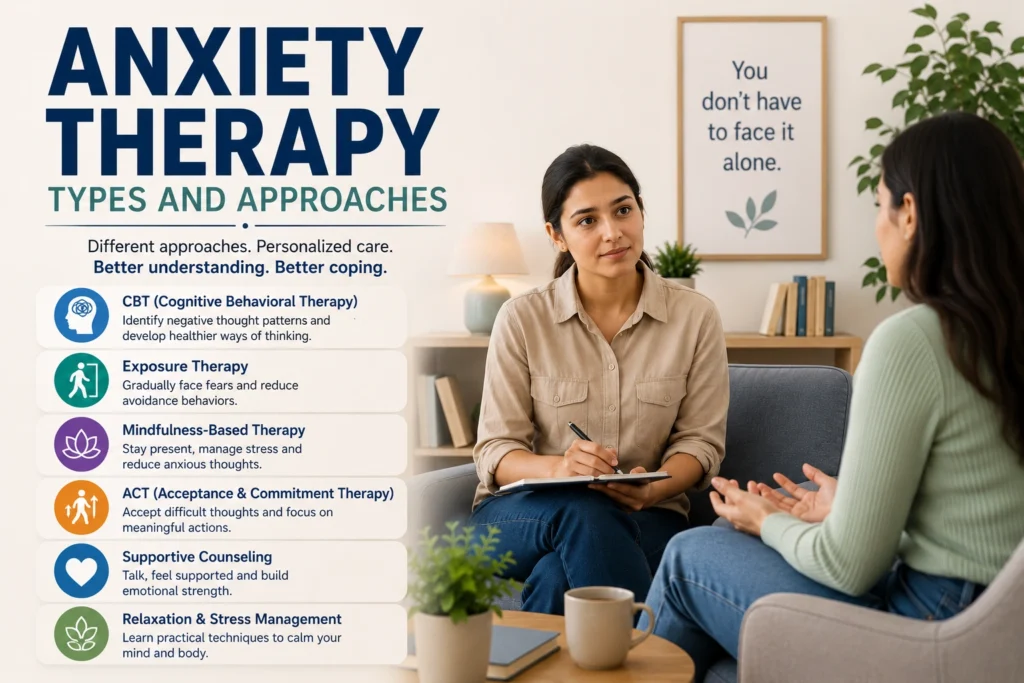
Anxiety Therapy: Types and Approaches
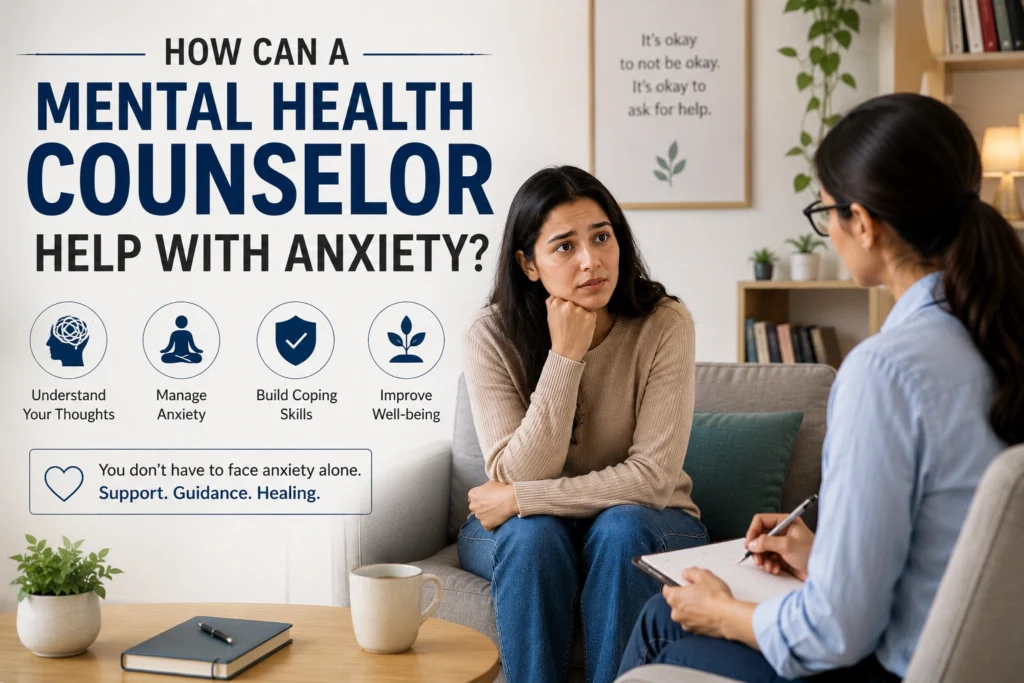
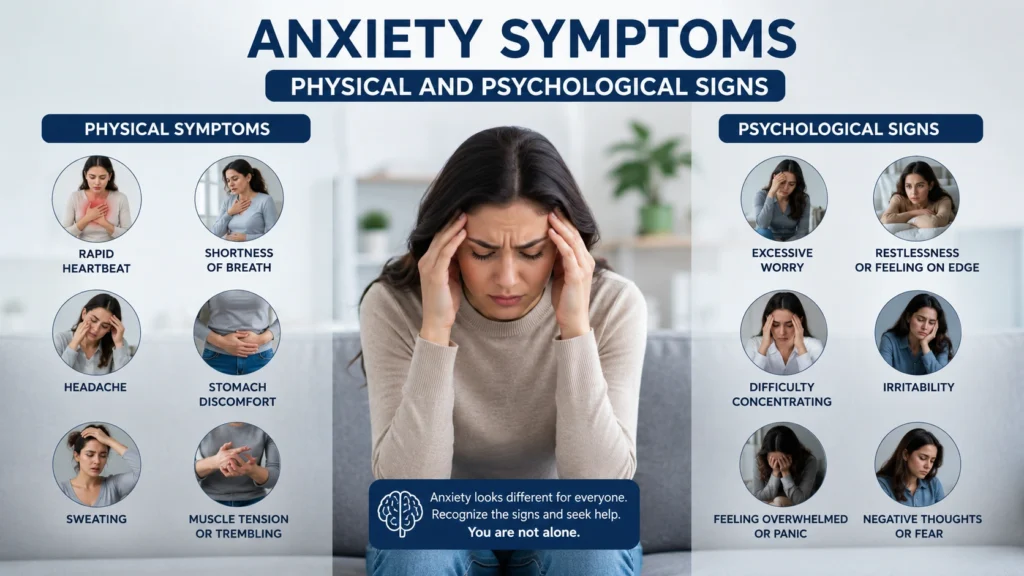
Anxiety Therapy: Types and Approaches That Can Help Anxiety is something almost everyone experiences at some point in life. Feeling nervous before an important meeting, exam, interview, or difficult conversation is normal. But sometimes anxiety becomes more than temporary nervousness. You may find yourself worrying about things repeatedly, imagining the worst possible outcome, avoiding situations you used to handle easily, or lying awake at night because your mind won’t slow down. When anxiety starts affecting your sleep, relationships, work, studies, or everyday life, you may start wondering: “Can therapy actually help with anxiety?” The answer is that psychological therapy can be helpful for many people experiencing anxiety. But there isn’t one single type of anxiety therapy that works exactly the same way for everyone. Different therapeutic approaches focus on different aspects of anxiety. A mental health professional can help you understand your concerns and determine which approach may be appropriate for your situation. In this article, we’ll look at the different types of anxiety treatment, how they work, what you can expect from counseling, and how online anxiety counseling may help. What Is Anxiety Therapy? Anxiety therapy refers to psychological treatment approaches used to help people understand and manage anxiety, excessive worry, fear, and related emotional or behavioral difficulties. Therapy isn’t simply about telling someone: “Don’t worry.” If it were that easy, most people would already have solved their anxiety. Instead, therapy may help you understand: Why certain situations trigger anxiety Why particular thoughts keep repeating How anxiety affects your behavior Why you may avoid certain situations How your body responds to stress What keeps the anxiety cycle going How you can develop healthier ways of responding The approach depends on your individual concerns, symptoms, goals, and circumstances. What Are the Different Types of Anxiety Therapy? Several psychological approaches may be used when working with anxiety. Some of the commonly used approaches include: Cognitive Behavioral Therapy (CBT) Exposure-based approaches Mindfulness-based approaches Acceptance and Commitment Therapy (ACT) Supportive counseling Relaxation and stress-management strategies Not every approach is appropriate for every person. A qualified mental health professional can help determine what may fit your situation. 1. Cognitive Behavioral Therapy (CBT) for Anxiety Cognitive Behavioral Therapy, commonly known as CBT, is one of the most widely used psychological approaches for anxiety. CBT looks at the connection between: Thoughts → Feelings → Behaviors For example, imagine someone has to speak in front of a group. They may think: “Everyone is going to judge me.” That thought may create fear and physical tension. Because they feel anxious, they may decide to avoid speaking altogether. Avoiding the situation provides temporary relief, but the person may become even more afraid of similar situations in the future. CBT can help people identify these patterns and learn different ways of thinking and responding. How CBT May Help With Anxiety CBT may involve working on: Unhelpful thinking patterns Excessive worry Fear-based assumptions Avoidance behaviors Problem-solving Emotional responses Practical coping strategies The goal isn’t to replace every negative thought with an unrealistically positive thought. Instead, therapy can help you develop a more balanced and realistic way of looking at difficult situations. 2. Exposure-Based Therapy Anxiety can sometimes make people avoid situations that they fear. For example: Someone with social anxiety may avoid parties. Someone with a fear of driving may avoid driving. Someone with panic-related concerns may avoid places where they previously experienced intense anxiety. Avoidance can feel helpful in the short term because it reduces anxiety temporarily. However, it can sometimes strengthen the fear over time. Exposure-based approaches involve gradually working with feared situations in a structured and appropriate way. The process should be personalized and should not mean suddenly forcing yourself into an overwhelming situation. Instead, therapy can help you gradually develop confidence and learn that anxiety can be managed. 3. Mindfulness-Based Approaches Sometimes anxiety keeps your attention stuck in the past or future. You may repeatedly think: “What if this happens?” “What if I made a mistake?” “What will happen tomorrow?” “What if something goes wrong?” Mindfulness-based approaches can help develop greater awareness of the present moment. Rather than automatically reacting to every anxious thought, you can learn to notice thoughts and emotions with greater awareness. Mindfulness strategies may include: Paying attention to the present moment Observing thoughts without immediately reacting Breathing exercises Body awareness Relaxation practices These techniques can be useful as part of a broader anxiety-management plan. 4. Acceptance and Commitment Therapy (ACT) Acceptance and Commitment Therapy, or ACT, takes a somewhat different approach to difficult thoughts and emotions. Instead of making the goal: “I must get rid of every anxious thought.” ACT can focus on learning how to respond differently to difficult thoughts and feelings while continuing to take meaningful actions based on your values. For example, you may feel anxious about meeting new people but still want meaningful friendships. Therapy may help you understand the anxiety while gradually taking actions that are important to you. 5. Supportive Counseling Sometimes a person doesn’t immediately need a highly structured therapeutic approach. They may first need a safe place where they can talk openly about what’s happening in their life. Supportive counseling can provide space to discuss stress, relationships, work pressure, family concerns, life changes, emotional difficulties, and worry and anxiety. A counselor can listen, help you understand your situation, and support you in developing healthier ways of coping. The approach can be adapted according to the person’s needs. 6. Relaxation and Stress-Management Techniques Anxiety can affect the body as well as the mind. You might experience muscle tension, restlessness, fast heartbeat, sweating, difficulty relaxing, trouble sleeping, and feeling constantly “on edge”. Depending on your situation, counseling may include relaxation and stress-management strategies like breathing exercises, grounding techniques, relaxation exercises, mindfulness, healthy routines, and stress-management strategies. These tools can be useful, but they aren’t necessarily a complete treatment for persistent or severe anxiety. Which Anxiety Therapy Is Best? This is one of the most common questions people ask. The honest answer is: There isn’t one anxiety