
Depression in Young Adults
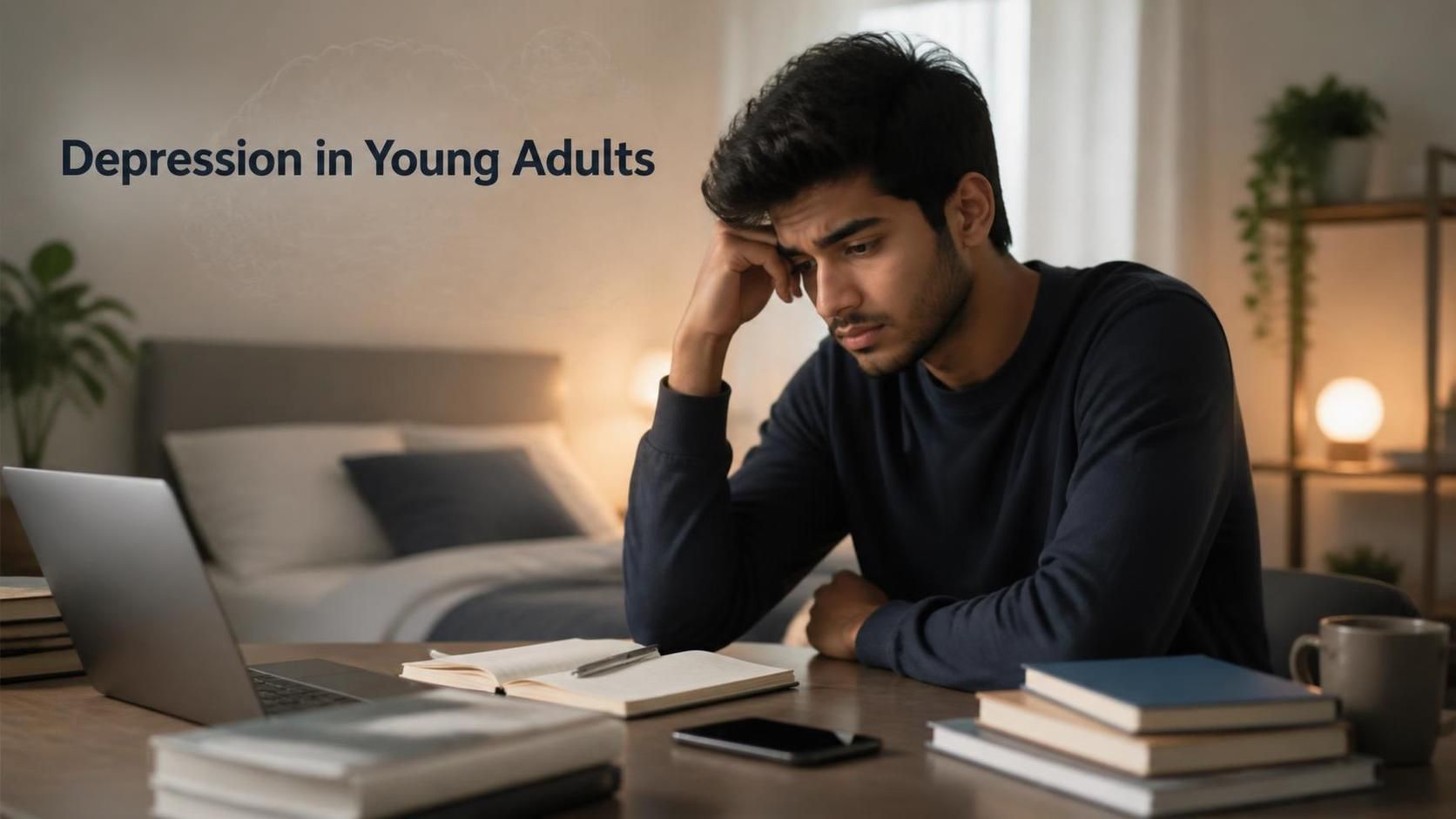
Young adulthood can bring major changes in a relatively short period of time. Education, career decisions, relationships, financial responsibilities, moving away from home, family expectations, and uncertainty about the future can all affect emotional wellbeing.
It is normal to feel stressed, disappointed, confused, or overwhelmed during difficult periods. But when low mood, loss of interest, exhaustion, hopelessness, or other emotional changes persist and begin interfering with everyday life, depression may need to be considered.
Depression in young adults can look different from what people expect. It may not always appear as constant sadness. Some young adults become withdrawn, irritable, emotionally numb, exhausted, unmotivated, or unable to concentrate. Others continue working or studying while privately struggling.
Recognizing these changes early can make it easier to seek appropriate support.
Table of Contents
- What Is Depression in Young Adults?
- Why Can Young Adults Experience Depression?
- What Are the Signs of Depression in Young Adults?
- Can Depression in Young Adults Look Like Irritability?
- Depression and College Life
- Depression and Work in Young Adults
- Depression, Relationships and Young Adults
- Depression and Social Media
- Can Overthinking Be Connected With Depression?
- What Can Help A Young Adult With Depression?
- How Can Depression Counseling Help Young Adults?
- Can Young Adults Get Depression Counseling Online?
- When Should A Young Adult Seek Professional Help for Depression?
- What If A Young Adult Does Not Want Help?
- Frequently Asked Questions
- Final Thoughts
What Is Depression in Young Adults?
Depression is more than having a bad day or feeling disappointed about something that happened.
A young adult experiencing depression may notice persistent changes in mood, interest, energy, thinking, sleep, appetite, motivation, or everyday functioning.
For example, a college student who normally enjoys meeting friends may gradually stop responding to messages and lose interest in activities. A young professional may continue going to work but feel emotionally exhausted, disconnected, and unable to enjoy anything outside work.
These experiences do not automatically mean someone has depression. A qualified mental health professional can assess the overall pattern and determine whether professional support may be appropriate.
Why Can Young Adults Experience Depression?
There is no single reason why a young adult develops depression.
This stage of life can involve several transitions at once. Someone may be trying to establish a career, manage relationships, become financially independent, and make decisions about their future.
Some experiences that may contribute to emotional difficulties include:
- Academic pressure
- Career uncertainty
- Job-related stress
- Financial difficulties
- Relationship problems
- Breakups or divorce
- Moving away from family
- Loneliness or social isolation
- Family conflict
- Major life changes
- Difficult experiences or losses
- Persistent stress
- Pressure to meet personal or family expectations
Sometimes there is no obvious event that explains why someone feels depressed. Depression can develop even when a person cannot identify a single reason.
What Are the Signs of Depression in Young Adults?
Depression can affect emotional, physical, and behavioral functioning.
Some common signs include:
Persistent Low Mood
A person may feel sad, empty, emotionally numb, or unusually down for much of the time. They may struggle to explain exactly why they feel this way.
Loss of Interest
Activities that once felt enjoyable may no longer feel rewarding. Someone who previously enjoyed sports, gaming, socializing, music, traveling, or hobbies may gradually stop participating.
Constant Tiredness
Depression can be associated with low energy and exhaustion. A young adult may sleep for long periods but still feel tired, or find basic tasks unusually difficult.
Changes in Sleep
Sleep may change in different ways. Someone might struggle to fall asleep, wake frequently, wake earlier than usual, or sleep much more than before.
Difficulty Concentrating
Studying, working, reading, making decisions, or completing simple tasks can become harder. A person may describe their mind as feeling slow, distracted, or constantly occupied.
Withdrawal From Others
Someone may stop attending social events, avoid calls, or spend increasing amounts of time alone. They may want connection but lack the energy or motivation to participate.
Increased Self-Criticism
Depression can be associated with harsh thoughts about oneself. A young adult may repeatedly think that they are failing, disappointing others, or not good enough.
Changes in Appetite
Some people experience reduced appetite, while others eat more than usual. Changes in eating patterns may occur alongside other emotional or behavioral changes.
Reduced Motivation
Even small responsibilities can begin to feel overwhelming. A person may know what needs to be done but feel unable to get started.
Can Depression in Young Adults Look Like Irritability?
Yes.
Depression does not always look like obvious sadness. Some young adults may become unusually irritable, frustrated, impatient, or emotionally reactive. They may get annoyed easily or find themselves arguing more often with family members, partners, or friends.
Because irritability can have many causes, it should not automatically be interpreted as depression. It becomes more meaningful when it appears alongside other persistent changes such as loss of interest, low energy, withdrawal, sleep problems, or difficulty functioning.
Depression and College Life
College can involve major changes in independence, routine, relationships, and expectations.
A student may be living away from family for the first time, adjusting to academic demands, trying to make friends, or worrying about future career opportunities.
Someone experiencing depression may begin missing classes, falling behind with assignments, avoiding classmates, or losing interest in activities they previously enjoyed.
Sometimes academic problems are the first visible sign that a student is struggling emotionally. Instead of assuming that the student is simply lazy or irresponsible, it can be helpful to consider whether emotional difficulties may be affecting their ability to function.
Depression and Work in Young Adults
Starting a career does not automatically bring emotional stability.
Young professionals may experience pressure related to performance, job security, workplace relationships, finances, or uncertainty about their career direction.
A person may continue showing up to work while feeling increasingly disconnected or exhausted. This can make depression difficult for others to notice because the individual may appear to be functioning normally.
If work begins taking all of their energy and they have little interest or emotional capacity outside their job, it may be worth exploring what is happening rather than simply assuming they need to work harder.

Depression, Relationships and Young Adults
Depression can affect romantic and personal relationships.
Someone who is depressed may withdraw, communicate less, become irritable, or lose interest in spending time together. Their partner may interpret this as rejection or lack of care.
At the same time, relationship difficulties themselves can contribute to emotional distress.
Counseling can provide a structured space to explore how mood, communication, expectations, and relationship difficulties may be interacting.
Depression and Social Media
Social media is part of everyday life for many young adults, but its relationship with emotional wellbeing can be complicated.
A person who already feels inadequate may compare their life, appearance, career, relationships, or achievements with carefully presented versions of other people’s lives.
This can reinforce thoughts such as:
- “Everyone else is doing better than me.”
- “I am falling behind.”
- “My life should look different.”
Social media is not automatically the cause of depression, and reducing its use is not a universal treatment. However, noticing whether online activity consistently leaves you feeling worse can be useful.
Can Overthinking Be Connected With Depression?
Young adults may spend significant time thinking about past mistakes, current problems, or uncertainty about the future. This can become repetitive rather than productive.
For example, someone might repeatedly think:
- “Why did I make that decision?”
- “What if I had chosen another career?”
- “Why am I not where I should be?”
- “What is wrong with me?”
When negative thinking becomes persistent, it can reinforce self-criticism and hopelessness. Learning to recognize these patterns can be an important part of depression counseling or therapy.
What Can Help a Young Adult With Depression?
The right approach depends on the person’s situation, but several forms of support may be useful.
Talk to Someone You Trust
Keeping everything private can make emotional difficulties feel more overwhelming. Talking with a trusted friend, family member, mentor, counselor, or another supportive person can be a useful first step.
Maintain Basic Routines
Depression can disrupt sleep, meals, movement, work, and personal care. Instead of trying to completely change your lifestyle overnight, focus on manageable routines and small steps.
Stay Connected
Even when socializing feels difficult, maintaining some connection with supportive people can help reduce isolation. This does not mean forcing yourself into large social situations. A short conversation or spending time with one trusted person may be enough.
Consider Professional Counseling
If symptoms continue or begin interfering with studies, work, relationships, or everyday functioning, professional support may be appropriate. Counseling can help a young adult understand what they are experiencing and work on emotional patterns, coping strategies, motivation, relationships, and practical changes.
How Can Depression Counseling Help Young Adults?
Depression counseling is not simply about telling someone to think positively.
A counselor may help a young adult explore what is happening in their life and how they are responding to it.
Sessions may involve discussing:
- Persistent low mood
- Negative thinking
- Loss of motivation
- Academic or workplace stress
- Relationship difficulties
- Self-criticism
- Overthinking
- Changes in routine
- Feelings about the future
- Difficulty managing emotions
The specific approach depends on the individual’s circumstances. Therapy may also focus on identifying patterns between thoughts, feelings, and behaviors and developing healthier ways of responding.
Can Young Adults Get Depression Counseling Online?
Yes, online depression counseling can be an option for young adults who are appropriate for outpatient mental health support.
Online counseling can be especially convenient for someone managing college, work, travel, or a changing schedule. A session can provide a private space to discuss concerns with a mental health professional without requiring travel to an office.
However, online counseling is not intended to replace emergency care. If someone is in immediate danger, has thoughts or plans of suicide or self-harm, or cannot keep themselves safe, urgent local emergency or crisis support should be sought.
When Should a Young Adult Seek Professional Help for Depression?
Consider professional support when emotional difficulties are persistent, worsening, or interfering with everyday life.
Signs that it may be time to seek help include:
- You have lost interest in most things you previously enjoyed.
- Your sleep or appetite has changed significantly.
- You are struggling with college or work.
- You have increasingly withdrawn from friends or family.
- You feel persistently hopeless or worthless.
- Everyday responsibilities feel difficult to manage.
- You are experiencing ongoing emotional exhaustion.
- Your attempts to cope on your own are not helping.
You do not need to wait until symptoms become extremely severe before seeking counseling.
What If a Young Adult Does Not Want Help?
Some young adults may resist counseling because they believe asking for help means they are weak or unable to handle life.
It can help to approach the subject without judgment. Instead of saying: “You need therapy,” you might say: “I’ve noticed you’ve been having a difficult time lately. If you ever want to talk to someone, I’d be happy to help you find support.”
Giving someone space to make the decision can make professional help feel less threatening.
If there is an immediate risk of suicide or serious self-harm, however, safety takes priority and urgent professional assistance should be sought.

Frequently Asked Questions
What are the early signs of depression in young adults?
Can a young adult have depression without feeling sad?
Can college students experience depression?
Can depression affect a young person’s career?
Can depression in young adults be treated without hospitalization?
Can online counseling help young adults with depression?
When does depression require urgent help?
Explore Related Mental Health Topics
Explore Online Depression Treatment Across Cities
Connect with confidential, professional mental health counseling and therapy tailored for your city, available from the comfort of your home.
Bhopal
Professional counseling & online therapy support in Bhopal.
Bengaluru
Expert online mental health care tailored for Bengaluru.
Delhi
Confidential depression treatment and counseling in Delhi.
Mumbai
Specialized therapy and online support across Mumbai.
Pune
Professional depression counseling and online guidance in Pune.
Hyderabad
Accessible online depression therapy and support in Hyderabad.
Noida
Dedicated online mental health and counseling for Noida.
Gurugram
Professional depression therapy and counseling in Gurugram.