Author name: Vaibhav Mishra

Managing Creative and Corporate Burnout in Mumbai: A Mental Health Guide
Anxiety & Depression, Depression, Mental Wellness, Relationship Issues, Stress Management

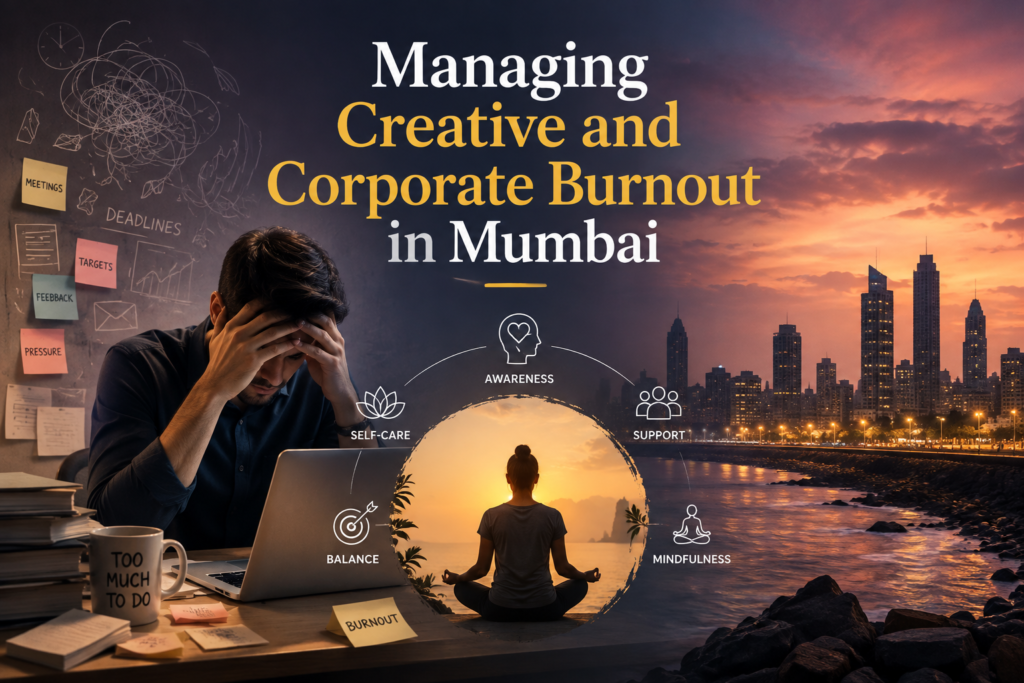
Managing Creative and Corporate Burnout in Mumbai

Mumbai is a city fueled by an unrelenting current of ambition. Whether you are navigating the high-stakes boardroom meetings in Bandra-Kurla Complex (BKC), managing frantic deadlines at media houses in Lower Parel, or chasing freelance creative projects across Andheri, life here moves at a breakneck speed. For many Mumbaikars, the line between passion and exhaustion blur entirely. You wake up early, battle the local train rush or Western Express Highway traffic, push through twelve-hour workdays, and return home only to answer late-night emails. From the outside, you look successful, driven, and productive. Inside, however, your tank is completely empty. If you feel a persistent, crushing mental fatigue, a loss of passion for work you once loved, and a deep emotional detachment from your daily life, you may be experiencing severe burnout. Seeking professional creative and corporate burnout counseling in Mumbai can help you reclaim your energy, establish sustainable boundaries, and restore your mental peace. What is Creative and Corporate Burnout? Burnout is not just standard physical tiredness that goes away after a good weekend sleep. Recognized clinically as a state of emotional, physical, and mental exhaustion caused by excessive and prolonged stress, it hits working professionals and creators uniquely hard. In a hyper-competitive city like Mumbai, burnout is frequently worn as a badge of honor. People normalize chronic exhaustion until it manifests as physical illness, anxiety, or clinical depression. Key Signs and Symptoms of Burnout Burnout creeps up slowly, disguising itself as “just a busy week” until it completely takes over your daily life. Look out for these warning signs: 1. Emotional Signs 2. Physical Signs 3. Behavioral Signs Why Mumbai Amplifies Burnout Culture Mumbai presents distinct environmental, structural, and cultural triggers that deepen chronic fatigue: Realistic Workplace Stress vs. Clinical Burnout Metric / Trait Normal Daily Work Stress Clinical Burnout Emotional State Hyperactive; you feel anxious and urgent about getting things done. Helpless, hopeless, and emotionally blunted; you feel empty. Physical Toll Tiredness that usually improves with a weekend break or vacation. Deep-seated exhaustion that persists even after taking time off. Impact on Output You try harder, work longer, and push through tasks. Productivity plummets; tasks that took minutes now feel impossible. Enjoyment Stress temporarily reduces fun, but joy returns once work ends. Passion and pleasure are completely stripped away from hobbies and work. Evidence-Based Recovery and Counseling Pathways Healing from burnout requires more than just a weekend getaway to Goa or Lonavala. It requires a fundamental restructuring of your psychological boundaries, cognitive patterns, and work habits. Professional guidance offers safe, structured support: Clear Guidance Frequently Asked Questions How long does it take to recover from severe burnout? Recovery varies from person to person. While acute physical exhaustion can improve within a few weeks of rest, rewiring deep mental burnout, emotional exhaustion, and work habits through counseling typically takes a few months of consistent support. Can burnout turn into clinical depression? Yes. If left unaddressed, chronic burnout keeps stress hormones elevated for too long, which can trigger clinical depression, generalized anxiety, and severe sleep disorders. Do I need to quit my job in Mumbai to heal from burnout? Not necessarily. While some situations require a career change, many professionals heal by learning how to set firm professional boundaries, changing internal thought patterns, and restructuring their relationship with work while staying in their roles. When should I seek professional counseling for burnout? If your exhaustion persists for weeks, impacts your physical health, ruins your personal relationships, and leaves you feeling completely detached from life, it is time to seek professional support. Explore Related Mental Health Topics Coping With Financial Stress and Money Anxiety in Mumbai Managing Health Anxiety in Mumbai Surviving Urban Loneliness in Mumbai Generalized Anxiety Disorder (GAD) Chronic Overthinking Support Take the First Step Toward Sustainable Balance You do not have to sacrifice your mental health and well-being on the altar of productivity. Reclaiming your energy and joy is possible with the right professional guidance. Schedule Your Consultation Today
Struggling with communication breakdowns or frequent fights in Delhi? Discover expert relationship counseling and couples therapy to rebuild trust and harmony.
Relationship Issues

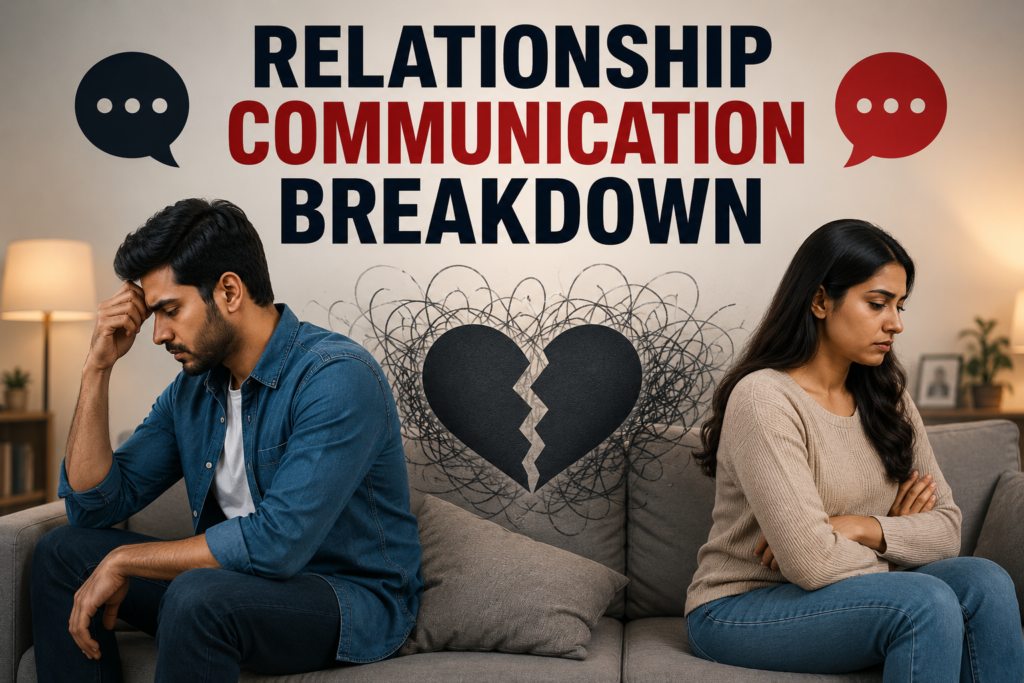
Relationship Communication Breakdown: Why It Happens in Delhi and How Counseling Helps

Delhi is a city built on contrast – the corporate hustle of Connaught Place, the academic energy of North Campus, the family-first culture of Rohini and Dwarka, the quieter professional pockets of South Delhi and Vasant Kunj. Across all of these, one pattern shows up again and again in my practice: couples and families who live together, eat together, manage the same home — and still feel like strangers by 9 PM. If conversations with your partner keep turning into arguments, or worse, into silence, you’re not imagining it. This is a relationship communication breakdown, and it’s one of the most common reasons people in Delhi seek relationship counseling. What a Communication Breakdown Actually Looks Like Every couple argues — that’s normal. A breakdown is different. It’s when conversations stop being about solving the problem and start being about winning it, or avoiding it altogether. In sessions, this usually shows up as one (or more) of these patterns: 1. The blame-and-defend loop A small comment — “you forgot to pay the electricity bill” — turns into “you never think about this house.” Both partners switch into defense mode, and the actual issue never gets addressed. 2. Stonewalling One partner goes quiet, leaves the room, or simply stops responding. It feels like it ends the fight, but it actually starves the relationship of the engagement it needs to repair. 3. Scorekeeping Old arguments resurface in new ones — “this is just like what happened in 2022” — because the original hurt was never actually resolved, just paused. 4. Conversational avoidance Finances, in-laws, career plans, even intimacy — these topics quietly disappear from conversation because both partners expect them to end in a fight. What’s left is logistics: bills, schedules, groceries. Partners start functioning more like co-managers of a household than a couple. Why This Shows Up So Often in Delhi Specifically A few things about life in Delhi NCR make communication breakdowns more likely, or make existing ones worse: None of these are unique to Delhi, but the combination — long commutes, joint-family proximity, and high social visibility — is a specific local pressure cooker. Healthy vs. Breakdown Communication Healthy Communication Communication Breakdown Goal Understand each other, find a solution Win the argument, prove a point Language “I feel…” statements “You always / you never” statements When overwhelmed Pause, come back to it calmly Escalate until someone shuts down or explodes Outcome Both feel heard Both feel defensive or unseen How Relationship Counseling Actually Helps Counseling isn’t about deciding who’s “right.” A structured, neutral process does three specific things: 1. Creates a space where both people can speak without it turning into a fight. A counselor manages the pace of the conversation so both partners can actually finish a sentence. 2. Identifies what the fight is really about. Most recurring arguments about chores, money, or in-laws are proxies for an underlying need — feeling appreciated, feeling secure, feeling like a priority. Counseling helps name that need directly instead of fighting about its surface symptom. 3. Builds specific tools, not just insight. Depending on the approach used, this can include structured communication exercises (like the Gottman Method’s “soft startup” technique, which trains partners to raise an issue without criticism or contempt), boundary-setting frameworks for in-law conflicts, and repair strategies to use right after an argument instead of days later. Individual Counseling, If Your Partner Won’t Come Couples counseling works best when both partners attend, but it’s not a requirement to start. Working one-on-one with a counselor still helps you change how you respond in the pattern, set clearer boundaries, and often shifts the dynamic even if your partner never sits in the room. Online vs. In-Person Sessions Given Delhi’s traffic and commute realities, many practices – including ours – offer both in-person sessions and secure online video sessions. Online sessions are often a practical starting point for couples juggling long work hours, especially when one partner is more hesitant to begin. Clear Guidance Frequently Asked Questions Can a relationship recover after years of poor communication? Yes — patterns that have been in place for years can shift, but it takes both partners being willing to look at their own role, not just their partner’s. What if my partner refuses to attend counseling with me? Start individually. It’s genuinely useful on its own, not just a fallback option. How do we stop fighting over small, everyday things? Small arguments (chores, schedules) are usually standing in for a bigger unmet need — appreciation, security, attention. Counseling helps you get to that underlying need instead of re-fighting the same surface issue. Is couples counseling only for relationships in crisis? No. Many couples come in proactively — before a wedding, before a major life change, or simply to strengthen communication before small issues become bigger ones. How many sessions does it usually take to see a difference? This varies by couple, but most people notice a shift in how arguments unfold within the first few sessions, once specific communication tools are introduced. Do you see couples from Gurgaon and Noida as well, or only Delhi? Online sessions are available for couples across Delhi NCR (including Gurgaon and Noida), alongside in-person counseling options in Delhi. Take the First Step Toward Relationship Harmony If you recognize your relationship in this pattern, you don’t have to work through it alone. Talk through what’s going on — for you individually or with your partner. Schedule Your Consultation Today

Relationship Communication Problems in Delhi: Causes, Signs & How Counseling Helps
Blog

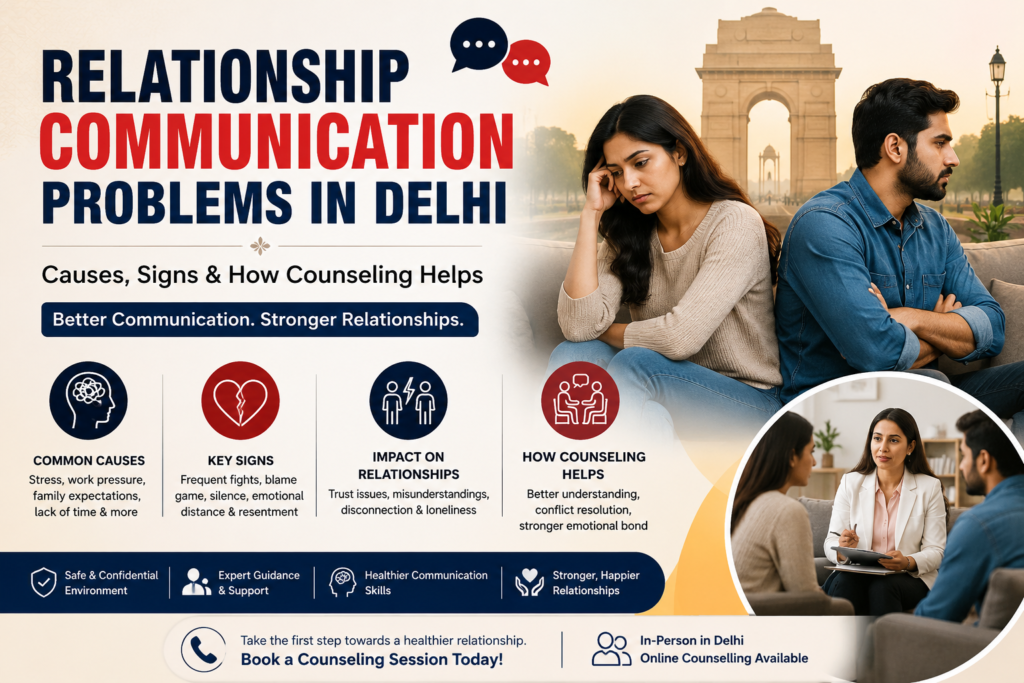
Relationship Communication Problems in Delhi: Causes, Signs & How Counseling Helps

Delhi is a city of rich culture, vibrant communities, and fast-paced ambition. Yet, beneath the corporate energy of Connaught Place, the bustling academic hubs of North Campus, and the residential lanes of South Delhi and Dwarka, thousands of couples and families are experiencing a quiet crisis behind closed doors. You might live under the same roof, share meals, and manage daily responsibilities together, but emotionally, you feel miles apart. Conversations quickly turn into arguments over minor issues. One partner shuts down in silence, while the other feels unheard, frustrated, and deeply alone. If this sounds familiar, you are experiencing a relationship communication breakdown. Healthy communication is the emotional core of any partnership. When it stops flowing, resentment, emotional distance, and chronic stress take its place. Working with a professional mental health counselor can help you bridge the gap, rebuild emotional safety, and learn how to truly connect again. What is a Relationship Communication Breakdown? A communication breakdown is more than just occasional arguing. Every couple disagrees; conflict is a normal part of any human relationship. A breakdown occurs when the way you communicate stops solving problems and instead starts creating emotional wounds. Instead of resolving differences, conversations become battlegrounds where both partners feel defensive, judged, or ignored. Over time, individuals stop sharing their vulnerabilities altogether. They walk on eggshells, keep secrets to avoid fights, or retreat into complete emotional detachment (stonewalling). Key Signs of Communication Problems in Relationships Communication issues rarely happen overnight. They usually manifest through distinct emotional and behavioral patterns: 1. The Blame and Defense Loop Conversations that begin as minor discussions quickly escalate. Instead of addressing the issue, partners resort to “you always” or “you never” statements. Both people immediately put up their shields to defend themselves rather than listening. 2. Stonewalling and Emotional Shutdown When arguments become too overwhelming, one or both partners pull away completely. They stop responding, leave the room, or give the silent treatment. While it feels like a way to stop the fight, it actually starves the relationship of emotional engagement. 3. Chronic Resentment and Scorekeeping Unresolved arguments don’t disappear; they pile up. You find yourself bringing up mistakes from months or years ago during current disagreements because past emotional hurts were never properly healed. 4. Conversational Avoidance You stop talking about important things—finances, future goals, or emotional needs—because you expect the conversation to end in a fight. You talk only about logistics (bills, groceries, schedules), turning partners into roommates. Why Delhi’s Urban Pressure Cooker Strains Relationships Relationships in Delhi NCR carry unique environmental and cultural stressors that can heavily intensify communication friction: Healthy Communication vs. Destructive Communication Loops Metric / Trait Healthy Communication Destructive Communication Breakdown Goal of Conversation To understand each other’s perspective and find solutions. To “win” the argument or prove the other person wrong. Expression of Needs Using “I” statements to share vulnerable feelings. Using “You” statements, insults, sarcasm, or blame. Handling Disagreements Pausing when overwhelmed, then returning to talk calmly. Escalating until someone explodes or shuts down completely. Emotional Safety Both partners feel heard, respected, and valued. Both partners feel defensive, unappreciated, and unsafe. How Professional Counseling Restores Connection Fixing a broken communication pattern on your own can feel impossible when you are stuck inside the cycle. Informed by clinical frameworks like the Gottman Method and emotionally focused therapy, professional counseling provides a neutral, structured environment: Clear Guidance Frequently Asked Questions Can a relationship recover after years of poor communication? Yes, absolutely. Even if you have been stuck in negative patterns for years, relationships can heal if both partners are willing to look inward, take accountability, and learn new, healthier ways of connecting. What if my partner refuses to attend counseling with me? While couples counseling is ideal, individual counseling is still immensely powerful. Working with a counselor on your own helps you change your communication responses, set healthy boundaries, and shift the dynamic of the relationship from your side. How do we stop fighting over small, trivial things? Small arguments (like household chores or scheduling) are usually proxies for unmet emotional needs—such as wanting appreciation, security, or attention. Counseling helps you address the root emotional need rather than fighting over the surface symptom. Is couples counseling only meant for couples on the brink of separation? Not at all. Many healthy couples seek counseling proactively to strengthen their bond, deepen intimacy, and future-proof their relationship against major life transitions. Explore Related Mental Health Topics Recognizing High-Functioning Depression in Delhi Managing Work Burnout in Delhi Generalized Anxiety Disorder (GAD) Chronic Overthinking Support Building Healthy Self-Esteem Take the First Step Toward Relationship Harmony You do not have to live in a cycle of silent distance and endless friction. Rebuilding connection is entirely possible with the right guidance. Schedule Your Consultation Today
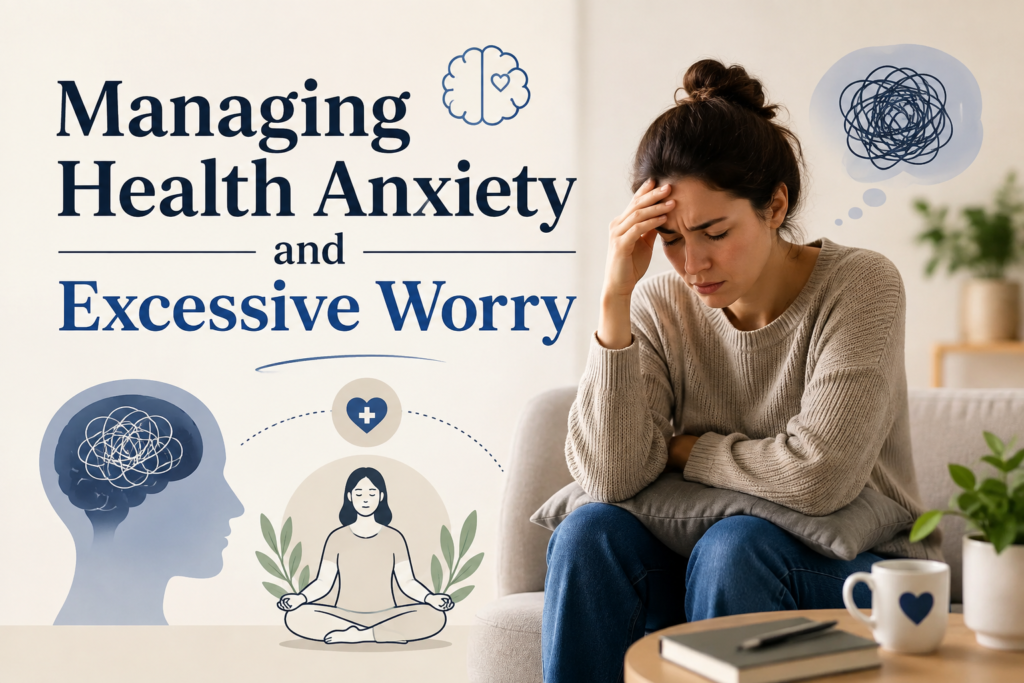
health anxiety treatment Mumbai, illness anxiety disorder, hypochondria counseling, cyberchondria help, health anxiety therapist, somatic symptom therapy, mental health counselor Mumbai
Anxiety & Depression

Managing Health Anxiety and Excessive Worry in Mumbai: A Practical Guide

Mumbai is a city that never stops moving. From the high-stakes corporate environment of Bandra-Kurla Complex (BKC) to the bustling media houses of Andheri and the fast-paced financial districts of South Mumbai, life here moves at an electric, demanding pace. Living in such a high-intensity metropolis means that your mind and body are constantly absorbing sensory stimulation—from traffic congestion and local train crowds to relentless professional deadlines. For many Mumbaikars, this sustained baseline of stress doesn’t just manifest as mental fatigue; it often targets physical health, turning normal bodily sensations into sources of profound terror. If you find yourself constantly checking your pulse, examining every minor ache, endlessly searching online medical forums for scary diagnoses, or worrying that every physical symptom points to a life-threatening illness, you may be experiencing Health Anxiety (Clinically known as Illness Anxiety Disorder). Finding a compassionate and professional mental health counselor in Mumbai can help you step off this exhausting physical and mental roller coaster. What is Health Anxiety (Illness Anxiety Disorder)? Health anxiety involves an obsessive, persistent preoccupation with having or acquiring a serious medical condition. Unlike normal health concerns which prompt you to consult a doctor, follow advice, and move on health anxiety is characterized by a loop of intense doubt and catastrophic thinking. Even when medical tests, blood work, and comprehensive evaluations by doctors in Mumbai come back completely normal, the relief is short-lived. Within days or hours, a new symptom appears—a minor headache, a muscle twitch, or a slight chest tightness and the cycle of panic begins all over again. Key Symptoms of Health Anxiety Health anxiety impacts your daily life across emotional, physical, and behavioral dimensions: 1. Emotional Symptoms 2. Physical Symptoms (Anxiety-Induced) 3. Behavioral Symptoms Why Mumbai’s Urban Environment Intensifies Health Anxiety Living in Mumbai presents unique environmental and psychological catalysts that can fuel health-related fears: Realistic Concern vs. Clinical Health Anxiety Metric / Trait Normal Health Awareness Clinical Health Anxiety Reaction to Symptoms Notes symptoms objectively; seeks medical advice rationally. Panics instantly; jumps to the worst-case fatal conclusion. Response to Doctor Reassurance Feels relieved and accepts clear medical test results. Doubts the doctor’s competence; seeks secondary/tertiary opinions continuously. Trigger Frequency Occasional response to genuine illness or injury. Daily preoccupation triggered by minor, normal bodily shifts. Impact on Quality of Life Minimal; normal daily functioning is preserved. Disrupts work focus, strains relationships, and causes continuous distress. Evidence-Based Treatment and Counseling Pathways Breaking free from health anxiety requires shifting your focus away from physical policing and toward neurological and cognitive retraining. Professional counseling offers structured, compassionate approaches: Clear Guidance Frequently Asked Questions Can anxiety actually cause real physical symptoms in my body? Yes, absolutely. When you experience chronic anxiety, your nervous system releases stress hormones like cortisol and adrenaline. This causes real physical effects, including muscle tension, accelerated heart rate, dizziness, and digestive issues. These are stress symptoms, not signs of a hidden disease. Why don’t doctor reassurances cure my health anxiety? Doctor reassurance provides temporary relief because it treats the external fear (the medical test) rather than the internal psychological mechanism (intolerance of uncertainty). Once the temporary relief fades, the brain seeks reassurance again, keeping the loop alive. What is “cyberchondria” and how does it make health anxiety worse? Cyberchondria is the obsessive searching of medical information online regarding symptoms. Because search engine algorithms and medical forums frequently highlight worst-case scenarios, online searches heavily feed health anxiety and catastrophizing. When should I seek professional help for health anxiety? If health worries consume hours of your day, prompt constant medical checks or web searches, disrupt your sleep, or leave you emotionally exhausted, it is time to seek professional counseling support. Explore Related Mental Health Topics Managing Creative and Corporate Burnout in Mumbai Coping With Financial Stress and Money Anxiety in Mumbai Surviving Urban Loneliness in Mumbai Generalized Anxiety Disorder (GAD) Chronic Overthinking Support Take the First Step Toward a Calm Mind Constant health worry can make everyday life feel like a minefield, but you do not have to fight these fears alone. Professional guidance can help you untangle physical sensations from anxiety, break the cycle of checking, and restore your inner peace. Schedule Your Consultation Today

Anxiety & Depression

Coping With Financial Stress and Money Anxiety in Mumbai

Mumbai is a city of dreams, ambitions, and unmatched energy. It is a place where people arrive with aspirations of building a career, achieving financial stability, and creating a comfortable life. However, behind the glamour of Bollywood, the skyline of Lower Parel, and the corporate offices of BKC lies a harsh reality: the staggering cost of living. From sky-high housing rents in Andheri and Bandra to the daily expenses of commuting across the Mumbai Metropolitan Region (MMR), financial pressure in this metropolis is relentless. If you find yourself constantly worrying about your savings, checking bank balances with dread, feeling anxious about EMIs, or losing sleep over future financial security, you are not alone. Money anxiety and financial stress are widespread psychological burdens in Mumbai. When financial worries cross the line from practical budgeting into chronic anxiety, they begin to heavily impact your mental health, relationships, and physical well-being. Seeking guidance from a professional mental health counselor in Mumbai can help you break the cycle of money-related panic and build emotional resilience. What is Financial Stress and Money Anxiety? Financial stress is the emotional strain caused by money-related challenges—such as debt, unstable income, high cost of living, or lack of savings. When this stress becomes chronic, it develops into money anxiety (or financial anxiety), a state of persistent worry, dread, and physiological arousal linked entirely to financial matters. Unlike standard budgeting concerns, money anxiety can make you feel trapped in a perpetual loop of scarcity, even when you are earning a stable income. It alters your decision-making, strains your personal relationships, and keeps your nervous system in a state of high alert. Key Symptoms of Financial Stress and Anxiety Financial anxiety does not just affect your wallet; it manifests deeply across your emotional, physical, and behavioral health: 1. Emotional Symptoms 2. Physical Symptoms 3. Behavioral Symptoms Why Mumbai’s High-Cost Living Amplifies Money Anxiety Mumbai presents unique economic and social pressures that can severely intensify financial anxiety compared to other cities: Realistic Financial Thinking vs. Money Anxiety Metric / Trait Practical Budgeting & Caution Chronic Money Anxiety Perspective Pragmatic tracking of expenses and savings goals. Catastrophizing; believing financial ruin is always imminent. Decision Making Evaluates purchases based on actual utility and budget. Driven by fear, guilt, restriction, or panic buying. Emotional State Calm and in control during financial planning. Overwhelmed, panicked, or paralyzed when dealing with money. Impact on Life Encourages stability without hurting mental peace. Disrupts sleep, ruins relationships, and impacts productivity. Evidence-Based Treatment and Coping Strategies Overcoming financial anxiety requires addressing the psychological relationship you have with money, rather than just managing spreadsheets. Professional counseling offers safe, effective pathways: Clear Guidance Frequently Asked Questions How does financial stress affect mental health? Chronic financial stress keeps the brain’s stress response activated, leading to elevated cortisol levels. This can trigger clinical anxiety, depressive symptoms, sleep disorders, and severe emotional exhaustion. Can counseling actually help if my problem is a real lack of money? Yes. While a counselor cannot change your bank balance, therapy helps you manage the emotional panic, reduce avoidance behaviors, think more clearly under pressure, and make calmer, more practical financial decisions. Is money anxiety a recognized mental health condition? While “money anxiety” isn’t a standalone diagnosis in medical manuals, it is a very real form of situational and generalized anxiety that frequently overlaps with Generalized Anxiety Disorder (GAD) and chronic stress. When should I seek professional help for financial stress? If financial worries consume your thoughts daily, disrupt your sleep, cause physical health symptoms, or strain your relationships, it is time to seek professional counseling support. Explore Related Mental Health Topics Managing Creative and Corporate Burnout in Mumbai Surviving Urban Loneliness in Mumbai Managing Health Anxiety in Mumbai Generalized Anxiety Disorder (GAD) Chronic Overthinking Support Take the First Step Toward Financial Peace of Mind Financial pressures in Mumbai are heavy, but you do not have to navigate the weight of money anxiety alone. Professional guidance can help you find emotional clarity, regain control, and restore your inner peace. Schedule Your Consultation Today

Recognizing-High-Functioning-Depression-Signs-and-When-to-Seek-Help-in-Delhi
Anxiety & Depression, Mental Wellness

Recognizing High-Functioning Depression: Signs and When to Seek Help in Delhi

Living in a fast-paced metropolitan city like Delhi is exhilarating, but it is also an unrelenting pressure cooker. From battling grueling commutes along the outer ring road and navigating hyper-competitive corporate environments in Connaught Place or Gurgaon to managing academic pressures in student hubs, life here demands constant high performance. For many urban professionals and students, keeping up appearances is a full-time job. You wake up, go to work, attend meetings, meet friends for coffee, and fulfill family obligations. From the outside, your life looks completely put together. Inside, however, you feel completely hollow. If you find yourself functioning on autopilot—checking off every daily task while feeling an underlying, persistent numbness, fatigue, and sadness—you may be experiencing High-Functioning Depression. While it is not an official clinical diagnosis name, it describes individuals struggling with Persistent Depressive Disorder (Dysthymia) who manage to maintain their daily routines despite severe internal distress. Seeking a professional mental health counselor in Delhi can help you uncover why you feel this way and provide a safe, confidential space to heal. What is High-Functioning Depression? Unlike major depressive episodes, which can completely immobilize a person, high-functioning depression allows an individual to keep moving forward. You go to the office, manage your projects, pay your bills, and smile at social gatherings. However, this outward success comes at an immense psychological cost. Every single task requires monumental effort. You aren’t necessarily crying in bed all day; instead, you are dealing with a chronic, low-grade grey cloud that shadows every aspect of your life. Because you appear fine to everyone else, friends, family, and colleagues rarely notice your internal struggle. This leads to profound isolation, as you feel you have to carry your burden completely alone. Key Signs and Symptoms of High-Functioning Depression Because high-functioning depression is subtle, it often goes unrecognized for years. Look out for these emotional, physical, and behavioral warning signs: 1. Emotional Signs 2. Physical Signs 3. Behavioral Signs Why Delhi’s Fast Paced Environment Triggers Persistent Low Moods Delhi NCR presents unique environmental and psychological stressors that can deepen high-functioning depression: Realistic Thinking vs. High-Functioning Depression Metric / Trait Normal Daily Stress High-Functioning Depression Duration Temporary and tied to specific deadlines. Persists unbroken for weeks, months, or years. Emotional Core Joy and relief return once stress passes. Pleasure remains blunted even during positive life events. Internal Experience Tired, but fundamentally connected to life. Functioning mechanically while feeling emotionally dead inside. Self-Perception Recognizes temporary burnout and takes breaks. Blames oneself for not being “strong enough.” Evidence-Based Treatment and Counseling Pathways Recovery from high-functioning depression is entirely possible. Because you have spent years masking your symptoms, therapy provides a vital sanctuary where you can finally take off the mask. Clear Guidance Frequently Asked Questions Can I work and function normally if I have high-functioning depression? Yes. That is the defining characteristic of this condition. You can maintain your job, studies, and relationships, but you do so while experiencing chronic emotional exhaustion and low mood internally. Is high-functioning depression the same as clinical depression? It is closely related. Clinically, it often falls under Persistent Depressive Disorder (Dysthymia)—a chronic form of depression where symptoms are less severe than major depression but last much longer. How do I know if I need counseling or if I am just tired? If your low energy, lack of joy, and fatigue persist for more than two weeks and do not improve with rest, vacation, or time off, it is likely more than standard fatigue and warrants professional support. Will counseling force me to take medications? Not necessarily. As a mental health counselor, therapy focuses primarily on talk therapy, psychological reframing, and behavioral strategies. If medication is ever deemed helpful, a referral to a trusted psychiatrist is discussed collaboratively. Explore Related Mental Health Topics Managing Work Burnout in Delhi Loss of Interest in Life (Anhedonia) Generalized Anxiety Disorder (GAD) Chronic Overthinking Support Building Healthy Self-Esteem Take the First Step Toward Emotional Clarity You do not have to keep carrying the weight of the world in complete silence. If you are ready to move from merely surviving to genuinely living, professional support is available. Schedule Your Consultation Today

Stress Management

Anxiety Treatment in Pune: Professional Counseling & Emotional Wellness

Why Anxiety Is on the Rise in Pune Pune is often called the “Oxford of the East” and India’s IT-education powerhouse and both titles come with pressure. Thousands of students migrate here every year for engineering, medical, and management education, often facing intense academic competition far from family support systems. At the same time, Pune’s booming IT corridors Hinjewadi, Magarpatta, Kharadi keep young professionals locked into high-performance corporate cultures, tight deadlines, and long commutes through increasingly congested traffic. This unique mix of “student city” and “IT city” creates a distinct kind of anxiety: performance pressure, homesickness, career uncertainty, and burnout, often compounded by the loneliness of living away from family. Many Puneites are also navigating rapid lifestyle shifts as the city urbanizes quickly, leaving little room to process stress in healthy ways. If this sounds familiar, anxiety treatment in Pune is available professional, compassionate, and designed around your real life. Symptoms & Warning Signs of Anxiety Mental & Emotional Signs Physical Signs Types of Anxiety Conditions Treated Our anxiety counseling in Pune covers: Evidence-Based Treatment Approach Our clinicians, recognized among the best therapists for anxiety in Pune, use proven, research-backed methods: Treatment is always personalized, never generic — because your anxiety has a unique story behind it. Why Choose Local Therapy in Pune 5 Daily Self-Care Tips for Managing Anxiety Frequently Asked Questions Q1. Where can I find affordable anxiety counseling in Pune? We offer flexible session packages designed for students and working professionals, with both online and in-person options to suit different budgets. Q2. Can students get anxiety treatment in Pune without informing their families? Yes. All sessions are completely confidential, and many students prefer discreet, private support during exam or academic stress. Q3. How effective is online anxiety therapy for Pune’s working professionals? Very effective — online therapy offers the same evidence-based techniques as in-person sessions, fitting easily into demanding IT schedules. Q4. What’s the difference between everyday stress and an anxiety disorder? Stress is usually tied to a specific situation and fades once it resolves. Anxiety disorders involve persistent, often disproportionate worry that interferes with daily functioning — a licensed therapist can help you understand which you’re experiencing. Start Your Journey to Calm Today Whether you’re a student far from home or a professional stretched thin by deadlines, you deserve support that understands your world. Book a confidential anxiety counseling session in Pune and take the first step toward feeling like yourself again. Reach Out Today to Schedule

Anxiety & Depression, Blog

Anxiety Treatment in Hyderabad: Professional Counseling & Emotional Wellness

Why Anxiety Is Rising in Hyderabad Hyderabad has emerged as one of India’s leading IT, pharma, and biotech hubs, drawing professionals from across the country to areas like HITEC City, Gachibowli, and Financial District. This rapid economic growth has brought incredible opportunity — but also mounting pressure. Long working hours, demanding project deadlines, and a highly competitive job market leave many professionals feeling constantly “switched on.” Students preparing for engineering, medical, and civil services exams face intense academic competition, often compounded by family expectations around career success. Meanwhile, Hyderabad’s rapid infrastructural growth has brought increasing traffic congestion, and many residents — especially those who’ve relocated for work — navigate these pressures without the traditional family support systems that once buffered stress. If you’re feeling persistently anxious, mentally fatigued, or unable to switch off even during personal time, anxiety treatment in Hyderabad can help you regain balance and clarity. Symptoms & Warning Signs of Anxiety Mental & Emotional Signs Physical Signs Types of Anxiety Conditions Treated Our anxiety counseling in Hyderabad addresses: Evidence-Based Treatment Approach Recognized among the best therapists for anxiety in Hyderabad, our clinicians use scientifically validated approaches: Each treatment plan is personalized to your unique triggers, career demands, and goals. Why Choose Local Therapy in Hyderabad 5 Daily Self-Care Tips for Managing Anxiety Frequently Asked Questions Q1. How do I find the best therapist for anxiety in Hyderabad? Look for a licensed professional experienced in CBT and workplace or academic anxiety. We offer an initial consultation to match you with the right therapist for your needs. Q2. Can I get anxiety counseling in Hyderabad around demanding IT work hours? Yes, we offer flexible online scheduling, including evening and weekend sessions, to accommodate busy IT and pharma professionals. Q3. Is online therapy effective for students preparing for competitive exams in Hyderabad? Yes, online anxiety counseling is highly effective for managing exam-related stress, offering the same evidence-based techniques as in-person sessions with added convenience. Q4. How many sessions are typically needed to manage anxiety effectively? Most clients notice meaningful improvement within 4–6 sessions, with continued support available depending on individual needs. Take the First Step Toward Calm Whether it’s career pressure, exam stress, or the demands of city life, you don’t have to face it alone. Book a confidential anxiety counseling session in Hyderabad today — online or in-person — and begin your journey toward lasting emotional wellness. Schedule Your Appointment Now

Anxiety & Depression, Blog

5 Gentle Ways to Calm an Anxiety Spike Right Now

Have you ever felt your heart race, your chest tighten, or your thoughts spiral out of control out of nowhere? Anxiety spikes can be overwhelming, making you feel disconnected from your surroundings. If you are experiencing a moment of high stress or anxiety right now, take a deep breath. Here are 5 quick, grounded techniques to help bring you back to the present moment. 1. The 5-4-3-2-1 Grounding Technique Engage your physical senses to interrupt the anxiety loop in your mind: 2. Try Box Breathing (4×4) Control your breath to signal to your nervous system that you are safe: 3. Change Your Physical Temperature A sudden shift in temperature can reset an overactive nervous system. Splash cold water on your face, hold an ice cube in your palm, or take a warm shower. 4. Write Down Your “Brain Dump” When thoughts are racing, holding them in your head increases panic. Grab a piece of paper and write down every single thought without worrying about spelling or grammar. Getting it out on paper reduces its power over you. A Gentle Reminder: You don’t have to fix everything today. Take things one breath, one minute, and one step at a time.

Blog, Mental Illness Posts

Understanding Mental Illness: 5 Common Myths vs. Science-Backed Facts

Mental health is just as important as physical health, yet mental illness remains one of the most misunderstood topics today. Misconceptions often prevent people from seeking the help they need. To build a more empathetic society, we must separate stigma from scientific reality. Here are 5 common myths about mental illness—debunked. Myth 1: Mental illness is a sign of weakness. Fact: Mental health conditions are medical issues, not character flaws. Just like diabetes or heart disease, mental illnesses are complex conditions influenced by genetics, brain chemistry, life experiences, and trauma. Wanting to “snap out of it” isn’t enough—proper care and support are essential. Myth 2: People with mental illness are unpredictable or dangerous. Fact: The vast majority of people with mental health conditions are active, peaceful members of society. In reality, individuals living with severe mental illnesses are far more likely to be victims of violence rather than perpetrators. Myth 3: Therapy and psychiatric care are only for extreme cases. Fact: Seeking professional support early prevents minor struggles from escalating. Therapy provides tools for stress management, emotional regulation, and self-awareness. You don’t need to reach a crisis point before speaking with a professional.

Scroll to Top