
Relationship Issues

Managing Creative and Corporate Burnout in Mumbai: A Mental Health Guide
Anxiety & Depression, Depression, Mental Wellness, Relationship Issues, Stress Management

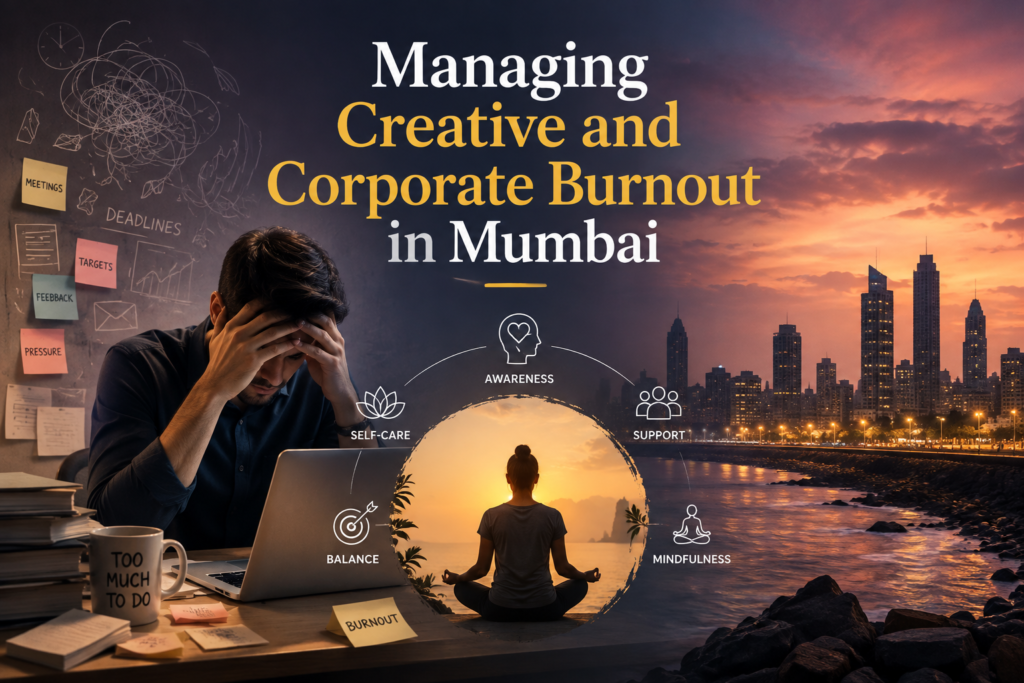
Managing Creative and Corporate Burnout in Mumbai

Mumbai is a city fueled by an unrelenting current of ambition. Whether you are navigating the high-stakes boardroom meetings in Bandra-Kurla Complex (BKC), managing frantic deadlines at media houses in Lower Parel, or chasing freelance creative projects across Andheri, life here moves at a breakneck speed. For many Mumbaikars, the line between passion and exhaustion blur entirely. You wake up early, battle the local train rush or Western Express Highway traffic, push through twelve-hour workdays, and return home only to answer late-night emails. From the outside, you look successful, driven, and productive. Inside, however, your tank is completely empty. If you feel a persistent, crushing mental fatigue, a loss of passion for work you once loved, and a deep emotional detachment from your daily life, you may be experiencing severe burnout. Seeking professional creative and corporate burnout counseling in Mumbai can help you reclaim your energy, establish sustainable boundaries, and restore your mental peace. What is Creative and Corporate Burnout? Burnout is not just standard physical tiredness that goes away after a good weekend sleep. Recognized clinically as a state of emotional, physical, and mental exhaustion caused by excessive and prolonged stress, it hits working professionals and creators uniquely hard. In a hyper-competitive city like Mumbai, burnout is frequently worn as a badge of honor. People normalize chronic exhaustion until it manifests as physical illness, anxiety, or clinical depression. Key Signs and Symptoms of Burnout Burnout creeps up slowly, disguising itself as “just a busy week” until it completely takes over your daily life. Look out for these warning signs: 1. Emotional Signs 2. Physical Signs 3. Behavioral Signs Why Mumbai Amplifies Burnout Culture Mumbai presents distinct environmental, structural, and cultural triggers that deepen chronic fatigue: Realistic Workplace Stress vs. Clinical Burnout Metric / Trait Normal Daily Work Stress Clinical Burnout Emotional State Hyperactive; you feel anxious and urgent about getting things done. Helpless, hopeless, and emotionally blunted; you feel empty. Physical Toll Tiredness that usually improves with a weekend break or vacation. Deep-seated exhaustion that persists even after taking time off. Impact on Output You try harder, work longer, and push through tasks. Productivity plummets; tasks that took minutes now feel impossible. Enjoyment Stress temporarily reduces fun, but joy returns once work ends. Passion and pleasure are completely stripped away from hobbies and work. Evidence-Based Recovery and Counseling Pathways Healing from burnout requires more than just a weekend getaway to Goa or Lonavala. It requires a fundamental restructuring of your psychological boundaries, cognitive patterns, and work habits. Professional guidance offers safe, structured support: Clear Guidance Frequently Asked Questions How long does it take to recover from severe burnout? Recovery varies from person to person. While acute physical exhaustion can improve within a few weeks of rest, rewiring deep mental burnout, emotional exhaustion, and work habits through counseling typically takes a few months of consistent support. Can burnout turn into clinical depression? Yes. If left unaddressed, chronic burnout keeps stress hormones elevated for too long, which can trigger clinical depression, generalized anxiety, and severe sleep disorders. Do I need to quit my job in Mumbai to heal from burnout? Not necessarily. While some situations require a career change, many professionals heal by learning how to set firm professional boundaries, changing internal thought patterns, and restructuring their relationship with work while staying in their roles. When should I seek professional counseling for burnout? If your exhaustion persists for weeks, impacts your physical health, ruins your personal relationships, and leaves you feeling completely detached from life, it is time to seek professional support. Explore Related Mental Health Topics Coping With Financial Stress and Money Anxiety in Mumbai Managing Health Anxiety in Mumbai Surviving Urban Loneliness in Mumbai Generalized Anxiety Disorder (GAD) Chronic Overthinking Support Take the First Step Toward Sustainable Balance You do not have to sacrifice your mental health and well-being on the altar of productivity. Reclaiming your energy and joy is possible with the right professional guidance. Schedule Your Consultation Today

Struggling with communication breakdowns or frequent fights in Delhi? Discover expert relationship counseling and couples therapy to rebuild trust and harmony.
Relationship Issues

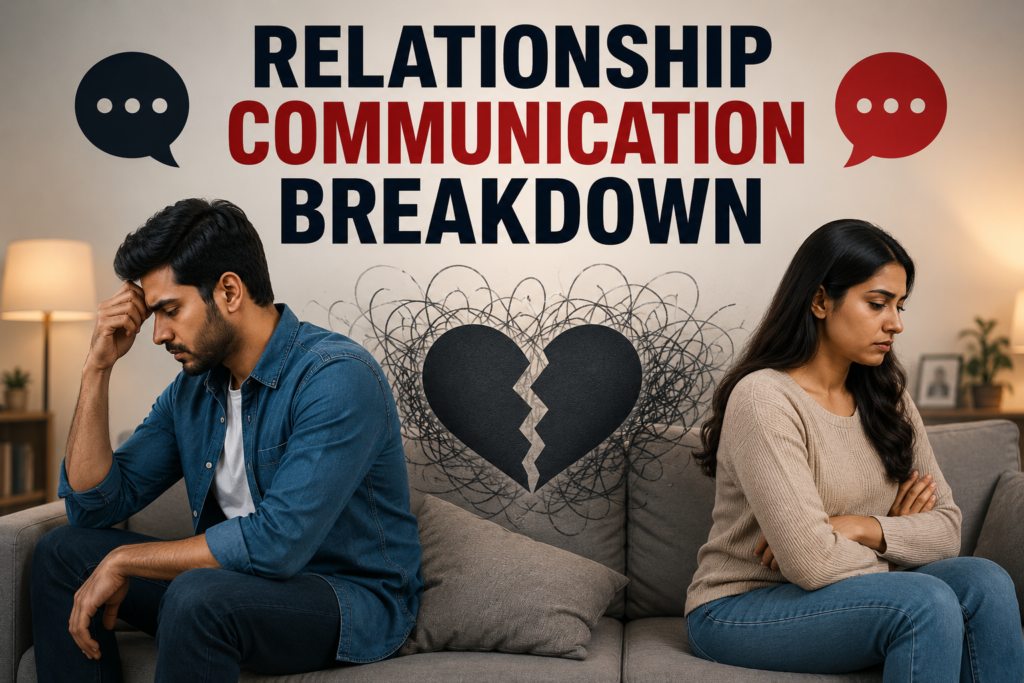
Relationship Communication Breakdown: Why It Happens in Delhi and How Counseling Helps

Delhi is a city built on contrast – the corporate hustle of Connaught Place, the academic energy of North Campus, the family-first culture of Rohini and Dwarka, the quieter professional pockets of South Delhi and Vasant Kunj. Across all of these, one pattern shows up again and again in my practice: couples and families who live together, eat together, manage the same home — and still feel like strangers by 9 PM. If conversations with your partner keep turning into arguments, or worse, into silence, you’re not imagining it. This is a relationship communication breakdown, and it’s one of the most common reasons people in Delhi seek relationship counseling. What a Communication Breakdown Actually Looks Like Every couple argues — that’s normal. A breakdown is different. It’s when conversations stop being about solving the problem and start being about winning it, or avoiding it altogether. In sessions, this usually shows up as one (or more) of these patterns: 1. The blame-and-defend loop A small comment — “you forgot to pay the electricity bill” — turns into “you never think about this house.” Both partners switch into defense mode, and the actual issue never gets addressed. 2. Stonewalling One partner goes quiet, leaves the room, or simply stops responding. It feels like it ends the fight, but it actually starves the relationship of the engagement it needs to repair. 3. Scorekeeping Old arguments resurface in new ones — “this is just like what happened in 2022” — because the original hurt was never actually resolved, just paused. 4. Conversational avoidance Finances, in-laws, career plans, even intimacy — these topics quietly disappear from conversation because both partners expect them to end in a fight. What’s left is logistics: bills, schedules, groceries. Partners start functioning more like co-managers of a household than a couple. Why This Shows Up So Often in Delhi Specifically A few things about life in Delhi NCR make communication breakdowns more likely, or make existing ones worse: None of these are unique to Delhi, but the combination — long commutes, joint-family proximity, and high social visibility — is a specific local pressure cooker. Healthy vs. Breakdown Communication Healthy Communication Communication Breakdown Goal Understand each other, find a solution Win the argument, prove a point Language “I feel…” statements “You always / you never” statements When overwhelmed Pause, come back to it calmly Escalate until someone shuts down or explodes Outcome Both feel heard Both feel defensive or unseen How Relationship Counseling Actually Helps Counseling isn’t about deciding who’s “right.” A structured, neutral process does three specific things: 1. Creates a space where both people can speak without it turning into a fight. A counselor manages the pace of the conversation so both partners can actually finish a sentence. 2. Identifies what the fight is really about. Most recurring arguments about chores, money, or in-laws are proxies for an underlying need — feeling appreciated, feeling secure, feeling like a priority. Counseling helps name that need directly instead of fighting about its surface symptom. 3. Builds specific tools, not just insight. Depending on the approach used, this can include structured communication exercises (like the Gottman Method’s “soft startup” technique, which trains partners to raise an issue without criticism or contempt), boundary-setting frameworks for in-law conflicts, and repair strategies to use right after an argument instead of days later. Individual Counseling, If Your Partner Won’t Come Couples counseling works best when both partners attend, but it’s not a requirement to start. Working one-on-one with a counselor still helps you change how you respond in the pattern, set clearer boundaries, and often shifts the dynamic even if your partner never sits in the room. Online vs. In-Person Sessions Given Delhi’s traffic and commute realities, many practices – including ours – offer both in-person sessions and secure online video sessions. Online sessions are often a practical starting point for couples juggling long work hours, especially when one partner is more hesitant to begin. Clear Guidance Frequently Asked Questions Can a relationship recover after years of poor communication? Yes — patterns that have been in place for years can shift, but it takes both partners being willing to look at their own role, not just their partner’s. What if my partner refuses to attend counseling with me? Start individually. It’s genuinely useful on its own, not just a fallback option. How do we stop fighting over small, everyday things? Small arguments (chores, schedules) are usually standing in for a bigger unmet need — appreciation, security, attention. Counseling helps you get to that underlying need instead of re-fighting the same surface issue. Is couples counseling only for relationships in crisis? No. Many couples come in proactively — before a wedding, before a major life change, or simply to strengthen communication before small issues become bigger ones. How many sessions does it usually take to see a difference? This varies by couple, but most people notice a shift in how arguments unfold within the first few sessions, once specific communication tools are introduced. Do you see couples from Gurgaon and Noida as well, or only Delhi? Online sessions are available for couples across Delhi NCR (including Gurgaon and Noida), alongside in-person counseling options in Delhi. Take the First Step Toward Relationship Harmony If you recognize your relationship in this pattern, you don’t have to work through it alone. Talk through what’s going on — for you individually or with your partner. Schedule Your Consultation Today

Scroll to Top