
How Long Does Depression Treatment Take?
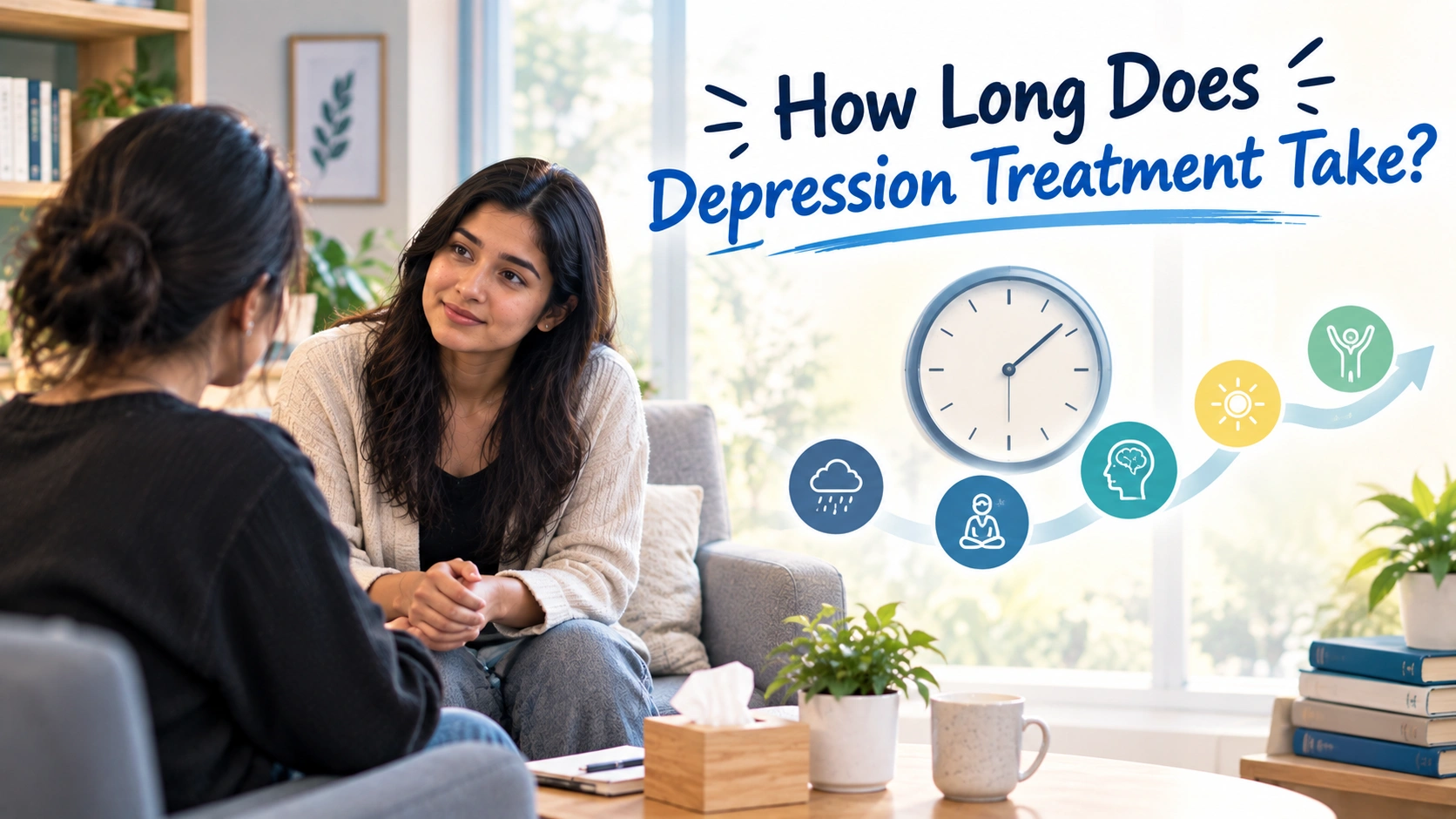
One of the most common questions people have after considering professional support is: “How long does depression treatment take?”
There is no single timeline that applies to everyone. Some people may begin noticing changes relatively early, while others may need longer-term support. Depression can vary significantly in its symptoms, severity, duration, and underlying circumstances, so the length of treatment depends on the individual.
Depression treatment is also not simply about making sadness disappear. It may involve understanding emotional difficulties, working with negative thoughts, rebuilding motivation, improving daily functioning, and developing healthier ways of coping.
Understanding what can influence the treatment timeline can help you approach the process with realistic expectations.
Table of Contents
- How Long Does Depression Treatment Take?
- Why Does Depression Treatment Take Different Amounts of Time?
- When Can You Start Noticing Improvement?
- Does Depression Treatment Work Quickly?
- How Many Therapy Sessions Are Needed for Depression?
- How Does CBT Affect the Treatment Timeline?
- What Can Make Depression Treatment Take Longer?
- What Can Help You Make Progress?
- Can Depression Come Back After Treatment?
- Can Depression Treatment Be Done Online?
- When Should You Seek Professional Help?
- FAQs
- Final Thoughts
How Long Does Depression Treatment Take?
There is no fixed duration for depression treatment.
The appropriate treatment period can range from relatively short-term support to longer-term care, depending on the person’s situation.
Several factors can influence how long treatment takes, including severity of symptoms, how long symptoms have been present, individual circumstances, treatment approach, personal goals, response to therapy, other emotional or psychological difficulties, and support available outside therapy.
For some people, early improvements may include better understanding of their emotions, improved daily functioning, or feeling more capable of managing difficult thoughts. For others, progress may take more time.
The goal should not be to finish treatment as quickly as possible. The focus should be on meaningful and sustainable improvement.
Why Does Depression Treatment Take Different Amounts of Time?
Depression isn’t the same experience for everyone.
Two people may both describe themselves as depressed but have very different symptoms and circumstances. One person may be struggling primarily with low motivation and negative thinking after a stressful period. Another person may have experienced symptoms for a long time and be dealing with significant changes in sleep, relationships, work, and daily functioning.
Because of these differences, treatment needs to be individualized. A mental health professional can help determine what areas need attention and how progress should be evaluated.
When Can You Start Noticing Improvement?
There is no guaranteed point at which everyone begins to feel better.
Some people may notice early changes such as understanding their emotions more clearly, recognizing negative thought patterns, feeling slightly more motivated, sleeping more consistently, communicating more openly, or feeling more capable of handling stressful situations.
These early changes can be encouraging, but they don’t necessarily mean that treatment is complete.
Depression recovery often involves gradual progress. You may have days when you feel better and other days when symptoms return temporarily. This doesn’t automatically mean that treatment isn’t working.
Does Depression Treatment Work Quickly?
Depression treatment usually shouldn’t be viewed as an instant solution.
The first part of therapy may involve understanding your concerns and identifying patterns that are affecting your emotional wellbeing. After that, treatment may gradually focus on specific goals.
For example, someone struggling with low motivation may first work on establishing a manageable routine. Someone experiencing persistent negative thinking may focus more on recognizing and examining those thoughts. Someone experiencing relationship difficulties may work on communication and emotional boundaries.
The timeline depends on what needs to be addressed.

How Many Therapy Sessions Are Needed for Depression?
There is no universal number of therapy sessions for depression. The number can depend on your symptoms, your goals, how long you’ve been experiencing difficulties, the type of therapy, your progress, and your personal circumstances.
Some people may benefit from a shorter course of therapy, while others may need ongoing support. It is also possible for the focus of therapy to change over time.
Early sessions may focus on understanding depression and stabilizing daily functioning, while later sessions may focus on maintaining progress and preventing old patterns from returning.
How Does CBT Affect the Treatment Timeline?
Cognitive Behavioral Therapy (CBT) is a commonly used psychological approach for depression.
CBT focuses on the relationship between thoughts, feelings, and behaviors. For example, depression may lead someone to think: “I’m not capable of doing anything properly.” That thought can contribute to low mood and reduced motivation. The person may then avoid activities, which can reinforce the negative belief.
CBT can help identify these patterns and develop more balanced ways of thinking and behaving.
The number and frequency of sessions can vary. There is no guarantee that CBT will take a particular number of weeks or sessions for every person.
What Can Make Depression Treatment Take Longer?
Several factors can influence the treatment timeline.
- Long-Standing Symptoms: If depression-related difficulties have been present for a long time, it may take time to understand and address the patterns involved.
- More Severe Symptoms: More significant symptoms may require a more comprehensive treatment plan and closer professional support.
- Multiple Concerns: Depression may occur alongside anxiety, sleep problems, relationship difficulties, chronic stress, or other concerns. When several areas need attention, treatment may naturally take longer.
- Difficulty Maintaining Changes: Therapy often involves practicing new strategies outside sessions. If changes are difficult to maintain because of work, family responsibilities, stress, or other circumstances, progress may take longer.
- Individual Differences: People respond differently to therapy. A strategy that works quickly for one person may take more time for another.
What Can Help You Make Progress?
Although there is no way to guarantee a specific treatment timeline, several things can support the process.
- Attend Sessions Consistently: Regular participation can help maintain continuity and make it easier to work toward your goals.
- Be Open With Your Therapist: If something isn’t helping, tell your therapist. Honest feedback can help you and your therapist adjust the approach.
- Practice Between Sessions: Depending on the therapy approach, you may have exercises or strategies to practice outside sessions. Applying what you learn in everyday situations can help connect therapy with real-life challenges.
- Set Realistic Goals: Trying to change everything at once can feel overwhelming. Small, achievable goals can make progress easier to manage.
- Maintain a Supportive Routine: Sleep, physical activity, social connection, and a manageable daily routine can support overall wellbeing. These habits aren’t a replacement for professional treatment, but they can complement it.
Can Depression Come Back After Treatment?
Depression symptoms can return for some people. This doesn’t mean that previous treatment was unsuccessful.
Mental health can change over time, and new stressors or life circumstances can sometimes contribute to the return of symptoms. Therapy can also involve learning how to recognize early changes and develop strategies for responding to them.
If you notice that symptoms are returning, discussing them with a mental health professional can help you decide what support may be appropriate.

Can Depression Treatment Be Done Online?
Yes, online counseling can be an option for some people experiencing depression-related difficulties.
Online sessions allow you to communicate with a mental health professional remotely instead of traveling to a physical clinic. A typical online session may involve discussing current concerns, exploring thoughts and emotions, reviewing progress, identifying challenges, developing coping strategies, and working toward personal goals.
Online counseling can be convenient, but it isn’t appropriate for every situation. If someone is experiencing an immediate mental health crisis or is unable to keep themselves safe, urgent professional or emergency support may be more appropriate.
When Should You Seek Professional Help?
You don’t need to wait until you know exactly how long your depression has been present before seeking support.
Consider speaking with a qualified mental health professional if you are experiencing persistent low mood, loss of interest, low motivation, negative thinking, emotional exhaustion, sleep difficulties, concentration problems, social withdrawal, or difficulty managing everyday responsibilities.
Professional support may be especially important when these difficulties are affecting your work, studies, relationships, self-care, or overall quality of life.
FAQs
How long does depression treatment take?
How long does depression therapy take to work?
How many sessions are needed to treat depression?
Can depression be treated in a few weeks?
Does CBT take a long time for depression?
Can depression treatment take several months?
Can depression treatment be done online?
Explore Related Mental Health Topics
Explore Online Depression Treatment Across Cities
Connect with confidential, professional mental health counseling and therapy tailored for your city, available from the comfort of your home.
Bhopal
Professional counseling & online therapy support in Bhopal.
Bengaluru
Expert online mental health care tailored for Bengaluru.
Delhi
Confidential depression treatment and counseling in Delhi.
Mumbai
Specialized therapy and online support across Mumbai.
Pune
Professional depression counseling and online guidance in Pune.
Hyderabad
Accessible online depression therapy and support in Hyderabad.
Noida
Dedicated online mental health and counseling for Noida.
Gurugram
Professional depression therapy and counseling in Gurugram.