
Can Anxiety Be Managed Without Medication?
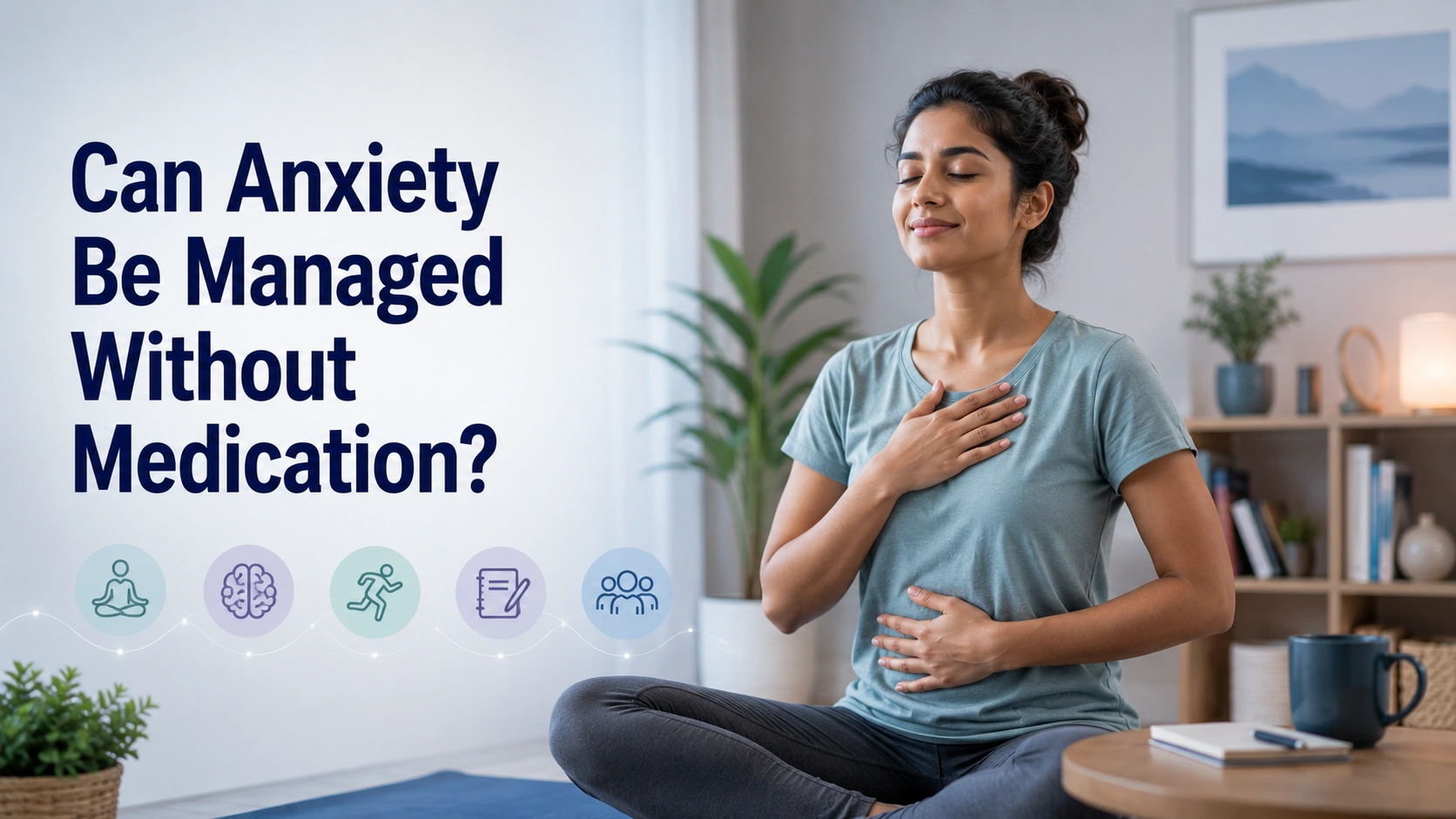
When people experience anxiety, one of the first questions they often ask is: “Do I need medication, or can I manage anxiety without it?”
The answer is: sometimes, anxiety can be managed without medication, particularly when symptoms are mild, situational, or when psychological approaches and lifestyle changes are appropriate. Counseling and psychotherapy can also play an important role in learning how to understand and manage anxiety.
However, there is no single treatment that works for everyone. Some people may benefit from therapy alone, while others may need medication, psychiatric evaluation, or a combination of treatment approaches.
The right choice depends on the type, severity, duration, and impact of anxiety, along with your individual circumstances.
What Does “Managing Anxiety Without Medication” Mean?
Managing anxiety without medication does not mean simply ignoring your symptoms or telling yourself to “stop worrying.”
It means learning to understand your anxiety and developing healthier ways to respond to anxious thoughts, emotions, physical sensations, and stressful situations.
Non-medication approaches may include:
- Counseling or psychotherapy
- Cognitive behavioral therapy (CBT)
- Relaxation techniques
- Regular physical activity
- Better sleep habits
- Stress management
- Mindfulness
- Breathing exercises
- Identifying anxiety triggers
- Reducing avoidance behaviors
- Building supportive relationships
For some people, these approaches can significantly improve their ability to manage anxiety.
Can Mild Anxiety Be Managed Without Medication?
In some cases, yes.
Everyone experiences anxiety from time to time. If anxiety is temporary and connected to a particular situation, making changes to your routine and learning coping strategies may be enough.
For example, you might feel anxious because of an upcoming exam, a job interview, a major life change, relationship difficulties, work pressure, financial stress, or an important presentation.
When the stressful situation passes, anxiety may naturally reduce.
However, if anxiety continues for a long time or begins interfering with your everyday life, professional assessment can help determine what type of support may be appropriate.
1. Counseling and Psychotherapy
One of the most important non-medication approaches to anxiety is psychological therapy.
Therapy provides a structured environment where you can explore what triggers your anxiety, why certain situations feel threatening, patterns of overthinking, avoidance behaviors, physical symptoms, fear and uncertainty, and stress in your daily life.
Rather than simply trying to eliminate anxious feelings, therapy can help you develop healthier ways of responding to them.
2. Cognitive Behavioral Therapy (CBT)
Cognitive behavioral therapy, commonly called CBT, is a psychological approach frequently used for anxiety.
CBT looks at the connection between Thoughts → Feelings → Behaviors.
For example: “Something bad will happen.” → Fear and anxiety → Avoiding the situation → Temporary relief → Fear continues.
Therapy can help you recognize these patterns and gradually develop more balanced ways of thinking and responding.
CBT may be useful for different anxiety-related concerns, depending on the person’s individual situation.
3. Learn to Recognize Anxious Thoughts
Anxiety can make ordinary uncertainty feel like a serious threat.
You may find yourself thinking: “What if everything goes wrong?”, “What if people judge me?”, “What if something is wrong with my health?”, or “What if I make a mistake?”
The goal isn’t to force yourself to think positively all the time.
Instead, try learning to recognize: “This is an anxious thought, not necessarily a fact.”
Creating some distance between yourself and the thought can make it easier to respond rather than react automatically.
4. Avoid Constant Reassurance-Seeking
When people feel anxious, they may repeatedly ask others for reassurance, such as: “Are you sure everything is okay?”, “Do you think something bad will happen?”, or “Are you sure I’m not sick?”
Reassurance may provide temporary relief, but constantly seeking it can sometimes keep the anxiety cycle going.
Therapy can help you gradually become more comfortable with uncertainty instead of needing constant confirmation that everything will be okay.
5. Practice Mindfulness
Mindfulness involves paying attention to the present moment rather than becoming completely absorbed in worries about the past or future.
For example, instead of spending ten minutes thinking: “What if tomorrow goes badly?” you can bring your attention back to what is happening right now by noticing your breathing, surroundings, sounds, physical sensations, or what you are currently doing.
Mindfulness does not mean that anxious thoughts will disappear. It can help you change how much attention and importance you give them.

6. Use Relaxation and Breathing Techniques
Anxiety can activate the body’s stress response. Some people find relaxation techniques helpful for managing physical tension.
You might try slow, comfortable breathing, progressive muscle relaxation, gentle stretching, guided relaxation, or mindfulness exercises.
The purpose isn’t to force anxiety to disappear immediately. Instead, these techniques can help your body move toward a calmer state.
7. Exercise Regularly
Physical activity can be a useful part of overall mental well-being. Regular exercise may help reduce stress and support better sleep and mood.
You don’t necessarily need an intense workout. Depending on your health and fitness level, activities such as walking, cycling, yoga, swimming, jogging, or strength training can be incorporated into a healthy routine.
The important thing is consistency rather than perfection.
8. Improve Your Sleep Routine
Anxiety and poor sleep can influence each other. When you’re tired, you may find it harder to regulate emotions and manage stressful thoughts.
Try maintaining a consistent sleep and wake schedule and creating a calmer routine before bedtime, such as reducing stimulating activities, keeping your bedroom comfortable, avoiding excessive screen use, and addressing worries before getting into bed.
If anxiety is regularly interfering with your sleep, professional support may be useful.
9. Reduce Excessive Caffeine
Caffeine can increase feelings such as alertness, restlessness, or a racing heartbeat in some people.
If you already experience anxiety, consuming large amounts of caffeine may make certain sensations more noticeable.
Consider paying attention to how your body responds to coffee, energy drinks, strong tea, or other caffeinated beverages. You don’t necessarily have to eliminate caffeine completely; the important thing is understanding whether it appears to make your anxiety worse.
10. Stop Fighting Every Anxious Thought
One common mistake is trying to completely eliminate anxiety. You may think: “I must stop feeling anxious.” But becoming frightened by anxiety itself can create another layer of worry.
Instead, you can practice acknowledging the feeling: “I am feeling anxious right now. I can allow the feeling to be present while I continue with what I’m doing.”
Learning that anxiety is uncomfortable but manageable can gradually change your relationship with anxious sensations.
Can Anxiety Be Managed Without Medication Permanently?
There is no guarantee that anxiety will never return. People can experience anxiety again during stressful periods, major life changes, health concerns, relationship problems, or other difficult circumstances.
The goal of psychological treatment isn’t necessarily to ensure that you never feel anxious again. A more realistic goal is to develop skills that help you recognize anxiety early, understand your triggers, respond to anxious thoughts differently, reduce avoidance, handle uncertainty, recover from stressful periods, and continue daily activities despite manageable anxiety.
These skills can remain useful even after formal therapy ends.
When Is Medication Sometimes Considered?
Although anxiety can sometimes be managed without medication, medication may be appropriate for some people.
A doctor or psychiatrist may consider medication depending on factors such as severity of symptoms, duration of anxiety, level of impairment, response to psychotherapy, other mental health or medical considerations, and individual treatment preferences.
Is Therapy Better Than Medication for Anxiety?
It’s not helpful to think of therapy and medication as competitors.
For some people, therapy may be sufficient. For others, medication may be recommended. Some people may benefit from both.
The appropriate approach depends on the person’s symptoms, circumstances, preferences, and professional assessment. A qualified mental health professional can help you understand the available options.
When Should You Seek Professional Anxiety Treatment?
Consider professional support if anxiety happens frequently, is difficult to control, interferes with sleep, affects work or studies, causes repeated panic attacks, makes you avoid everyday situations, affects your relationships, leads to constant overthinking, causes persistent health-related fears, or has continued despite your attempts to manage it.
You don’t need to wait until anxiety becomes severe before seeking help.
What If Physical Symptoms Are Part of Your Anxiety?
Anxiety can be associated with physical symptoms such as a racing heartbeat, muscle tension, sweating, trembling, headaches, stomach discomfort, dizziness, changes in breathing, and fatigue.
However, physical symptoms should not automatically be assumed to be anxiety.
If you experience new, severe, persistent, or unexplained symptoms, appropriate medical evaluation is important. A mental health professional can then help if anxiety is contributing to the symptoms.
Can Online Anxiety Counseling Help Without Medication?
Yes, online counseling can be an option for people who prefer to receive psychological support from home.
Online counseling may help you work on concerns such as anxiety, overthinking, stress, panic-related concerns, sleep difficulties, health anxiety, and social anxiety.
Depending on your individual situation, a mental health professional can help you understand your symptoms and develop appropriate coping strategies. Online counseling can also be convenient for people who live in different cities or prefer remote consultations.
Online Anxiety Counseling With Vaibhav Mishra
If anxiety is affecting your thoughts, sleep, relationships, work, or everyday activities, you don’t necessarily have to manage it alone.
Vaibhav Mishra provides online anxiety counseling for anxiety, overthinking, stress, panic-related concerns, and other emotional challenges.
Through online counseling, you can discuss what you’re experiencing and explore practical strategies based on your individual needs.
Take the First Step
You don’t have to decide on medication before seeking help. The first step can simply be talking to a qualified mental health professional about what you’re experiencing.