
Depression After a Major Life Change
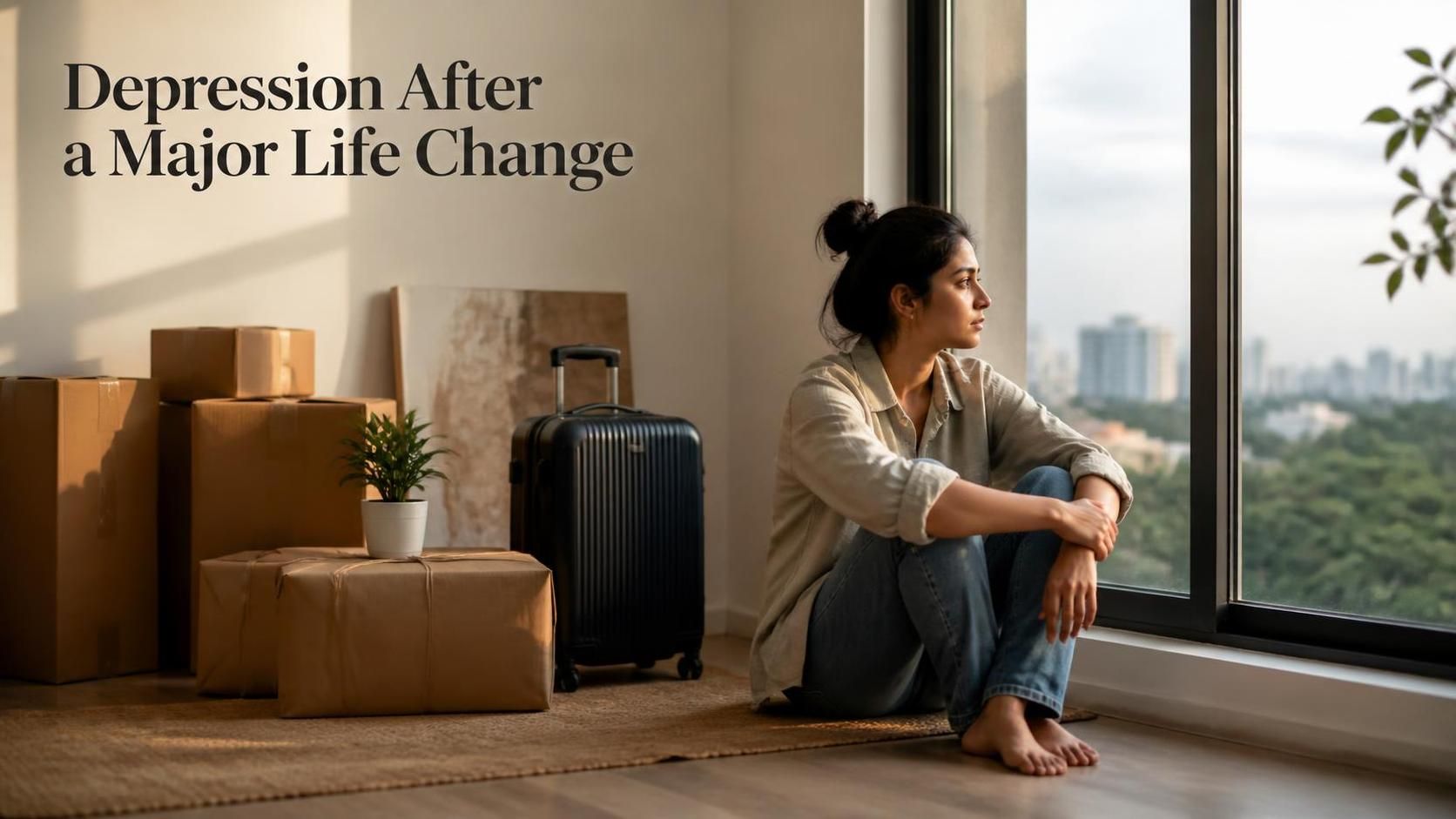
Major life changes can affect your emotional wellbeing in ways you may not expect. A new job, relationship ending, marriage, moving to another city, financial difficulties, loss of a loved one, becoming a parent, retirement, or another major transition can bring stress, uncertainty, and emotional exhaustion.
For some people, these feelings gradually settle as they adjust to the new situation. For others, the emotional impact can become persistent and beginning affecting sleep, motivation, relationships, work, or everyday life. In some cases, a major life change may contribute to depression.
But feeling low after a difficult event does not automatically mean you have depression. What matters is the nature, persistence, intensity, and impact of what you are experiencing.
Table of Contents
- Can a Major Life Change Cause Depression?
- Why Can Life Changes Feel So Emotionally Difficult?
- What Does Depression After a Major Life Change Look Like?
- Depression vs a Normal Reaction to Change
- Can a Positive Life Change Also Lead to Depression?
- How Can a Major Loss Affect Depression?
- How Does a Major Life Change Affect Daily Routine?
- Can Overthinking Make Depression After a Life Change Worse?
- What Can Help When You’re Feeling Depressed After a Major Change?
- When Should You Consider Counseling for Depression After a Life Change?
- How Can Depression Counseling Help After a Major Life Change?
- Can Online Counseling Help With Depression After a Major Life Change?
- When Should Depression After a Life Change Be Taken Seriously?
- FAQs
- Final Thoughts
Can a Major Life Change Cause Depression?
A major life change does not necessarily cause depression by itself. However, significant changes can create emotional stress that may contribute to depressive symptoms, particularly when the change involves loss, uncertainty, isolation, financial pressure, relationship difficulties, or a disruption of everyday life.
For example, someone who moves away from family for work may initially feel lonely and disconnected. Someone going through a divorce may struggle with sadness, uncertainty, and changes in their daily routine. A person who loses a job may experience financial worries along with a loss of confidence and purpose.
These reactions can be understandable responses to difficult circumstances. However, when low mood and other symptoms persist or increasingly interfere with everyday functioning, professional support may be helpful.
Why Can Life Changes Feel So Emotionally Difficult?
Major changes often affect several parts of life at the same time.
You may lose familiar routines, relationships, responsibilities, surroundings, or expectations about the future. Even a positive event can create emotional pressure because adapting to something new requires time and energy.
A person may think: “Everything has changed, and I don’t feel like myself anymore.”
This can happen after both positive and negative transitions. Starting a new job, for example, may bring excitement but also pressure, uncertainty, and exhaustion. Becoming a parent can be meaningful while also changing sleep, responsibilities, relationships, and personal time.
The emotional response depends on the individual and the circumstances surrounding the change.
What Does Depression After a Major Life Change Look Like?
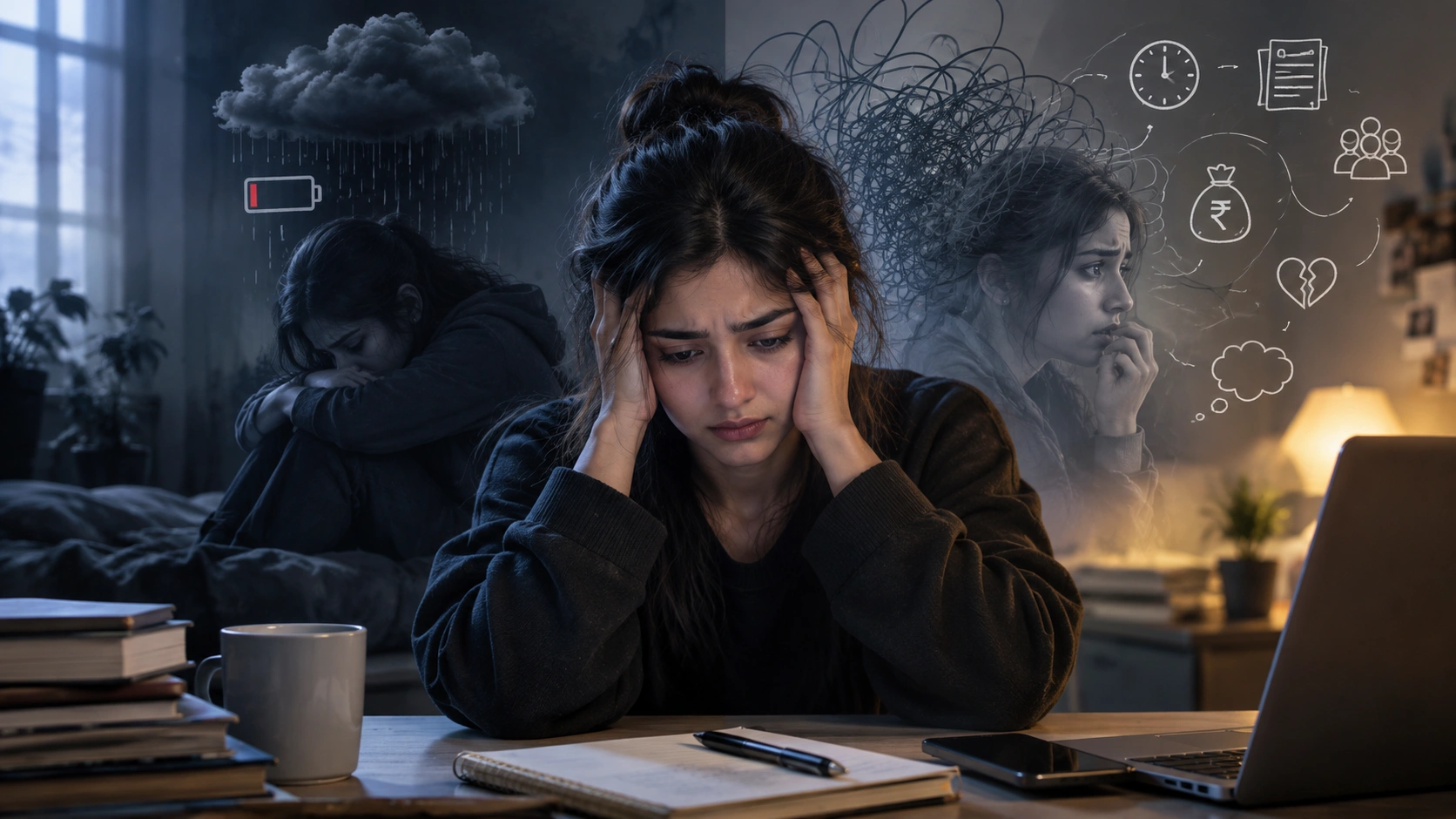
Depression can affect people differently, but some common changes may include:
- Feeling persistently sad, empty, or emotionally numb
- Losing interest in activities you previously enjoyed
- Feeling tired or lacking energy
- Sleeping much more or much less than usual
- Changes in appetite or eating habits
- Difficulty concentrating
- Feeling hopeless about the future
- Becoming increasingly withdrawn from other people
- Losing motivation to complete everyday tasks
- Experiencing strong guilt or self-criticism
- Finding it difficult to experience pleasure
Having one of these experiences does not automatically mean someone has depression. The overall pattern and its effect on daily life matter.
Depression vs a Normal Reaction to Change
One of the most common questions people have is whether they are experiencing depression or simply struggling to adjust.
There is no single symptom that provides the answer.
After a major life event, it is natural to experience sadness, disappointment, frustration, grief, worry, or uncertainty. Emotional ups and downs can occur while someone gradually adapts.
Depression can be more concerning when symptoms become persistent, increasingly intense, or begin interfering substantially with important areas of life.
For example, someone dealing with a breakup may feel sad for a while but continue working, meeting friends, and gradually adapting. Another person might become increasingly isolated, lose interest in almost everything, struggle to get through ordinary responsibilities, and feel increasingly hopeless. The second situation may warrant professional assessment.
Can a Positive Life Change Also Lead to Depression?
Yes. Emotional difficulties do not happen only after negative events. A major positive transition can still involve stress and adjustment.
Examples include getting married, starting a new career, moving for a better opportunity, becoming a parent, getting promoted, starting college, retirement, or moving into a new home.
People sometimes feel confused or guilty when they struggle emotionally after something they believe they “should” be happy about.
You can appreciate a positive change and still find the transition difficult. Recognizing this can make it easier to seek support without feeling that your emotions are invalid.
How Can a Major Loss Affect Depression?
Some life changes involve a significant sense of loss.
This may include the death of someone close, the end of a relationship, loss of employment, financial security, independence, physical ability, or a familiar way of life.
Loss can produce grief and emotional pain. Grief and depression can overlap, but they are not automatically the same experience.
If sadness or other symptoms become persistent, overwhelming, or significantly interfere with daily functioning, speaking with a mental health professional can help clarify what kind of support may be appropriate.
How Does a Major Life Change Affect Daily Routine?
One overlooked part of major life transitions is the disruption of routine. A person’s normal schedule may change after moving, changing jobs, ending a relationship, becoming a parent, or leaving education.
Once routines disappear, it can become easier to sleep at irregular times, stop eating regularly, avoid social contact, spend excessive time in bed, stop exercising or moving around, neglect responsibilities, or spend long periods thinking about the situation.
These changes can sometimes reinforce low mood.
Creating a simple, realistic routine can therefore be useful while someone is adjusting. The goal does not need to be becoming highly productive immediately. Small, manageable activities can provide structure while emotional recovery takes place.
Can Overthinking Make Depression After a Life Change Worse?
Major changes often create unanswered questions. You may repeatedly think: “Why did this happen?”, “What should I have done differently?”, “Will things ever become normal again?”, or “What if I had made another decision?”
Some reflection is normal, but repetitive thinking can become exhausting when it keeps returning to the same questions without leading to a useful solution. If you struggle with repetitive mental loops, you can also read our guide on how to stop overthinking and anxiety.
Depression can also make these thoughts more negative. A person may begin interpreting a difficult event as proof that they are a failure or that their future will always be bad. Learning to recognize these thinking patterns can be an important part of counseling or therapy.
What Can Help When You’re Feeling Depressed After a Major Change?
There is no single solution, but several approaches can support adjustment.
- Give Yourself Time to Adjust: A major change does not have to feel normal immediately. Allowing yourself time to process what has happened can reduce the pressure to “get over it” quickly.
- Maintain a Basic Routine: Try to keep regular sleep, meals, personal care, and simple daily activities where possible. A routine does not need to be complicated. Consistency can provide a sense of stability when other parts of life feel uncertain.
- Stay Connected With Supportive People: Isolation can make difficult emotions feel heavier. Talking with someone you trust can provide emotional support and reduce the feeling that you have to manage everything alone.
- Avoid Judging Yourself for Struggling: People sometimes compare their situation with others and think: “Other people have gone through worse.” That comparison does not make your emotional experience less real. A difficult transition can affect you even when someone else might respond differently to the same situation.
- Consider Professional Counseling: If your emotional difficulties are persistent or interfering with daily life, counseling can provide a structured space to understand what has changed and how you are responding to it. A counselor may help you work through difficult emotions, identify unhelpful thinking patterns, rebuild routines, and develop healthier ways of coping with the transition.
When Should You Consider Counseling for Depression After a Life Change?
You may want to consider professional support when emotional difficulties are becoming difficult to manage on your own.
For example, counseling may be worth considering if:
- Low mood continues and does not seem to be improving
- You have lost interest in most activities
- Your sleep has changed significantly
- You are struggling to work or study
- You have withdrawn from people close to you
- You feel overwhelmed by everyday responsibilities
- You are experiencing persistent hopelessness or worthlessness
- Overthinking is consuming a large part of your day
- Your attempts to cope on your own are not helping
Seeking counseling does not mean you are unable to handle life. It simply means you are choosing to get professional support during a difficult period. You can also explore our guide on when you should seek depression treatment.
How Can Depression Counseling Help After a Major Life Change?
Depression counseling can help you explore both the event itself and your response to it.
Rather than simply being told to “move on,” counseling can provide space to understand questions such as:
- What has this change meant for you?
- What emotions are you finding hardest to manage?
- What thoughts keep returning?
- What parts of your old routine are you missing?
- What are you worried about now?
- How has the change affected your relationships and motivation?
Therapy may also focus on practical changes that can help you gradually rebuild a sense of stability. The approach depends on the person’s circumstances and needs.
Can Online Counseling Help With Depression After a Major Life Change?
For people who are appropriate for outpatient counseling, online depression counseling can provide a convenient way to speak with a mental health professional from home.
This may be particularly useful during periods when traveling to appointments feels difficult or when a person’s routine has already been disrupted by a major transition. Online counseling can provide a structured environment to discuss emotional difficulties, understand patterns of thinking, and work toward practical coping strategies.
However, online counseling is not designed to replace emergency care. If someone is in immediate danger or believes they may harm themselves, urgent local emergency or crisis support should be sought.
When Should Depression After a Life Change Be Taken Seriously?
Pay attention when the emotional impact is no longer limited to occasional sadness and starts affecting how you function.
If you are consistently struggling to get out of bed, work, study, maintain relationships, care for yourself, or experience interest in everyday life, it may be time to seek professional support.
Also seek urgent help if you are having thoughts of suicide or self-harm, feel unable to keep yourself safe, or are in immediate danger. In those circumstances, contact local emergency services or go to the nearest emergency department rather than waiting for a routine counseling session.

FAQs
Is it normal to feel depressed after a major life change?
Can a happy life event cause depression?
How long does depression after a major life change last?
Can counseling help with depression after a breakup or divorce?
Can depression after a major life change be treated without hospitalization?
Should I seek counseling even if I am not sure I have depression?
Explore Related Mental Health Topics
Explore Online Depression Treatment Across Cities
Connect with confidential, professional mental health counseling and therapy tailored for your city, available from the comfort of your home.
Bhopal
Professional counseling & online therapy support in Bhopal.
Bengaluru
Expert online mental health care tailored for Bengaluru.
Delhi
Confidential depression treatment and counseling in Delhi.
Mumbai
Specialized therapy and online support across Mumbai.
Pune
Professional depression counseling and online guidance in Pune.
Hyderabad
Accessible online depression therapy and support in Hyderabad.
Noida
Dedicated online mental health and counseling for Noida.
Gurugram
Professional depression therapy and counseling in Gurugram.