
When Should You Seek Depression Treatment?
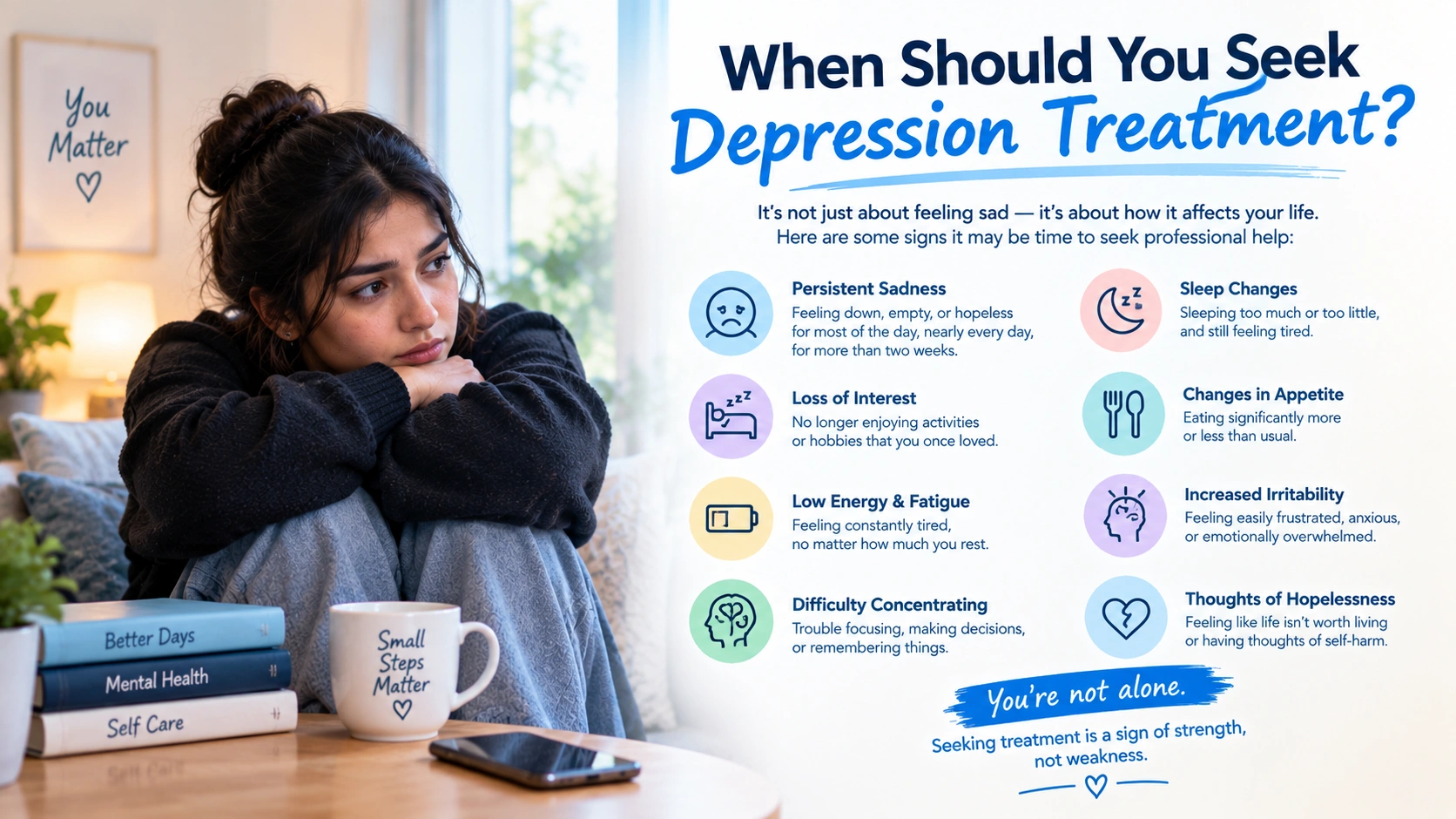
Everyone experiences difficult days, sadness, disappointment, or emotional exhaustion at some point in life. Feeling low after a stressful event does not automatically mean that you need depression treatment.
The important question is when low mood and other symptoms start becoming persistent, difficult to manage, or disruptive to everyday life.
Depression can affect much more than emotions. It may influence motivation, sleep, concentration, relationships, work, studies, and interest in activities you once enjoyed. Sometimes the changes happen gradually, making it difficult to recognize that you may need professional support.
Knowing the signs that it may be time to seek depression treatment can help you take action before the difficulties become more overwhelming.
Table of Contents
- When Should You Seek Depression Treatment?
- Feeling Low for an Extended Period
- Losing Interest in Things You Used to Enjoy
- Constant Tiredness and Low Motivation
- Changes in Sleep
- Changes in Appetite or Eating Habits
- Difficulty Concentrating
- Withdrawing From Other People
- Persistent Guilt or Worthlessness
- When Depression Starts Affecting Daily Life
- When Self-Help Is Not Helping Enough
- What Kind of Depression Treatment Is Available?
- When Should You Seek Urgent Help?
- Online Depression Treatment and Counseling
- FAQs
- Final Thoughts
When Should You Seek Depression Treatment?
There isn’t one specific moment when everyone should seek depression treatment.
However, professional support may be worth considering when emotional difficulties are persistent, becoming more intense, or interfering with your normal life.
You may want to consider speaking with a mental health professional if you notice several changes such as:
- Persistent low mood
- Loss of interest or pleasure
- Low energy
- Lack of motivation
- Changes in sleep
- Changes in appetite
- Difficulty concentrating
- Social withdrawal
- Excessive guilt or self-criticism
- Difficulty managing work or studies
- Feeling emotionally overwhelmed
You don’t have to wait until every symptom appears. Even a few persistent symptoms can be a good reason to discuss what you’re experiencing with a qualified professional.
Feeling Low for an Extended Period
Everyone feels sad sometimes. The difference can be the persistence and impact of the emotional state.
If you regularly feel sad, empty, hopeless, or emotionally drained and the feeling isn’t improving, it may be worth seeking professional support.
You may notice that your mood has started affecting how you approach everyday situations. For example, things that previously felt manageable may now feel exhausting or overwhelming.
Rather than trying to decide for yourself whether your symptoms are “serious enough,” you can speak with a mental health professional and describe what has been happening.
Losing Interest in Things You Used to Enjoy
One important change to pay attention to is losing interest in activities that previously mattered to you.
You might stop enjoying hobbies, meeting friends, watching movies or shows, exercise, family activities, work or creative activities, or social events.
Sometimes you may still do these things but feel emotionally disconnected from them.
This loss of interest can be an important reason to consider professional support, especially when it continues and affects your quality of life.
Constant Tiredness and Low Motivation
Depression can sometimes make everyday activities feel much harder. You may want to complete a task but struggle to begin it.
Getting ready for work, studying, cleaning your room, replying to messages, or meeting someone may feel like a major effort.
You might think: “I know I need to do it, but I just can’t get myself to start.”
If low energy and reduced motivation continue to interfere with your daily responsibilities, talking to a mental health professional can be helpful.
Changes in Sleep
Depression can be associated with changes in sleeping patterns. Some people may have difficulty falling asleep or staying asleep, while others may sleep considerably more than usual.
You might also notice that your sleep doesn’t feel refreshing even after spending enough time in bed.
Sleep changes can have many possible causes, so they should not automatically be attributed to depression. However, if sleep difficulties occur alongside persistent low mood, loss of interest, low energy, or other emotional changes, it may be worth discussing them with a professional. You can also explore our guide on anxiety and sleep problems.
Changes in Appetite or Eating Habits
Changes in appetite can also occur alongside depression. Some people may lose interest in food, while others may eat more than they normally would.
You may notice changes in appetite, eating patterns, interest in meals, weight, or relationship with food.
These changes can have many causes, so they should be considered alongside your other symptoms and circumstances. If significant changes continue, discussing them with an appropriate healthcare professional can help identify possible causes.
Difficulty Concentrating
Depression can make concentration feel more difficult. You may find yourself forgetting things, losing track of conversations, struggling to complete tasks, reading the same information repeatedly, finding decisions harder than usual, or having difficulty focusing at work or during studies.
When concentration problems start affecting your responsibilities or everyday functioning, professional support may be useful.
Withdrawing From Other People
Another sign that it may be time to seek support is increasing social withdrawal. You may stop replying to friends, avoid family gatherings, decline invitations, or prefer spending most of your time alone.
Sometimes isolation can feel easier when you’re emotionally exhausted. However, withdrawing from people can also reduce opportunities for connection and support.
If you notice yourself consistently pulling away from people you care about, consider talking to someone you trust or seeking professional mental health support.
Persistent Guilt or Worthlessness
Depression can sometimes involve harsh self-judgment. You may repeatedly think:
- “I’m a failure.”
- “I’m not good enough.”
- “Everything is my fault.”
- “I don’t deserve good things.”
- “I’m a burden to everyone.”
These thoughts can feel extremely convincing when you’re experiencing low mood. If feelings of worthlessness or excessive guilt are persistent or becoming increasingly intense, it’s important to discuss them with a mental health professional. You don’t have to handle these thoughts alone.

When Depression Starts Affecting Daily Life
One of the most important questions to ask is: “How much is this affecting my everyday life?”
Depression may be interfering with your:
- Work: You may struggle to concentrate, complete responsibilities, or maintain your usual performance.
- Studies: You may have difficulty focusing, attending classes, completing assignments, or preparing for exams.
- Relationships: You may become withdrawn, irritable, emotionally distant, or less interested in communicating.
- Self-Care: Basic routines such as eating regularly, maintaining hygiene, exercising, or getting out of bed may become difficult.
When depression starts affecting multiple areas of life, professional support becomes especially worth considering.
When Self-Help Is Not Helping Enough
Lifestyle changes and self-care can be useful for emotional wellbeing. You might try improving your sleep routine, exercising regularly, spending time with supportive people, returning to enjoyable activities, reducing excessive stress, or creating a manageable daily routine.
These steps can be helpful, but they are not always enough. If you’ve been trying to manage your symptoms on your own and you’re still struggling, that doesn’t mean you have failed. It may simply mean that additional professional support is needed.
What Kind of Depression Treatment Is Available?
Depression treatment can involve different forms of professional support depending on the individual’s situation.
Counseling and Psychotherapy: Counseling provides a structured environment to discuss emotional difficulties, thoughts, behaviors, relationships, and everyday challenges.
Cognitive Behavioral Therapy: CBT focuses on the relationship between thoughts, emotions, and behaviors. It can help people recognize unhelpful thinking patterns and develop healthier ways of responding to them.
Lifestyle and Behavioral Support: A mental health professional may also help you work toward practical changes involving routines, activities, stress management, and coping strategies.
Medical or Psychiatric Support: In some situations, a healthcare professional may recommend a psychiatric evaluation or medication. Treatment decisions should be based on the individual’s symptoms and circumstances. Medication should only be started, stopped, or changed under the guidance of an appropriate medical professional.
When Should You Seek Urgent Help?
Some situations require more immediate support.
If you are experiencing thoughts of suicide, self-harm, or feeling that you may not be able to keep yourself safe, don’t wait for a routine counseling appointment. Seek urgent help through your local emergency services, a crisis service, or a trusted person who can stay with you and help you access immediate professional care.
You deserve support, and you don’t have to deal with a crisis alone.
Online Depression Treatment and Counseling
Online counseling can be an option for people who prefer receiving mental health support remotely. Instead of traveling to a clinic, you can speak with a mental health professional from a private environment.
An online depression counseling session may involve discussing your symptoms, understanding your concerns, identifying patterns, developing coping strategies, and setting realistic goals.
Online counseling may be particularly convenient for people with busy schedules or those who feel more comfortable beginning the process from home. However, online counseling isn’t appropriate for every situation. If someone is experiencing an immediate mental health crisis or is at risk of harming themselves, urgent in-person or emergency support may be more appropriate.

FAQs
When should I seek treatment for depression?
How do I know if I need depression treatment?
Should I wait for depression symptoms to become severe?
Can depression go away without treatment?
Can counseling help with depression?
Can depression treatment be done online?
Who should I talk to about depression?
Explore Related Mental Health Topics
Explore Online Depression Treatment Across Cities
Connect with confidential, professional mental health counseling and therapy tailored for your city, available from the comfort of your home.
Bhopal
Professional counseling & online therapy support in Bhopal.
Bengaluru
Expert online mental health care tailored for Bengaluru.
Delhi
Confidential depression treatment and counseling in Delhi.
Mumbai
Specialized therapy and online support across Mumbai.
Pune
Professional depression counseling and online guidance in Pune.
Hyderabad
Accessible online depression therapy and support in Hyderabad.
Noida
Dedicated online mental health and counseling for Noida.
Gurugram
Professional depression therapy and counseling in Gurugram.