
Anxiety Treatment in Delhi: Symptoms, Therapy, Counseling & How to Get Help
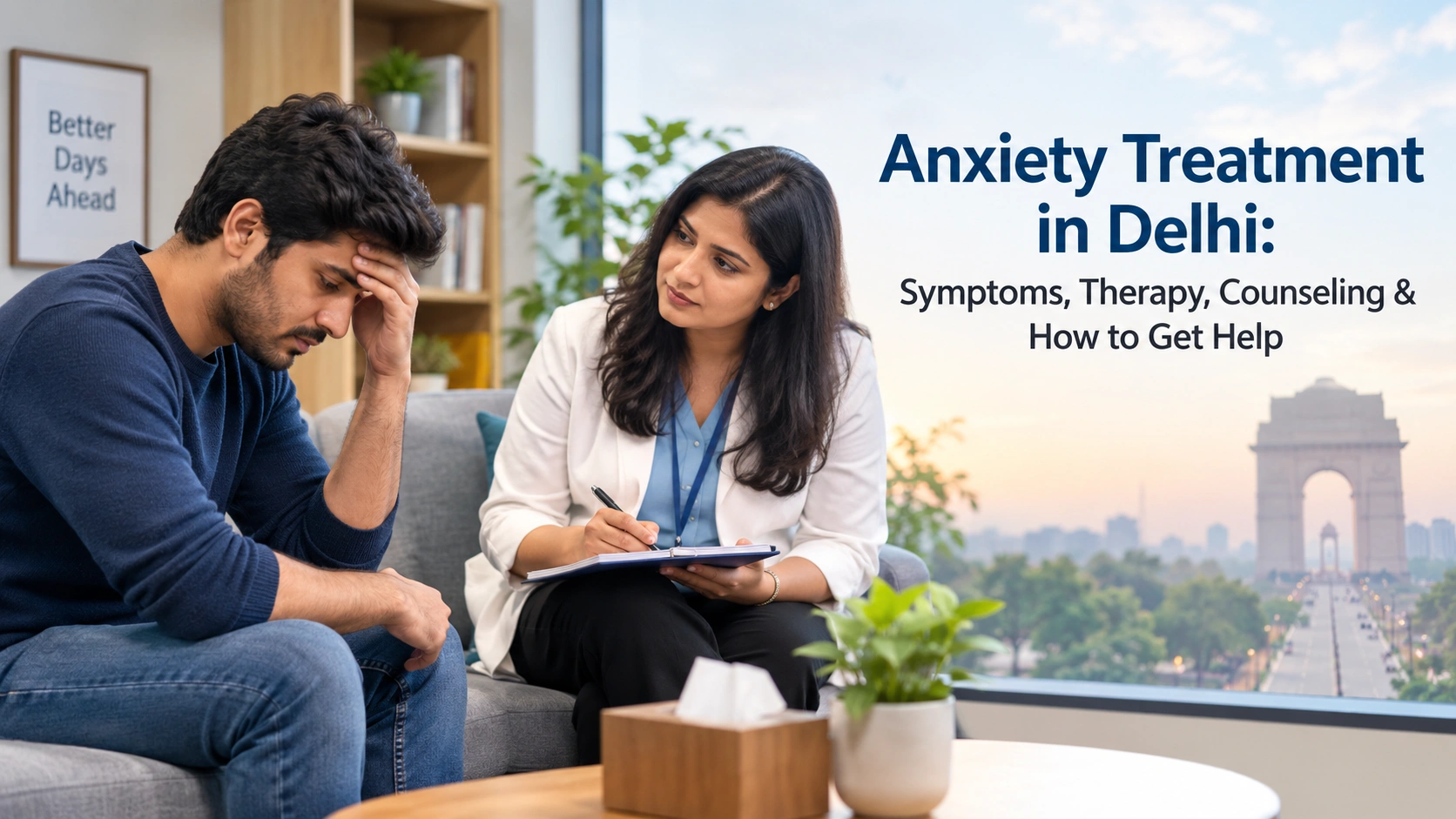
Anxiety can affect much more than your mood. Constant worrying, overthinking, difficulty sleeping, physical tension, fear about the future, or feeling unable to relax can gradually interfere with work, studies, relationships, and everyday life.
If you are looking for anxiety treatment in Delhi, you may be wondering whether you should manage it yourself, speak with a counselor, or seek a more structured form of professional support. The right approach depends on what you are experiencing, how long it has been happening, and how much it is affecting your daily life.
For people in Delhi who prefer privacy and convenience, online anxiety counseling can also be an option. You can speak with a mental health professional from a comfortable and private setting without needing to travel for every session.
What Is Anxiety?
Anxiety is a natural response to stress, uncertainty, or situations that feel threatening. Everyone experiences it from time to time. Feeling nervous before an interview, examination, important meeting, or difficult conversation does not necessarily mean that something is wrong.
The concern arises when anxiety becomes frequent, difficult to control, or starts interfering with normal life.
Someone experiencing ongoing anxiety may notice:
- Constant or excessive worrying
- Racing or repetitive thoughts
- Feeling restless or on edge
- Difficulty concentrating
- Irritability
- Trouble falling or staying asleep
- Muscle tension
- Rapid heartbeat
- Feeling short of breath
- Stomach discomfort
- Feeling overwhelmed by everyday situations
These symptoms can vary from person to person. Experiencing one or two of them does not automatically mean that you have an anxiety disorder.
When Does Anxiety Need Professional Treatment?
Not every anxious feeling requires professional treatment. Sometimes anxiety may reduce when a stressful situation passes or when you get enough rest and support.
Professional help may be worth considering when anxiety continues despite your efforts to manage it or begins affecting important areas of your life.
For example, you may find yourself:
- Worrying for hours every day
- Avoiding places, people, or situations because of fear
- Struggling to sleep because your mind will not switch off
- Constantly seeking reassurance from others
- Finding it difficult to concentrate on work or studies
- Experiencing repeated panic-like episodes
- Checking your body or symptoms repeatedly
- Feeling anxious even when there is no obvious immediate danger
- Becoming increasingly withdrawn from family or friends
- Finding that anxiety is affecting your relationships or daily responsibilities
The purpose of counseling is not simply to tell you to “stop worrying.” A professional can help you understand patterns behind your anxiety and work with you on practical strategies suited to your situation.
Anxiety Treatment Options in Delhi
Anxiety does not have one universal treatment that works for everyone. The appropriate approach depends on the person’s symptoms, circumstances, goals, and professional assessment.
Anxiety Counseling
Counseling provides a structured and confidential space to talk about what you are experiencing.
Instead of dealing with anxious thoughts alone, you can explore possible triggers, patterns of thinking, emotional responses, and behaviors that may be keeping anxiety going.
Counseling can be particularly useful when anxiety is connected with work pressure, relationship difficulties, overthinking, life changes, personal uncertainty, stress, sleep difficulties, or fear about the future.
Cognitive Behavioral Therapy (CBT)
CBT is one of the commonly used psychological approaches for anxiety.
It focuses on the relationship between thoughts, emotions, and behaviors. For example, a person may automatically interpret an uncertain situation as a sign that something bad will happen. That interpretation can increase anxiety and lead to avoidance or repeated reassurance seeking.
Therapy can help identify these patterns and develop healthier ways of responding.
Relaxation and Mindfulness-Based Approaches
Depending on the person’s needs, counseling may also involve techniques that help with emotional regulation, awareness, and relaxation.
These may include breathing exercises, mindfulness practices, grounding techniques, or strategies for managing stress.
These approaches are not necessarily about making anxiety disappear immediately. They can help you respond to anxious feelings without automatically reacting to every thought or physical sensation.
Psychiatric Support When Appropriate
Some people may benefit from evaluation by a psychiatrist, particularly when symptoms are severe, persistent, or significantly affecting functioning.
Psychological counseling and psychiatric care are not competing options. Depending on the situation, a person may need one, the other, or coordinated support.
Medication decisions should always be made with a qualified medical professional. Do not start, stop, or change psychiatric medication without appropriate medical guidance.

Why Consider Online Anxiety Counseling in Delhi?
Delhi is a large and busy city, and finding time for regular appointments can sometimes be difficult. For someone managing work, studies, family responsibilities, or other commitments, online counseling can provide greater flexibility.
With online anxiety counseling, you may be able to attend sessions from a private environment that is comfortable for you.
Some people prefer online sessions because they:
- Do not need to travel for every appointment
- Can attend sessions from home or another private location
- May find it easier to fit sessions around work or study
- Feel more comfortable beginning counseling from a familiar environment
- Can continue sessions even when their schedule changes
Online counseling is not automatically the right option for everyone. Your circumstances and the nature of the support you need should be considered when deciding how to seek help.
Anxiety, Overthinking and Constant Worry
Anxiety and overthinking often go together.
You might repeatedly replay a conversation, imagine everything that could go wrong, worry about decisions, or spend a lot of time trying to predict the future.
The problem is not simply having thoughts. Everyone thinks about problems. The difficulty begins when thinking becomes repetitive and does not lead to a useful decision or action.
For example, instead of asking: “What can I realistically do about this situation?” your mind may repeatedly ask:
- “What if something goes wrong?”
- “What if I made the wrong decision?”
- “What if people judge me?”
This cycle can increase anxiety and make it harder to relax. Counseling can help you understand these patterns and learn ways to respond to them more effectively. Learn more in our guide on how to stop overthinking and anxiety.
Anxiety and Sleep Problems
Nighttime can sometimes make anxiety feel more noticeable.
During the day, work, conversations, studies, household responsibilities, and other activities may keep your attention occupied. Once things become quiet, worries that were pushed aside during the day may become more noticeable.
You may find yourself thinking about tomorrow, replaying something that happened earlier, or worrying about whether you will be able to sleep.
This can create a frustrating cycle: Anxiety → overthinking → difficulty sleeping → tiredness → increased emotional stress. Read our dedicated article on anxiety and sleep problems.
What Happens During an Anxiety Counseling Session?
If you have never attended counseling before, it is normal to feel uncertain about what will happen.
An initial session may involve discussing what has been troubling you, when the problem started, situations that increase anxiety, how anxiety affects your routine, sleep and concentration, relationships and work/studies, and what you would like to change.
You do not need to arrive with everything perfectly explained. A counseling session is a conversation, not an examination. You can discuss your concerns at a pace that feels manageable.
Can Anxiety Be Treated Without Medication?
In some cases, people can manage anxiety through psychological approaches and lifestyle changes without medication. Whether this is appropriate depends on the person’s symptoms and individual circumstances.
Professional counseling or therapy may be useful alongside practical habits such as maintaining a consistent sleep schedule, staying physically active, reducing excessive caffeine if it worsens anxiety, practicing relaxation techniques, and how anxiety treatment works. These strategies are not a substitute for professional assessment when anxiety is severe or persistent.
When Should You Seek Help for Anxiety?
Consider professional support if anxiety has become difficult to manage on your own or is affecting your everyday functioning.
You do not have to wait until anxiety becomes overwhelming before asking for help. Seeking support early can give you an opportunity to understand what is happening and work on it before the problem becomes more disruptive.

Online Anxiety Counseling with Vaibhav Mishra
If you are looking for online anxiety counseling in Delhi, Vaibhav Mishra provides online mental health counseling for concerns such as anxiety, overthinking, stress, depression, relationships, and other emotional challenges.
Online sessions can provide a private space to discuss what you are experiencing and understand possible ways forward.
The aim is not to promise an instant solution. Counseling is a process that can help you understand your thoughts, emotions, and behavioral patterns and work toward practical changes based on your individual situation.
Take the Next Step
If anxiety has been interfering with your sleep, work, studies, relationships, or peace of mind, speaking with a mental health professional may be a useful next step.