
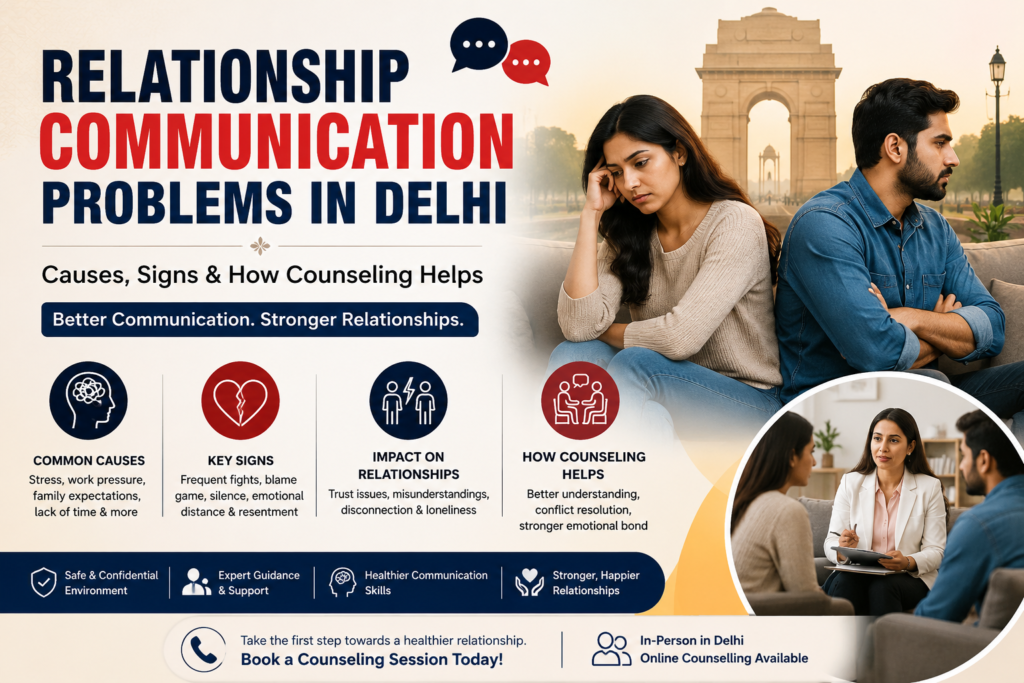
Delhi is a city of rich culture, vibrant communities, and fast-paced ambition. Yet, beneath the corporate energy of Connaught Place, the bustling academic hubs of North Campus, and the residential lanes of South Delhi and Dwarka, thousands of couples and families are experiencing a quiet crisis behind closed doors.
You might live under the same roof, share meals, and manage daily responsibilities together, but emotionally, you feel miles apart. Conversations quickly turn into arguments over minor issues. One partner shuts down in silence, while the other feels unheard, frustrated, and deeply alone.
If this sounds familiar, you are experiencing a relationship communication breakdown.
Healthy communication is the emotional core of any partnership. When it stops flowing, resentment, emotional distance, and chronic stress take its place. Working with a professional mental health counselor can help you bridge the gap, rebuild emotional safety, and learn how to truly connect again.
What is a Relationship Communication Breakdown?
A communication breakdown is more than just occasional arguing. Every couple disagrees; conflict is a normal part of any human relationship. A breakdown occurs when the way you communicate stops solving problems and instead starts creating emotional wounds.
Instead of resolving differences, conversations become battlegrounds where both partners feel defensive, judged, or ignored. Over time, individuals stop sharing their vulnerabilities altogether. They walk on eggshells, keep secrets to avoid fights, or retreat into complete emotional detachment (stonewalling).
Key Signs of Communication Problems in Relationships
Communication issues rarely happen overnight. They usually manifest through distinct emotional and behavioral patterns:
1. The Blame and Defense Loop
Conversations that begin as minor discussions quickly escalate. Instead of addressing the issue, partners resort to “you always” or “you never” statements. Both people immediately put up their shields to defend themselves rather than listening.
2. Stonewalling and Emotional Shutdown
When arguments become too overwhelming, one or both partners pull away completely. They stop responding, leave the room, or give the silent treatment. While it feels like a way to stop the fight, it actually starves the relationship of emotional engagement.
3. Chronic Resentment and Scorekeeping
Unresolved arguments don’t disappear; they pile up. You find yourself bringing up mistakes from months or years ago during current disagreements because past emotional hurts were never properly healed.
4. Conversational Avoidance
You stop talking about important things—finances, future goals, or emotional needs—because you expect the conversation to end in a fight. You talk only about logistics (bills, groceries, schedules), turning partners into roommates.
Why Delhi’s Urban Pressure Cooker Strains Relationships
Relationships in Delhi NCR carry unique environmental and cultural stressors that can heavily intensify communication friction:
- The Corporate Grind and Fatigue: Long working hours, grueling commutes across the city, and high-performance pressure leave individuals emotionally drained by the time they reach home, leaving zero energy for patient, empathetic conversation.
- Nuclear vs. Joint Family Dynamics: Navigating the delicate balance between extended family expectations, parental pressures, and nuclear couple boundaries is a massive source of silent marital conflict in Delhi.
- The Pace of Modern Life: Fast-paced urban living encourages multitasking and quick fixes, leaving little room for the slow, intentional listening required to maintain deep emotional intimacy.
Healthy Communication vs. Destructive Communication Loops
| Metric / Trait | Healthy Communication | Destructive Communication Breakdown |
| Goal of Conversation | To understand each other’s perspective and find solutions. | To “win” the argument or prove the other person wrong. |
| Expression of Needs | Using “I” statements to share vulnerable feelings. | Using “You” statements, insults, sarcasm, or blame. |
| Handling Disagreements | Pausing when overwhelmed, then returning to talk calmly. | Escalating until someone explodes or shuts down completely. |
| Emotional Safety | Both partners feel heard, respected, and valued. | Both partners feel defensive, unappreciated, and unsafe. |
How Professional Counseling Restores Connection
Fixing a broken communication pattern on your own can feel impossible when you are stuck inside the cycle. Informed by clinical frameworks like the Gottman Method and emotionally focused therapy, professional counseling provides a neutral, structured environment:
- Safe Emotional Space: A setting where both partners can speak without fear of immediate attack or judgment.
- Decoding Underlying Triggers: Uncovering what a fight is really about (often deep fears of abandonment, rejection, or feeling unvalued, rather than who forgot to do a chore).
- Building Emotional Attunement: Learning evidence-based tools to replace criticism and contempt with gentle startups, empathy, and active listening.
- Conflict Resolution Training: Teaching you how to disagree respectfully, pause escalations, and repair emotional bonds quickly after a disagreement.