
Panic Attack vs Anxiety Attack: What’s the Difference?
People often use the terms panic attack and anxiety attack as if they mean the same thing. While they can feel similar, there are some important differences in how they usually begin, how intense they feel, and how long they may last. Understanding the difference can help you describe your experience more clearly and know when it may be useful to speak with a mental health professional.
What Is a Panic Attack?
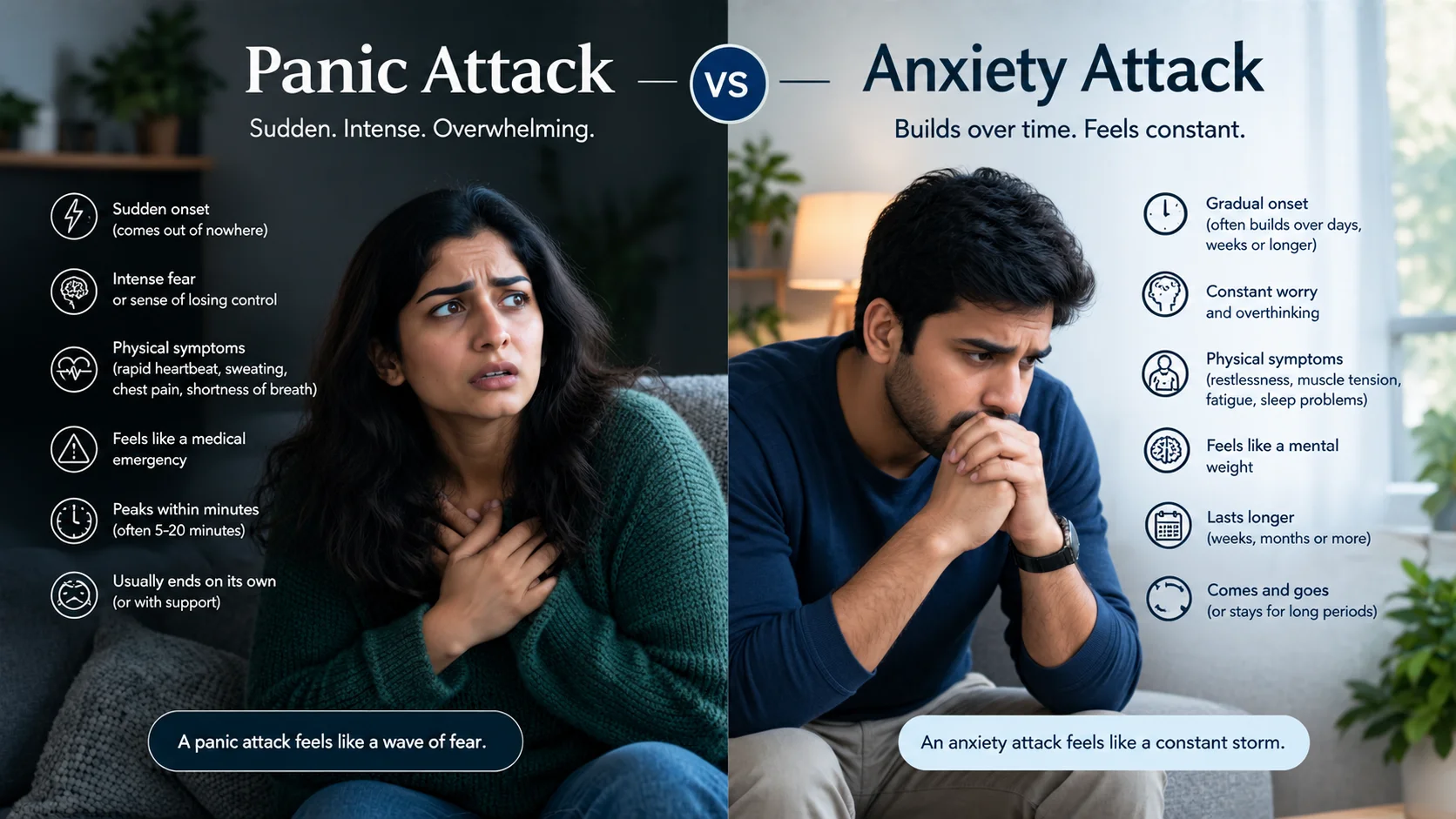
A panic attack is a sudden episode of intense fear or discomfort that can happen unexpectedly or in response to a particular situation. The symptoms can feel very strong and may appear within minutes. A person may suddenly feel that something is seriously wrong, even when there is no immediate danger.
- Rapid or pounding heartbeat
- Shortness of breath or a feeling of being unable to breathe normally
- Chest discomfort or tightness
- Sweating, chills, or sudden heat sensations
- Shaking or trembling
- Dizziness or lightheadedness
- Nausea or stomach discomfort
- Tingling or numbness in the body
- Feeling detached from yourself or your surroundings (depersonalization)
- Fear of losing control or fear of dying
Not everyone experiences all of these symptoms, and the experience can vary from person to person.
What Is an Anxiety Attack?
The phrase “anxiety attack” is commonly used to describe a period when anxiety becomes particularly intense or overwhelming. Unlike a panic attack, it is not a formal diagnostic term. Anxiety often develops in response to ongoing worry, stress, uncertainty, or a perceived threat.
For example, someone may experience increasing anxiety while worrying about work or academic pressure, relationships, financial problems, health concerns, an upcoming event, or long-term uncertainty.
As anxiety builds, physical symptoms can also appear, such as muscle tension, restlessness, difficulty concentrating, sweating, a faster heartbeat, stomach discomfort, or difficulty sleeping.
Panic Attack vs Anxiety Attack: Quick Comparison
| Panic Attack | Anxiety Attack |
|---|---|
| Often begins suddenly | Often builds gradually |
| Can occur unexpectedly (“out of the blue”) | Usually connected with ongoing worry or stress |
| May reach a very intense peak within minutes | Intensity may increase steadily as anxiety continues |
| Strong, acute physical sensations are common | Physical symptoms can occur but vary and linger longer |
| Can happen even when there is no obvious immediate threat | Usually associated with a specific worry, stressor, or perceived threat |
| A recognized clinical condition (Panic Disorder) | Not a formal diagnostic term; describes severe anxiety state |
The distinction is not always clear-cut. Someone can experience both intense anxiety and panic attacks, and the experiences can overlap.

How Does a Panic Attack Feel Different?
One of the most noticeable differences is how suddenly the experience can appear. A panic attack may seem to come out of nowhere. A person might suddenly notice a racing heart, difficulty breathing, dizziness, or overwhelming fear.
Because these sensations can be frightening, the physical symptoms themselves may increase the person’s fear, creating a cycle of escalating distress. Anxiety, on the other hand, often feels more connected to thoughts and worries that have been building over time:
This does not mean anxiety always develops slowly or that panic attacks always happen without a trigger. Individual experiences can be different.
Can Anxiety Cause Panic Attacks?
Yes. Ongoing anxiety can be associated with panic attacks, although having anxiety does not necessarily mean that a person will experience panic attacks. A person may spend a long period worrying about a particular situation and then experience a sudden episode of intense fear and physical symptoms.
Which One Is More Serious?
It is better not to think of one as simply “more serious.” Both panic and severe anxiety can be extremely distressing and can interfere with daily life. What matters is the frequency, intensity, duration, triggers, and impact on your everyday functioning.
If episodes are happening repeatedly, causing you to avoid normal activities, affecting work or relationships, or making you constantly afraid of another episode, consider discussing your experience with a qualified mental health professional.
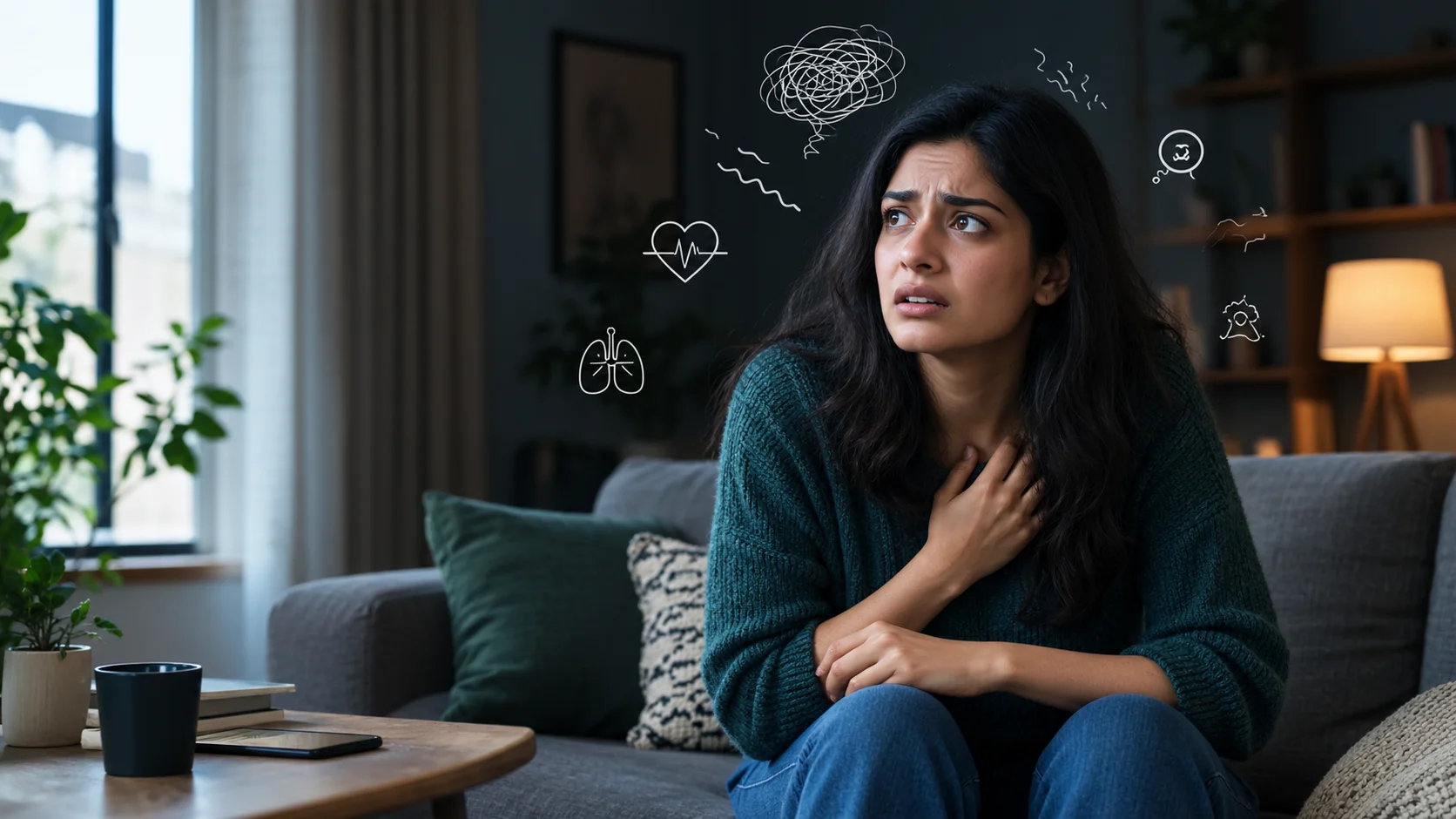
Panic attacks can produce symptoms that resemble certain medical conditions. New, severe, or unexplained chest pain, significant difficulty breathing, fainting, or other concerning physical symptoms should not automatically be assumed to be anxiety or panic. Seek urgent medical evaluation when symptoms could indicate a medical emergency.
Frequently Asked Questions
Final Thoughts
The main difference between panic attacks and anxiety attacks is often the pattern: panic attacks tend to involve a sudden surge of intense fear or discomfort, while what people call an anxiety attack generally refers to anxiety that becomes increasingly overwhelming in response to worry or stress. Understanding the pattern of your symptoms can be a useful first step toward getting appropriate support.
Understand Your Anxiety & Panic Patterns
Whether you are experiencing sudden panic attacks or overwhelming stress, professional psychological guidance can help you regain clarity and control. Book a confidential counseling session today.
Chat on WhatsApp to Book Session