
Anxiety and Sleep Problems: Why Anxiety Affects Sleep & What Can Help
Have you ever gone to bed feeling tired, but the moment your head touches the pillow, your mind suddenly becomes active?
You may start thinking about work, relationships, health, money, tomorrow’s responsibilities, or something that happened during the day.
You look at the clock and think:
“I need to sleep now.”
But the more you try to force yourself to sleep, the more awake you feel.
This is a common experience for people dealing with anxiety.
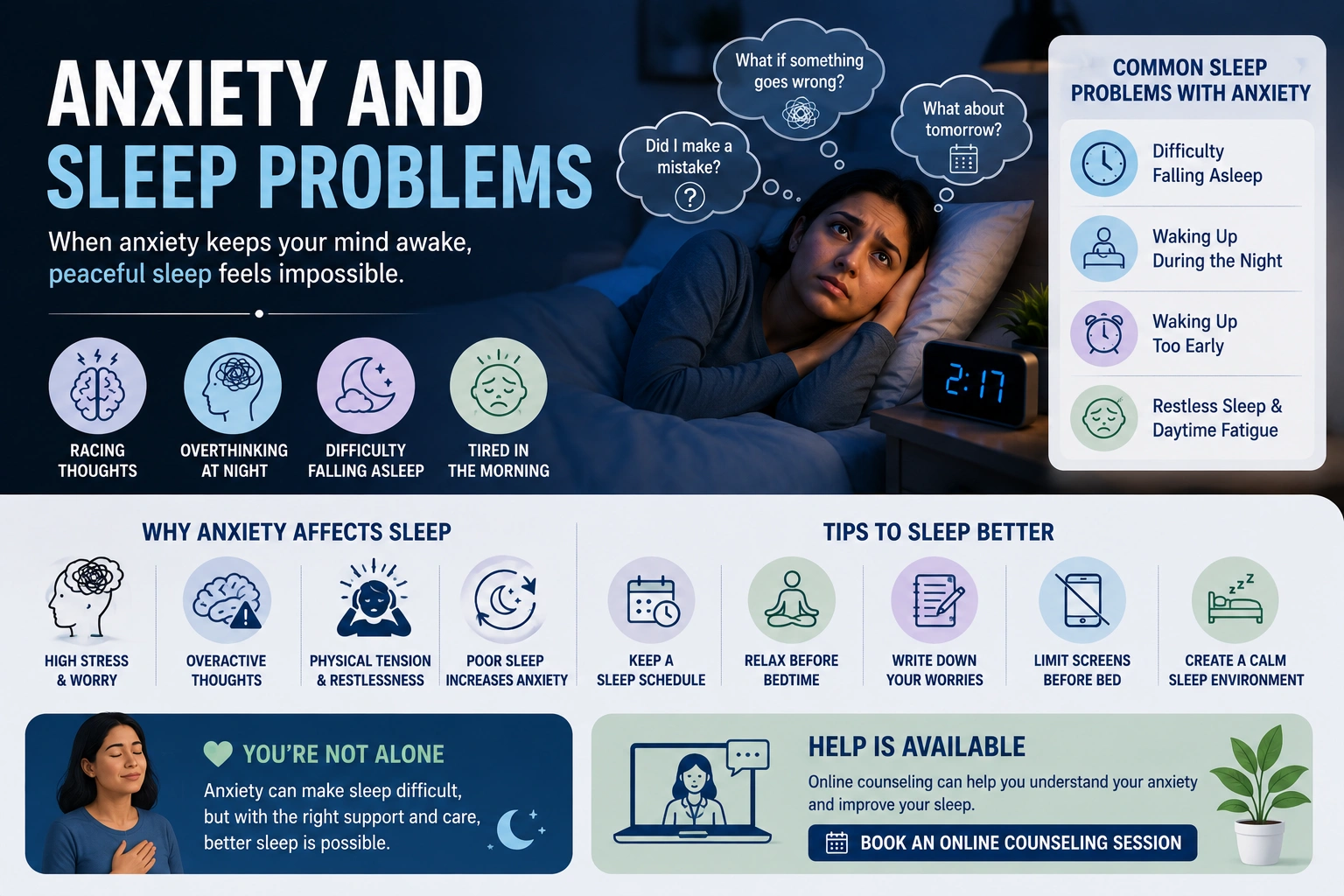
Anxiety and sleep problems can affect each other. Anxiety may make it difficult to relax and fall asleep, while poor sleep can make it harder to manage stress and anxious feelings the following day.
Over time, this can become a frustrating cycle.
In this article, we’ll discuss the connection between anxiety and sleep, common symptoms, why anxiety may become worse at night, practical ways to improve your sleep, and when anxiety counseling may be helpful.
How Are Anxiety and Sleep Connected?
Anxiety activates your body’s stress response.
When you feel worried or threatened, your mind and body can become more alert.
That’s useful when you need to respond to an immediate danger.
But when the same alertness continues at bedtime, relaxing can become difficult.
You may experience:
- Racing thoughts
- Constant worrying
- Restlessness
- Muscle tension
- Increased awareness of your heartbeat
- Difficulty falling asleep
- Waking during the night
- Waking up feeling anxious
This can create a cycle:
Anxiety → Difficulty Sleeping → Tiredness → More Stress → More Anxiety
Breaking this cycle may require addressing both your sleep habits and the underlying causes of anxiety.
Why Does Anxiety Get Worse at Night?
For many people, anxiety feels stronger at night.
One reason is simple: there are fewer distractions.
During the day, you may be busy with work, studies, family, social interactions, or other responsibilities.
At night, everything becomes quiet.
That’s when thoughts that were pushed aside during the day may become more noticeable.
You might start thinking:
“What if tomorrow goes badly?”
“Did I make a mistake today?”
“What if something happens to my family?”
“Why am I feeling this way?”
One thought can quickly lead to another.
This is why overthinking and nighttime anxiety often occur together.
Common Sleep Problems Associated With Anxiety
Anxiety can affect sleep in different ways.
Difficulty Falling Asleep
You may feel physically tired but mentally alert. Your mind keeps generating thoughts, making it difficult to settle down.
Waking Up During the Night
Some people fall asleep normally but wake up later and immediately start worrying.
Waking Up Too Early
You may wake earlier than expected and find yourself unable to return to sleep because your mind starts thinking about the day ahead.
Restless Sleep
Even when you sleep for several hours, you may feel that your sleep wasn’t refreshing.
Fear of Not Sleeping
Sometimes the sleep problem itself becomes a source of anxiety. You may start thinking: “What if I can’t sleep tonight?” That worry can make it even harder to fall asleep.
Can Anxiety Cause Insomnia?
Anxiety can contribute to difficulty falling asleep or staying asleep, but insomnia can have many causes.
Stress, lifestyle changes, medications, physical health conditions, sleep schedules, environmental factors, and other issues can also affect sleep.
If sleep difficulties are persistent or significantly affecting your daily life, it is worth discussing them with an appropriate healthcare professional rather than assuming anxiety is the only cause.
Why Does Overthinking Keep Me Awake?
Overthinking often involves repetitive thinking without reaching a useful conclusion.
For example: “What if I make a mistake tomorrow?”
Then: “What if everyone notices?”
Then: “What will they think about me?”
Your brain keeps searching for certainty.
But because the future cannot be predicted perfectly, the thinking continues.
This mental activity can keep you alert when your body needs to wind down.
If overthinking is a major part of your anxiety, read: How to Stop Overthinking and Anxiety.
Physical Symptoms of Anxiety That Can Affect Sleep
Anxiety isn’t only about thoughts.
It can also produce physical sensations that make relaxation difficult.
You may notice:
- Increased heart rate
- Muscle tension
- Sweating
- Restlessness
- Stomach discomfort
- Feeling unable to relax
- Changes in breathing
When you notice these sensations at bedtime, you may become concerned about them.
That concern can increase anxiety further.
How to Sleep Better When You Have Anxiety
There is no guaranteed quick fix for nighttime anxiety, but several habits may support better sleep.
1. Create a Consistent Sleep Schedule
Try to go to bed and wake up at approximately the same time each day. A consistent routine can help your body establish a more predictable sleep pattern.
2. Give Your Mind Time to Slow Down
Don’t move directly from stressful work or intense screen activity into bed. Give yourself some time to relax by reading something calming, listening to quiet music, or practicing a relaxation technique.
3. Write Down Your Worries
If your mind is full of unfinished thoughts, write them down before bedtime. You don’t have to solve everything immediately. Simply making a note can help you remind yourself: “I can deal with this tomorrow.”
4. Avoid Constantly Checking the Clock
Looking at the clock repeatedly can increase pressure: “It’s already 1 AM.” or “Now I only have five hours left.” This can create additional anxiety about sleep.
5. Reduce Stimulation Before Bed
Consider reducing activities that keep your mind highly stimulated before bedtime. Your personal routine may include a period of quiet time before sleep.

What If I’m Anxious About Going to Sleep?
This can happen when you’ve experienced several difficult nights.
You may start associating your bed with worry, frustration, watching the clock, anxiety, and difficulty sleeping.
In this situation, the problem isn’t simply sleep. There may also be anxiety about sleep itself.
Working on the underlying anxiety can be an important part of breaking this cycle.
Can Anxiety Counseling Help With Sleep Problems?
If anxiety is contributing to your sleep difficulties, counseling may help you understand the connection between your thoughts, emotions, behaviors, and sleep.
During counseling, you may explore what triggers your anxiety, why your thoughts become stronger at night, how you respond to anxious thoughts, stress in your daily life, overthinking patterns, sleep-related worries, and avoidance behaviors.
Approaches such as CBT may be used when appropriate to work with anxiety-related thought and behavior patterns. The right approach depends on your individual circumstances.
Can Online Counseling Help With Anxiety and Sleep Problems?
Yes. online anxiety counseling can be a convenient option if you prefer talking to a mental health professional from home.
It may be particularly convenient if you have a busy schedule, live in another city, prefer online sessions, find travelling difficult, or feel more comfortable talking from home.
A typical online counseling process may involve: Book a Session → Online Consultation → Discuss Your Concerns → Understand Anxiety & Sleep Patterns → Work on Personalized Strategies → Follow-Up.
The exact process varies depending on your needs and the professional providing the service.

When Should You Seek Professional Help?
Occasional difficulty sleeping is common.
However, consider speaking with a mental health professional if anxiety and sleep problems continue for a prolonged period, happen frequently, make it difficult to function during the day, affect your work or studies, cause significant distress, lead to frequent panic-like episodes, make you constantly worry about sleep, or affect your relationships or quality of life.
You don’t need to wait until you’re completely exhausted before seeking support.
Online Anxiety Counseling With Vaibhav Mishra
If anxiety, overthinking, or persistent worrying is affecting your sleep and everyday life, online counseling can provide a convenient way to discuss your concerns with a mental health professional.
At Vaibhav Mishra, online mental health counseling can help you discuss concerns related to anxiety, overthinking, stress, sleep-related anxiety, excessive worrying, panic-related concerns, emotional overwhelm, and relationship-related stress.
You don’t need to figure out exactly what’s wrong before your first session. You can simply explain what you’ve been experiencing.
Take the First Step
If anxiety is keeping you awake night after night, you don’t have to handle everything alone.