
Anxiety Counseling: What Happens in a Session?
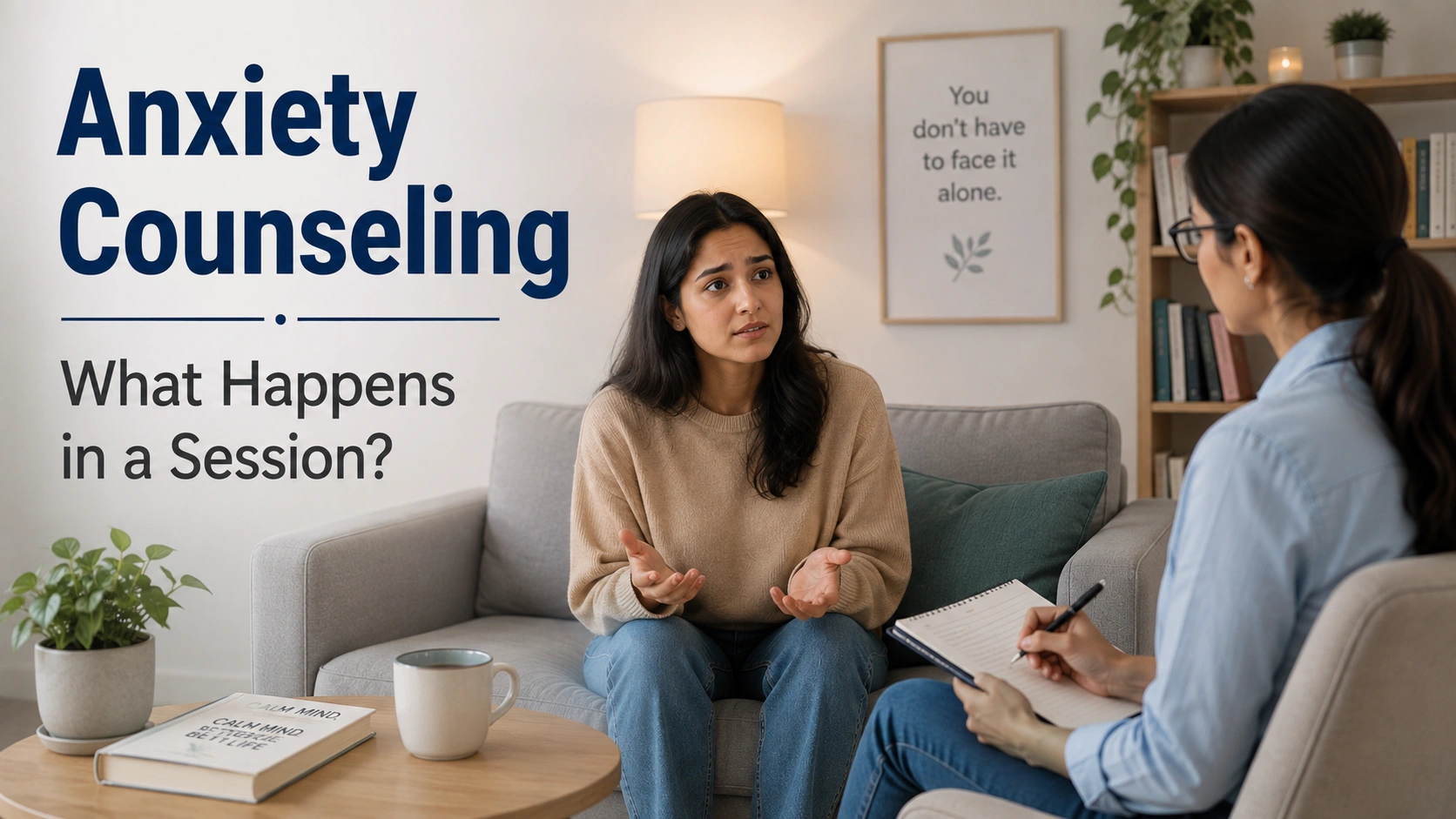
If you often feel worried, restless, overwhelmed, or unable to control your thoughts, you may wonder whether anxiety counseling could help. Many people delay seeking professional support because they don’t know what actually happens during a counseling session.
Anxiety counseling is a structured and confidential process where you can talk about your concerns, understand your anxiety patterns, identify possible triggers, and learn healthier ways to manage difficult thoughts and emotions.
You do not need to know exactly what is wrong before starting counseling. You can simply explain what you have been experiencing, and the counselor can help you understand your concerns and decide what kind of support may be appropriate.
In this guide, we’ll explain what happens during an anxiety counseling session, what you can expect in your first session, how anxiety therapy can help, how online anxiety counseling works, and when professional support may be useful.
What Is Anxiety Counseling?
Anxiety counseling is a form of psychological support designed to help people understand and manage persistent worry, fear, stress, anxious thoughts, and related emotional difficulties.
During counseling, you may explore:
- What makes you feel anxious
- When your anxiety usually occurs
- Thoughts that appear during anxious moments
- Physical sensations associated with anxiety
- Situations you tend to avoid
- How anxiety affects your sleep
- How anxiety affects work or studies
- How anxiety affects relationships
- How you currently cope with stress
The purpose isn’t simply to tell you to “stop worrying.”
Instead, counseling can help you understand why certain thoughts, emotions, and behaviors keep repeating and develop practical ways of responding to them.
What Happens in an Anxiety Counseling Session?
Every counseling session is different because everyone’s experiences are different. However, an anxiety counseling session may generally involve several stages.
1. Talking About Your Concerns
The first step is usually having an open conversation about what you’ve been experiencing.
You may talk about things such as:
- Constant worrying
- Overthinking
- Fear about the future
- Difficulty relaxing
- Racing thoughts
- Sleep problems
- Feeling restless
- Panic-like experiences
- Stress at work or college
- Relationship-related anxiety
- Fear of specific situations
You don’t need to explain everything perfectly.
A good counseling session should give you space to describe your experience in your own words.
2. Understanding Your Anxiety Patterns
Once your concerns are understood, counseling may focus on identifying patterns.
For example, you may notice:
Trigger → Anxious Thought → Emotional/Physical Response → Avoidance → Temporary Relief → Anxiety Returns
Understanding this cycle can help explain why anxiety sometimes continues even when you know that your fears may not be realistic.
A counselor can help you identify patterns that may be maintaining your anxiety and work with you on healthier responses.
3. Identifying Anxiety Triggers
Anxiety can have different triggers for different people.
Possible triggers may include:
- Work pressure
- Academic stress
- Relationship difficulties
- Financial concerns
- Major life changes
- Health worries
- Social situations
- Fear of failure
- Uncertainty about the future
- Previous stressful experiences
Sometimes the trigger is obvious. At other times, anxiety can appear without a clear explanation.
Counseling can help you explore these patterns without judgment.
4. Understanding Anxious Thoughts
One of the important parts of anxiety counseling may involve understanding the thoughts that occur when you feel anxious.
For example:
- “What if something goes wrong?”
- “What if people judge me?”
- “What if I can’t handle this?”
- “What if something bad happens?”
These thoughts can feel extremely real when you’re anxious.
Therapeutic approaches such as Cognitive Behavioral Therapy (CBT) can help people examine the relationship between thoughts, feelings, and behaviors and develop more balanced ways of responding.
5. Learning Anxiety Management Techniques
Anxiety counseling isn’t only about talking.
Depending on your needs, counseling may involve learning practical strategies for managing anxiety.
These can include:
- Breathing and relaxation techniques
- Grounding strategies
- Mindfulness-based techniques
- Stress-management skills
- Identifying unhelpful thinking patterns
- Healthy emotional coping strategies
- Improving daily routines
- Gradually addressing avoidance behaviors
The specific techniques used depend on your concerns and treatment approach.
6. Working on Avoidance and Fear
Anxiety can sometimes cause people to avoid situations that make them uncomfortable.
For example, someone may avoid:
- Speaking in meetings
- Travelling alone
- Going to crowded places
- Talking to strangers
- Driving
- Social gatherings
- Making important decisions
Avoidance may provide temporary relief, but it can sometimes strengthen fear over time.
When appropriate, therapy may involve gradually working with feared situations in a structured and manageable way.
The goal is not to force someone into an overwhelming situation. Instead, treatment can focus on building confidence and developing healthier responses step by step.

What Happens in the First Anxiety Counseling Session?
The first session is often focused on understanding your situation.
Your counselor may ask about:
- Your current concerns: What made you seek counseling now?
- Your symptoms: What are you experiencing emotionally, mentally, or physically?
- Your daily life: How are anxiety and stress affecting your work, studies, relationships, or routine?
- Your sleep: Are you having difficulty falling asleep, staying asleep, or relaxing at night?
- Your triggers: Are there particular situations that make your anxiety worse?
- Your goals: What would you like to change or improve through counseling?
You may also discuss previous experiences with counseling or treatment if relevant.
Do You Have to Tell Everything in the First Session?
No.
You don’t have to share everything immediately.
Counseling is a process, and trust can develop gradually.
You can discuss what you feel comfortable discussing and ask questions about the counseling process.
If something feels difficult to talk about, you can tell your counselor that as well.
Is Anxiety Counseling Confidential?
Confidentiality is an important part of professional counseling.
A person should generally be able to discuss personal concerns in a private and respectful environment.
However, confidentiality can have specific professional and legal limits depending on the situation and applicable rules. Your counselor should explain their confidentiality practices and any relevant limitations.
If privacy is one of your concerns, you can ask about confidentiality before beginning counseling.
Can Anxiety Counseling Be Done Online?
Yes. Online anxiety counseling allows you to speak with a mental health professional remotely rather than travelling to an office.
Online counseling can be convenient if you:
- Live in another city
- Have a busy schedule
- Prefer speaking from home
- Have difficulty travelling
- Feel more comfortable in a familiar environment
- Want to start counseling privately
A typical online counseling process may look like: Book a Session → Join the Online Session → Discuss Your Concerns → Understand Your Anxiety Patterns → Work on Personalized Strategies → Follow-Up
The exact process depends on the counselor and your individual needs.
Is Online Anxiety Counseling Effective?
Online counseling can be a useful option for many people, particularly when the therapy approach is suitable for remote delivery and the person has an appropriate private environment for sessions.
However, online counseling is not suitable for every situation.
If someone is experiencing a mental health emergency, immediate local emergency or medical support may be more appropriate than waiting for an online counseling appointment.
How Can an Anxiety Counselor Help?
An anxiety counselor can provide a structured space to understand what you’re experiencing and work on practical strategies.
Counseling may help you:
- Understand your anxiety
- Recognize triggers
- Identify unhelpful thinking patterns
- Manage excessive worrying
- Develop coping strategies
- Improve emotional regulation
- Reduce avoidance
- Handle stressful situations more effectively
- Build confidence
- Work toward healthier daily functioning
The exact goals of counseling should be personalized according to your needs.
Anxiety Counseling vs Simply Talking to a Friend
Talking to a trusted friend can provide emotional support, and having supportive relationships is valuable.
However, professional counseling is different.
A mental health counselor uses professional training and structured therapeutic approaches to help you explore psychological and emotional concerns.
A friend may say: “Don’t worry so much.”
A counseling process goes further by exploring: Why am I worrying? → What triggers it? → What thoughts appear? → How do I respond? → What keeps the cycle going? → What healthier strategies can I develop?
This structured approach can make professional counseling useful when anxiety is persistent or interfering with everyday life.
How Many Anxiety Counseling Sessions Do You Need?
There is no fixed number of sessions that works for everyone.
The duration of counseling can depend on:
- Type of anxiety
- Severity of symptoms
- How long you’ve experienced anxiety
- Your personal circumstances
- Your goals
- Your progress during counseling
- The therapeutic approach being used
Some people may benefit from relatively short-term counseling, while others may need longer-term support.
Your counselor can discuss your progress and treatment goals with you over time.
When Should You Consider Anxiety Counseling?
You may want to consider speaking with a mental health professional if anxiety:
- Feels difficult to control
- Is affecting your sleep
- Interferes with work or studies
- Affects your relationships
- Causes frequent physical symptoms
- Leads you to avoid everyday situations
- Causes repeated panic-like episodes
- Makes it difficult to concentrate
- Has continued for a prolonged period
- Is causing significant distress
You don’t necessarily have to wait until anxiety becomes severe before asking for help.

Can Anxiety Counseling Help With Overthinking?
Yes, anxiety and overthinking can often occur together.
A person experiencing anxiety may repeatedly think about:
- What could go wrong
- What happened in the past
- What other people think
- Future situations
- Relationships
- Health concerns
- Work or studies
Counseling can help identify the connection between anxious thoughts, emotions, and behaviors and develop healthier ways of responding to repetitive worry.
For more information, read our guide: How to Stop Overthinking and Anxiety
Anxiety Counseling for Different Types of Anxiety
Anxiety can take different forms.
Depending on the person’s concerns, professional support may address issues related to:
- Generalized Anxiety: Persistent and excessive worry about multiple areas of life.
- Social Anxiety: Intense fear or worry related to social interactions or being judged by others.
- Panic Attacks: Sudden episodes of intense fear accompanied by strong physical or emotional sensations.
- Health Anxiety: Persistent worry about having or developing a serious health condition.
- Anxiety Related to Stress: Anxiety associated with work pressure, academic demands, relationships, or major life changes.
The appropriate approach depends on the individual’s symptoms and circumstances.
Online Anxiety Counseling With Vaibhav Mishra
If anxiety, excessive worrying, overthinking, stress, or fear is affecting your everyday life, online anxiety counseling can give you a private and convenient way to seek professional support.
At Vaibhav Mishra, online mental health counseling focuses on understanding your individual concerns and helping you work toward practical, sustainable changes.
You can discuss concerns related to:
- Anxiety
- Excessive worrying
- Overthinking
- Stress
- Panic-related concerns
- Sleep difficulties associated with anxiety
- Emotional overwhelm
- Relationship-related concerns
Take the First Step
You don’t have to understand everything about your anxiety before asking for help.
If you’re ready to talk about what you’re experiencing, you can book an online counseling session with Vaibhav Mishra and discuss your concerns in a private setting.