
How Does Anxiety Treatment Work? Therapy, Counseling, Recovery & What to Expect
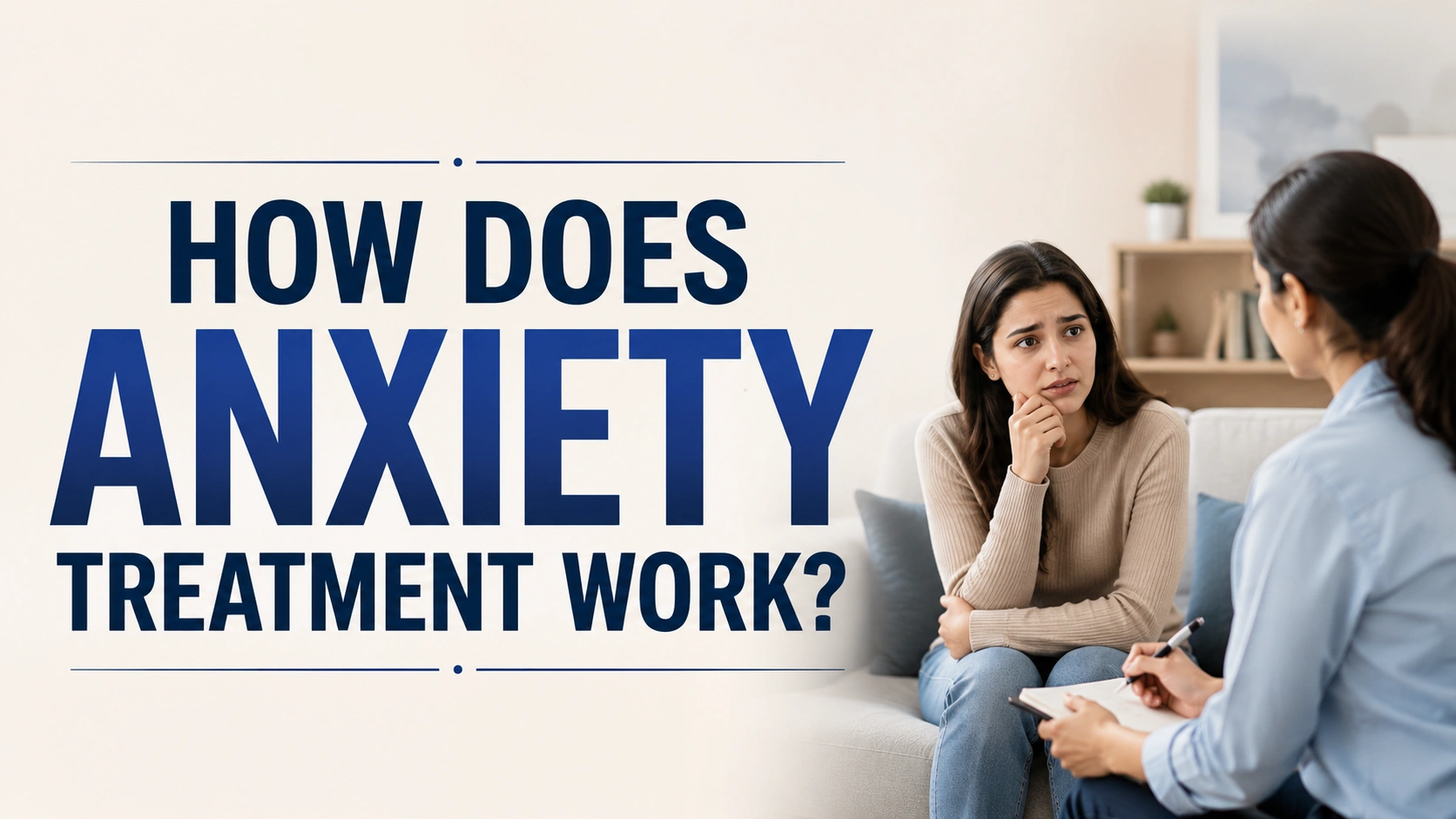
Anxiety treatment can help you understand what is causing your anxiety, manage overwhelming thoughts and physical symptoms, and gradually regain control of your daily life. Treatment may involve counseling or psychotherapy, lifestyle changes, coping strategies, and in some cases, medication recommended by a qualified medical professional.
If anxiety is affecting your sleep, relationships, work, studies, or ability to enjoy everyday life, speaking with a mental health professional can be an important first step.
In this guide, we’ll explain how anxiety treatment works, what happens during anxiety counseling, how therapy can help, how long treatment may take, and when you should consider professional support.
What Is Anxiety?
Anxiety is the body’s natural response to stress, uncertainty, or perceived danger. Feeling nervous before an examination, interview, important meeting, or major life event can be completely normal.
However, anxiety can become a concern when excessive fear or worry:
- happens frequently
- feels difficult to control
- continues even when there is no immediate danger
- interferes with sleep
- affects work or studies
- creates problems in relationships
- causes avoidance of everyday situations
- produces persistent physical symptoms
Everyone experiences anxiety differently. For some people, it may mainly appear as constant worrying. For others, it can involve racing thoughts, restlessness, panic-like symptoms, difficulty sleeping, or physical discomfort.
How Does Anxiety Treatment Work?
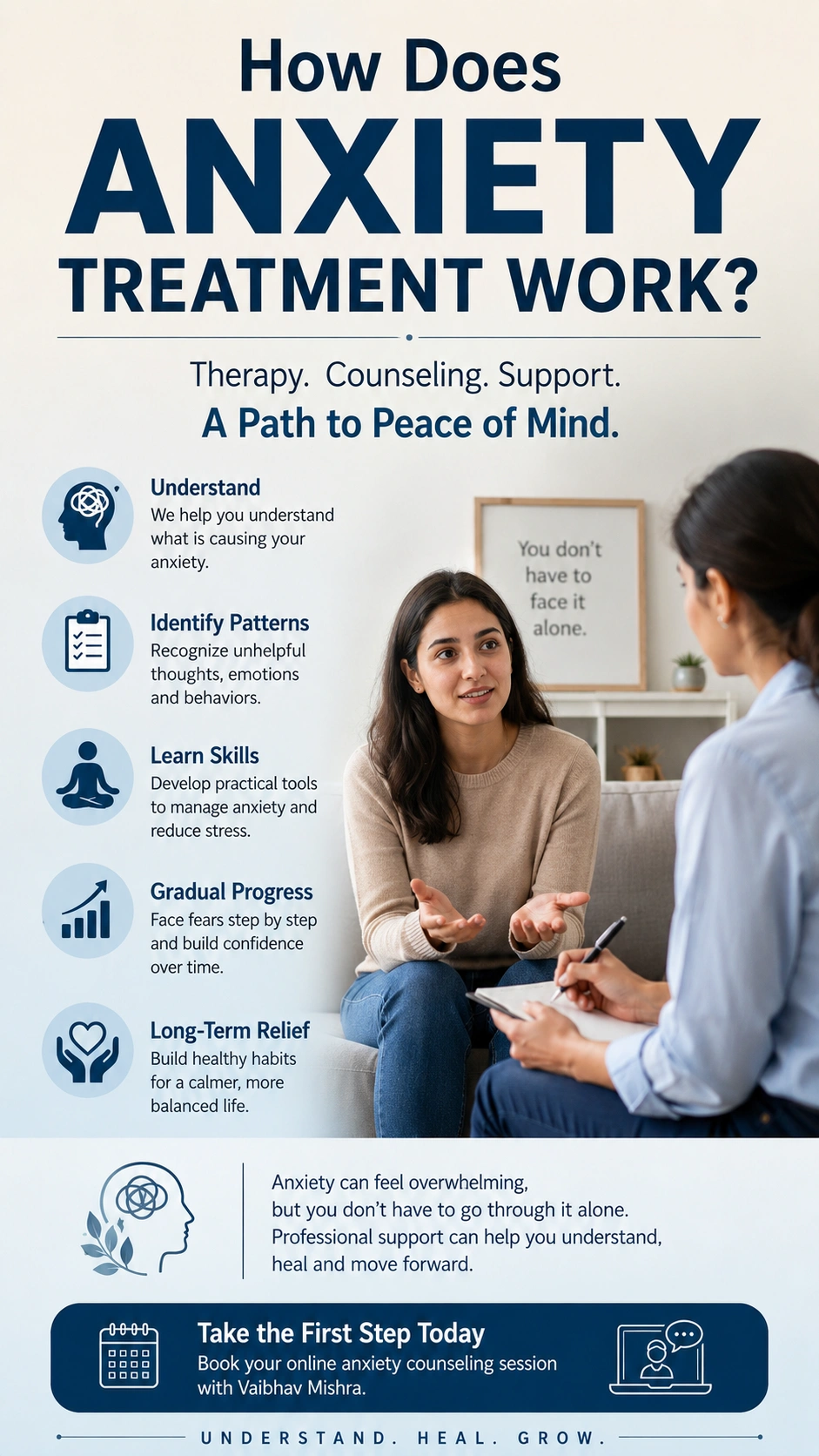
Anxiety treatment generally works by helping a person understand their anxiety, identify patterns that maintain it, develop healthier coping skills, and gradually respond differently to anxious thoughts and situations.
The exact treatment approach depends on the person’s symptoms, severity, circumstances, and goals.
Anxiety treatment may involve:
- Understanding the source of anxiety
- Identifying unhelpful thought patterns
- Learning practical coping strategies
- Working on avoidance and fear
- Improving emotional regulation
- Developing healthier responses to stress
- Improving sleep and daily routines
- Building long-term skills for managing anxiety
The goal of counseling is generally not to make a person feel that they should “never experience anxiety again.” Instead, treatment can help them respond to anxiety in a healthier and more manageable way.
How Does Anxiety Counseling Work?
Anxiety counseling provides a safe and confidential environment where you can talk about the thoughts, emotions, situations, and experiences contributing to your anxiety.
During counseling, a mental health counselor may help you explore:
- What situations trigger your anxiety
- What thoughts occur when you feel anxious
- How your body responds to stress
- Whether you avoid certain situations
- How anxiety affects your relationships
- How anxiety affects your sleep
- How you currently cope with stressful situations
- What changes you would like to make
Based on your concerns, counseling can then focus on developing practical strategies to manage anxiety.
What Happens in an Anxiety Counseling Session?
Your first anxiety counseling session may focus primarily on understanding your concerns.
A counselor may ask questions about your:
- Current symptoms
- Emotional wellbeing
- Stress levels
- Work or academic life
- Relationships
- Sleep
- Recent life changes
- Previous experiences with anxiety
- Goals for counseling
You don’t have to have everything figured out before your first session.
You can simply explain what you’ve been experiencing and what made you decide to seek help.
Over subsequent sessions, the focus may shift toward understanding patterns, developing coping strategies, and working toward your individual goals.
How Can Anxiety Therapy Help?
Different forms of psychotherapy can be used to address anxiety. The approach depends on the person’s specific needs.
1. Cognitive Behavioral Therapy (CBT)
Cognitive Behavioral Therapy, commonly called CBT, is one of the commonly used psychological approaches for anxiety.
CBT focuses on the relationship between:
Thoughts → Feelings → Behaviors
For example, a person may think: “Something terrible is going to happen.”
This thought may increase fear and physical tension, which can then lead the person to avoid the situation.
Therapy can help identify these patterns and develop more balanced ways of thinking and responding.
2. Exposure-Based Approaches
When anxiety causes someone to consistently avoid certain situations, therapy may involve gradually facing feared situations in a structured and appropriate way.
The goal isn’t to force someone into overwhelming situations.
Instead, exposure-based approaches can help a person gradually become more comfortable with situations they previously feared or avoided.
3. Relaxation and Stress-Management Techniques
Counseling may also include practical techniques that help manage physical and emotional stress.
Depending on the person’s needs, these may include:
- Relaxation exercises
- Breathing techniques
- Mindfulness strategies
- Grounding techniques
- Sleep and routine management
- Stress-management skills
These techniques can be useful tools, although they may not be sufficient on their own when anxiety is severe or persistent.
Can Anxiety Be Treated Without Medication?
In some cases, people with anxiety may benefit from psychological therapy or counseling without medication.
However, there is no single treatment that is right for everyone.
The appropriate approach depends on factors such as:
- Severity of symptoms
- Duration of symptoms
- Type of anxiety
- Impact on daily life
- Other mental health concerns
- Previous treatment
- Individual circumstances
Medication is prescribed by qualified medical professionals when appropriate. A mental health counselor can help with psychological support and may recommend consultation with a psychiatrist or other medical professional when additional evaluation appears appropriate.
How Long Does Anxiety Treatment Take?
There is no fixed number of counseling sessions that works for everyone.
Some people may notice improvements relatively early, while others may need longer-term support.
The duration of anxiety treatment can depend on:
- How long you’ve experienced anxiety
- The severity of symptoms
- The type of anxiety
- Your personal circumstances
- Your treatment goals
- How consistently you participate in therapy
- Other psychological or medical factors
Instead of focusing only on the number of sessions, it can be more useful to focus on whether your symptoms and ability to manage everyday situations are gradually improving.
Can Anxiety Go Away on Its Own?
Mild, temporary anxiety related to a specific stressful situation may improve when the situation changes.
However, persistent or worsening anxiety shouldn’t simply be ignored.
If anxiety continues for weeks or months, repeatedly interferes with your life, or causes significant distress, professional support may be worth considering.
Early support can also help you understand what is happening before anxiety becomes more disruptive.
When Should You Seek Professional Anxiety Treatment?
Consider talking to a mental health professional if anxiety:
- is difficult to control
- affects your sleep
- interferes with work or studies
- affects your relationships
- causes frequent physical symptoms
- leads you to avoid normal activities
- causes repeated panic-like episodes
- makes everyday situations feel overwhelming
- continues despite your attempts to manage it yourself
You don’t need to wait until anxiety becomes extremely severe before seeking support.
Can Online Anxiety Counseling Help?
Yes, online anxiety counseling can be a convenient option for people who prefer to speak with a mental health professional from home.
Online counseling can be particularly useful for people who:
- have difficulty travelling to an office
- prefer the privacy of their own space
- have a busy work or study schedule
- live in a different city
- feel more comfortable starting therapy online
A typical online counseling process may involve: Book a Session → Online Consultation → Discuss Your Concerns → Develop a Support Plan → Follow-Up Sessions
The exact process depends on the counselor and the individual’s needs.
Online Anxiety Counseling With Vaibhav Mishra
If anxiety is affecting your thoughts, emotions, sleep, relationships, work, or everyday life, online anxiety counseling can provide a private and convenient way to seek professional support.
At Vaibhav Mishra, counseling focuses on understanding your individual concerns rather than applying the same approach to everyone.
You can discuss concerns such as:
- Persistent anxiety
- Excessive worrying
- Overthinking
- Stress
- Panic-related concerns
- Sleep difficulties associated with anxiety
- Emotional overwhelm
- Relationship-related anxiety
- Difficulty managing stressful situations
Sessions are provided online, allowing you to access counseling from your preferred location.